Your savings, actually working.
Most cash sits in accounts earning near-zero interest, and no bank is in a hurry to mention it. Ed spots your idle cash, sizes the gap against a high-yield savings rate, and reads your savings against the life they're for.
Bank-grade, read-only connections. Ed never sees your login.

What Ed reads for you
Ed doesn't hold your money or sell you a savings account. Ed reads what your cash is doing and tells you straight.
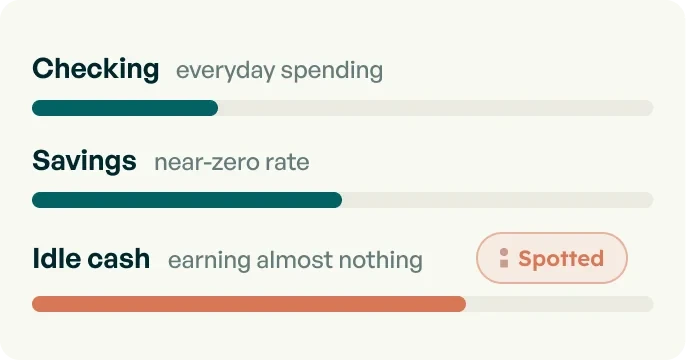
Idle cash, spotted
Cash sitting at near-zero interest — in checking or a default savings account — shows up in your read automatically, sized in your real numbers.
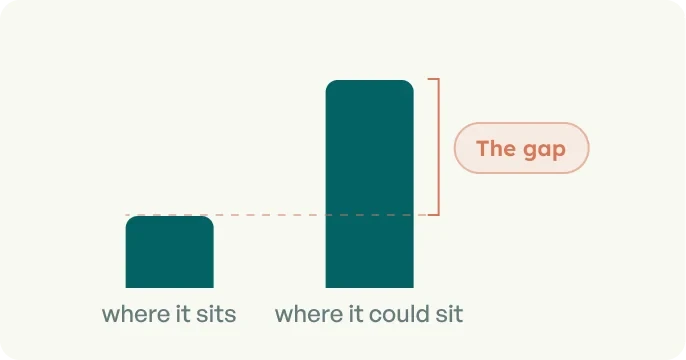
The gap, explained
What the difference between a default account and a high-yield savings account actually means for your balance, in plain terms.
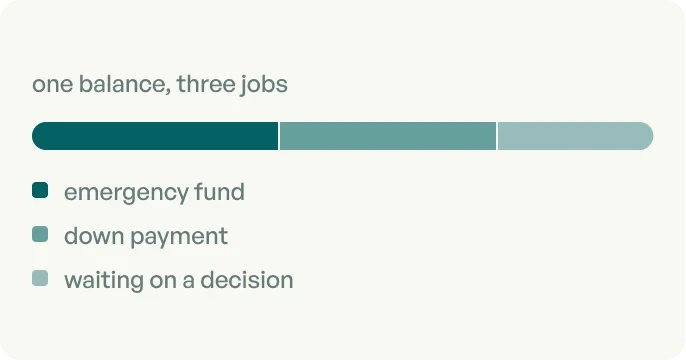
Savings, in context
A cash balance could be an emergency fund, a house down payment, or money waiting on a decision. Ed knows the difference.
The right place for your savings, by when you'll need it
Where your savings belong depends on one question: when will you need the money? Here is the standard answer — checking, high-yield savings, CDs, or invested — in plain terms.
When you'll need it
Where lists say it goes
This monthday-to-day spending
CheckingInstant access. Earns almost nothing — keep it lean.
Any daythe emergency fund
High-yield savingsA day away when you need it, earning while it sits.
1–3 yearsa named goal
CDs & similarLocked for a term in exchange for a steadier rate.
5+ yearsuntouched money
Investing territoryGrowth potential, market risk.
This month · day-to-day spending
CheckingThe usual answer: instant access, earns almost nothing.
ed: $18,400 — more than this month needsAbout five months of spending, sitting at near-zero.
Any day · the emergency fund
High-yield savingsThe usual answer: a day away, earning while it sits.
ed: Nothing here yetYour emergency fund is sitting in checking too.
1–3 years · a named goal
CDs & similarThe usual answer: locked for a term, for a steadier rate.
ed: $12,000 — in the right placeSet aside and untouched since March.
5+ years · untouched money
Investing territoryThe usual answer: growth potential, market risk.
ed: $64,000 — in the right placeLong horizon, invested, not idle.
Every list on the internet stops here — because a list can't see your accounts. Ed can. Connect once, read-only, and Ed reads where your cash actually sits, how much of it is idle, and whether it's in the right place.
Give the idle cash a job.
The cash Ed finds becomes a goal you can watch fill up — emergency fund, down payment, whatever it's for. Ed tracks it with you.
Subscription-only. Read-only. Your data is never sold.

Money at peace.Wealth in motion.
Your money, finally handled. Your life, finally unhurried.


FAQ
Does Ed recommend a specific bank or account?
How does Ed know my cash is idle?
What does it cost?
How much should I keep in a high-yield savings account?


