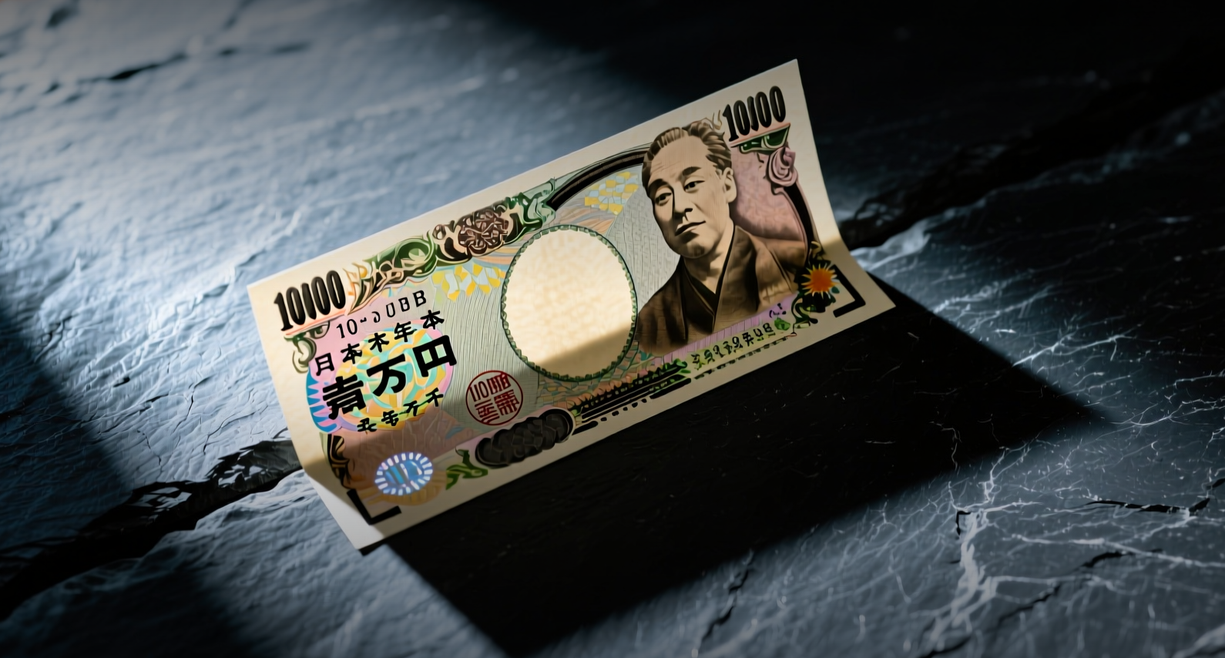
Yen depreciation is pushing Japanese government bond futures lower as traders price in a greater chance of further Bank of Japan rate increases.
Japanese government bond futures edged lower in early Tokyo trading, weighed by the yen's slide to a 40-year low against the dollar that stoked expectations for additional BOJ rate increases. Ten-year JGB futures fell 0.08 yen to 127.96 yen.
"The yen's persistent weakness tends to boost import prices and inflationary pressures, which in turn could lead to further BOJ rate increases," said Lisa Mochizuki, a junior analyst at SMBC Nikko Securities.
The Finance Ministry is scheduled to auction about 2.8 trillion yen ($19.4 billion) of two-year sovereign notes later today. Mochizuki expects the auction to clear smoothly, noting that "2y yields look fair" relative to current market conditions. The two-year JGB yield has been under pressure as traders reassess the BOJ's policy path while the currency declines.
The yen's weakness — driven by widening interest rate differentials between Japan and the US after the Federal Reserve's hawkish tilt — raises the stakes for the BOJ's upcoming policy meeting. If the currency continues to slide, it could force the central bank to accelerate its tightening cycle, pushing JGB yields higher and reshaping the carry trade dynamics that have defined Japanese markets for years.
The move in JGB futures reflects a broader repricing of Japanese rate expectations. The yen has weakened past 160 against the dollar, levels that previously triggered intervention from Japanese authorities. A weaker yen inflates the cost of imported energy and raw materials, feeding through to consumer prices and complicating the BOJ's efforts to normalize policy without disrupting the domestic bond market.
The auction of two-year notes will serve as a key test of demand at a time when the BOJ is gradually reducing its bond purchases. The central bank has been allowing long-term yields to rise more freely as part of its exit from ultra-loose monetary policy, but the pace of adjustment remains a delicate balancing act. A smooth auction, as SMBC Nikko anticipates, would suggest the market is absorbing the supply without requiring a concession in pricing.
The last time the yen traded at these levels, in mid-2024, the Ministry of Finance intervened with a record 9.8 trillion yen in currency operations. While authorities have signaled a willingness to act again, the fundamental driver — the rate differential between Japan and the US — remains wide. The Fed's hawkish hold in June, which reinforced expectations for a rate hike later this year, has kept US two-year yields elevated, maintaining the pressure on the yen and, by extension, on JGBs.
For investors, the key question is whether the BOJ will need to raise rates sooner than currently priced. Overnight index swaps imply a roughly 60% probability of a 25-basis-point hike by October, though that could shift rapidly if the yen continues to weaken. A faster pace of tightening would compress the carry advantage that has made Japanese bonds attractive to foreign investors, potentially reducing demand at future auctions.
The BOJ's next policy decision is scheduled for July 31, when the board will also release updated quarterly growth and inflation forecasts. Economists surveyed by Bloomberg expect the central bank to hold rates steady, though the yen's trajectory could alter that calculus.
This article is for informational purposes only and does not constitute investment advice.