
The Federal Reserve's hawkish hold and the Bank of England's decision to keep rates unchanged have widened the policy gap between the two central banks, sending the dollar to a four-month high and pushing GBP/USD toward critical support.
The Federal Reserve's hawkish hold and the Bank of England's decision to keep rates unchanged have widened the policy gap between the two central banks, sending the dollar to a four-month high and pushing GBP/USD toward critical support.
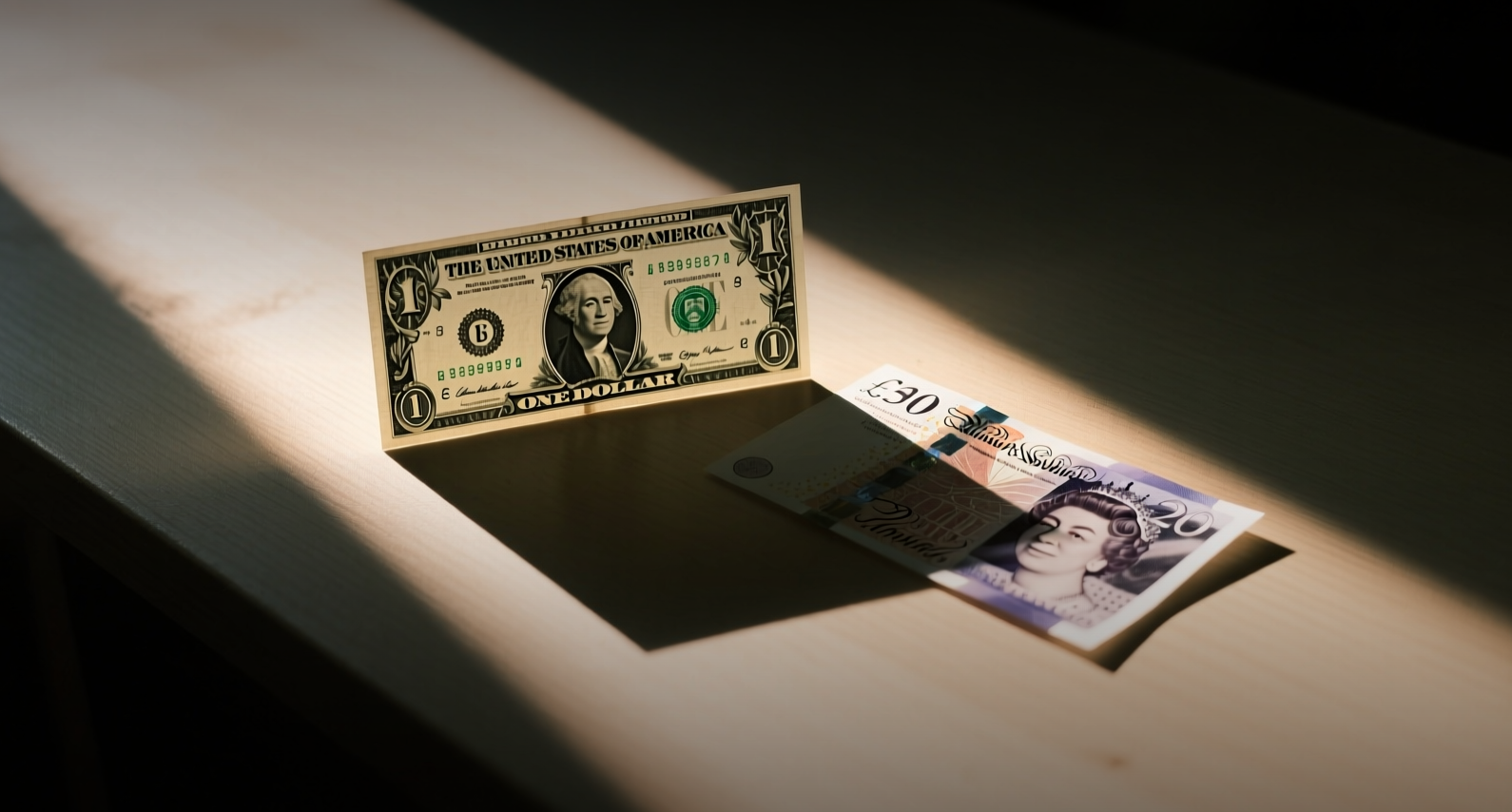
The Federal Reserve's hawkish hold and the Bank of England's decision to keep rates unchanged have widened the policy gap between the two central banks, sending the dollar to a four-month high and pushing GBP/USD toward critical support.
The Fed held its benchmark rate at 3.5% to 3.75% on Wednesday but signaled nine officials now see a rate hike by year-end, pushing the dollar index up 0.9% to 100.47 and the 2-year Treasury yield to its highest since February 2025.
"While the Fed paused as expected, the hawkish revision to the dots caused both the dollar and yields to rise while pressuring stocks lower," said Uto Shinohara, senior investment strategist at Mesirow Currency Management. "With a 12-0 vote and no dovish dissenters, implied market pricing for a Fed hike by year-end jumped from plus 20 basis points before the announcement to plus 30 basis points afterward."
The 2-year yield surged 17 basis points to 4.216%, its highest level in more than a year, while the 10-year yield rose 7 basis points to 4.495%. The S&P 500 dropped 1.3% and the Nasdaq fell 1.5% in the final hour of trading. Across the Atlantic, the Bank of England held its rate at 3.75%, offering no signal that a hike was imminent.
The divergence leaves GBP/USD exposed to further downside. Markets now price a 72% probability of a Fed hike by October, while the BoE's neutral stance offers little support for sterling. The next test for the pair comes as traders assess whether the dollar can sustain its break above the 100 level on the DXY index.
The policy gap between the Fed and the BoE has widened to roughly 180 basis points when accounting for market-implied paths. The last time the Fed's dot plot shifted this sharply — from cuts to hikes in a single meeting — was in September 2023, when the median projection showed one additional hike that year. The S&P 500 fell 1.6% in the two weeks following that meeting, while the dollar gained 1.8% over the same period.
New Fed Chair Kevin Warsh, in his debut press conference, announced five task forces to review communications, balance sheet policy, and data sources. He described the dot plot projections as written with pencils "that have big erasers," signaling a shift away from the forward guidance approach favored by his predecessor.
"The committee is divided roughly in half, with nine participants seeing a hike or a few hikes this year, while a similar number expect cuts by end-2027," said Michael Pearce, chief US economist at Oxford Economics. "Our inflation projections for this year and next are far lower than the median projection, which is why we expect the next move will still be a cut."
For GBP/USD, the immediate risk is a break below the 1.2500 level, a threshold that has held since April. A sustained dollar rally would also pressure other major currency pairs and emerging market currencies, which have already weakened as the greenback climbed to a four-month high.
The Fed's next meeting is scheduled for July 28-29, with the July nonfarm payrolls and CPI reports due before then. The BoE's next decision follows on Aug. 6. If U.S. inflation data continues to run above the central bank's 2% target — core PCE is projected at 3.3% for 2026, up from the 2.7% forecast in March — the case for a hike will strengthen, further widening the policy gap and adding to pressure on sterling.
This article is for informational purposes only and does not constitute investment advice.
