
The U.S. government took its most concrete step in half a century toward returning civilian supersonic flight to American skies.
The U.S. government took its most concrete step in half a century toward returning civilian supersonic flight to American skies.
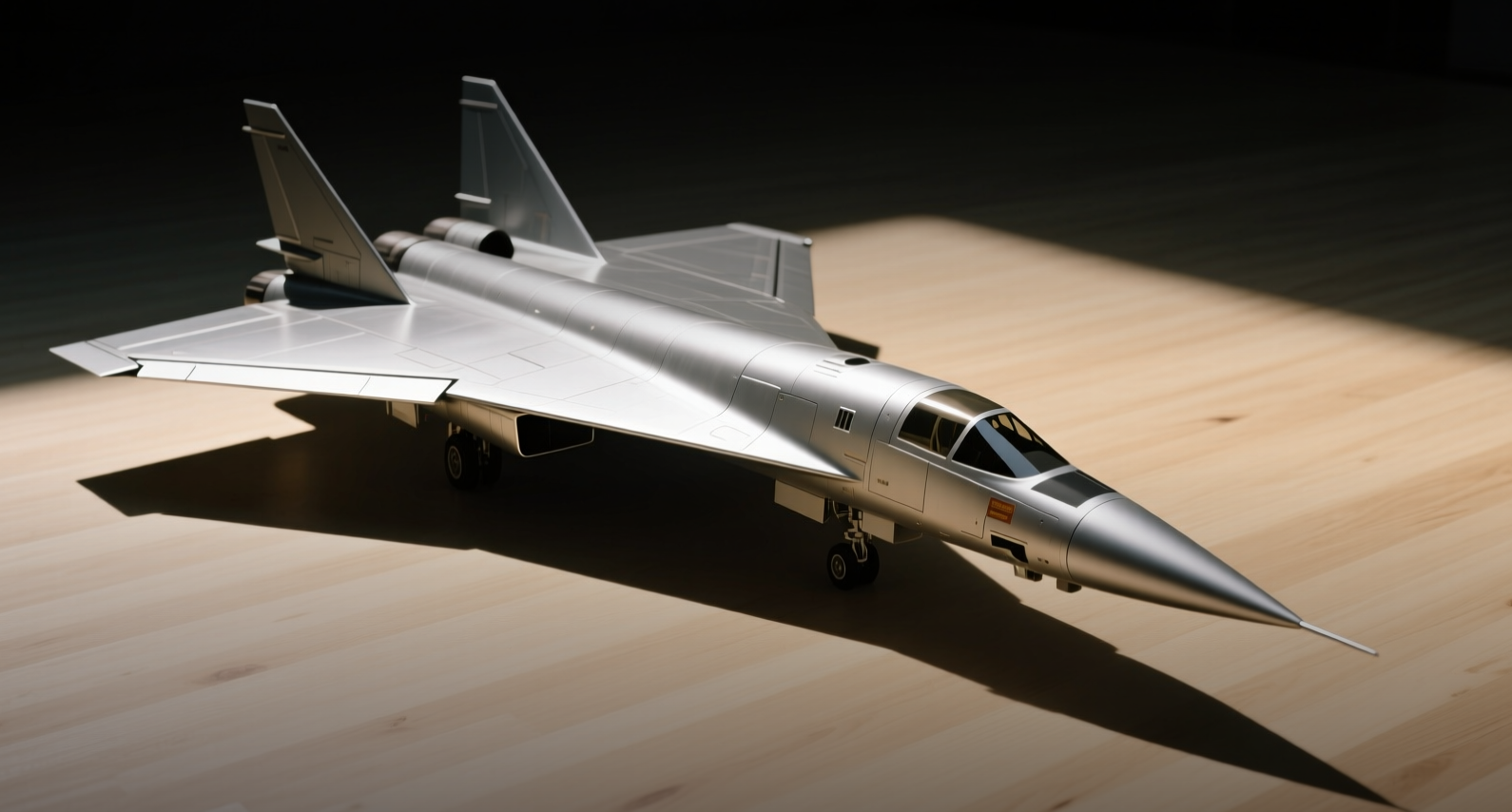
The FAA on June 30 proposed noise-based certification standards for supersonic aircraft, moving to scrap a 1973 ban on civilian flights exceeding Mach 1 over U.S. land.
"Advances in aerospace engineering, materials science, noise reduction, and new operational concepts will eliminate the old sonic boom," FAA Administrator Bryan Bedford said in a statement. "This means we can ultimately repeal the ban from the 1970s on supersonic flight over U.S. territory while minimizing noise impacts to residents."
The proposed rule, "Enabling Supersonic Overland Flight" (Docket FAA-2026-6935), sets a noise certification standard for supersonic planes and implements Executive Order 14304, "Leading the World in Supersonic Flight," signed by President Trump. A second rule later this year will establish takeoff and landing noise standards for supersonic aircraft, giving manufacturers the regulatory framework needed to finalize designs. Supersonic aircraft travel at roughly 770 miles per hour, compared with 550 to 600 mph for commercial jets.
The regulatory shift unlocks a market that has been dormant since the Concorde's final flight in 2003. Boom Supersonic, which has begun flight tests of its Overture aircraft, aims to cut the New York-to-London trip to 3.5 hours from about 7 hours. American Airlines, United Airlines and Japan Airlines have expressed interest in the plane, which would carry 60 to 80 passengers at speeds slightly above Mach 1.
The Mach Cutoff Solution
The key technology enabling the rule change is a flight technique called Mach cutoff, where an aircraft's speed, altitude and atmospheric conditions combine to bend sonic booms back into the atmosphere before they reach the ground. Blake Scholl, founder and CEO of Boom Supersonic, has described the effect as a "U-turn" that prevents the boom from being heard on the surface. NASA's X-59 research aircraft has demonstrated the capability at Mach 1.4 at 55,000 feet without disturbing communities below, according to agency video published last week.
The approach contrasts sharply with the 1964 Operation Bongo II experiment, when the Air Force and FAA subjected Oklahoma City to six months of military supersonic flights. The tests generated 15,000 formal complaints and 4,629 damage claims from residents, cementing public opposition that led to the 1973 ban.
Who Benefits, Who Loses
The proposed rule directly benefits aerospace manufacturers developing supersonic technology, including Boom Supersonic, Lockheed Martin and GE Aerospace, which is working on supersonic-capable engines. The FAA is collaborating with the International Civil Aviation Organization, NASA and academic institutions to inform the new noise standards.
"For too long, outdated rules held back our engineers and manufacturers," said Michael Kratsios, assistant to the president for science and technology and director of the White House Office of Science and Technology Policy. "Under President Trump's leadership, we are clearing the runway for supersonic flight."
The financial viability of supersonic travel remains an open question. A round-trip ticket on the Concorde cost $12,000 in 2003, equivalent to more than $22,100 today after adjusting for inflation. Boom Supersonic has not disclosed pricing for Overture, but the economics of supersonic travel will determine whether the market extends beyond premium business travelers and high-net-worth individuals. The FAA's second rule on takeoff and landing noise, expected later this year, will provide further clarity on operational constraints at airports near residential communities.
This article is for informational purposes only and does not constitute investment advice.
