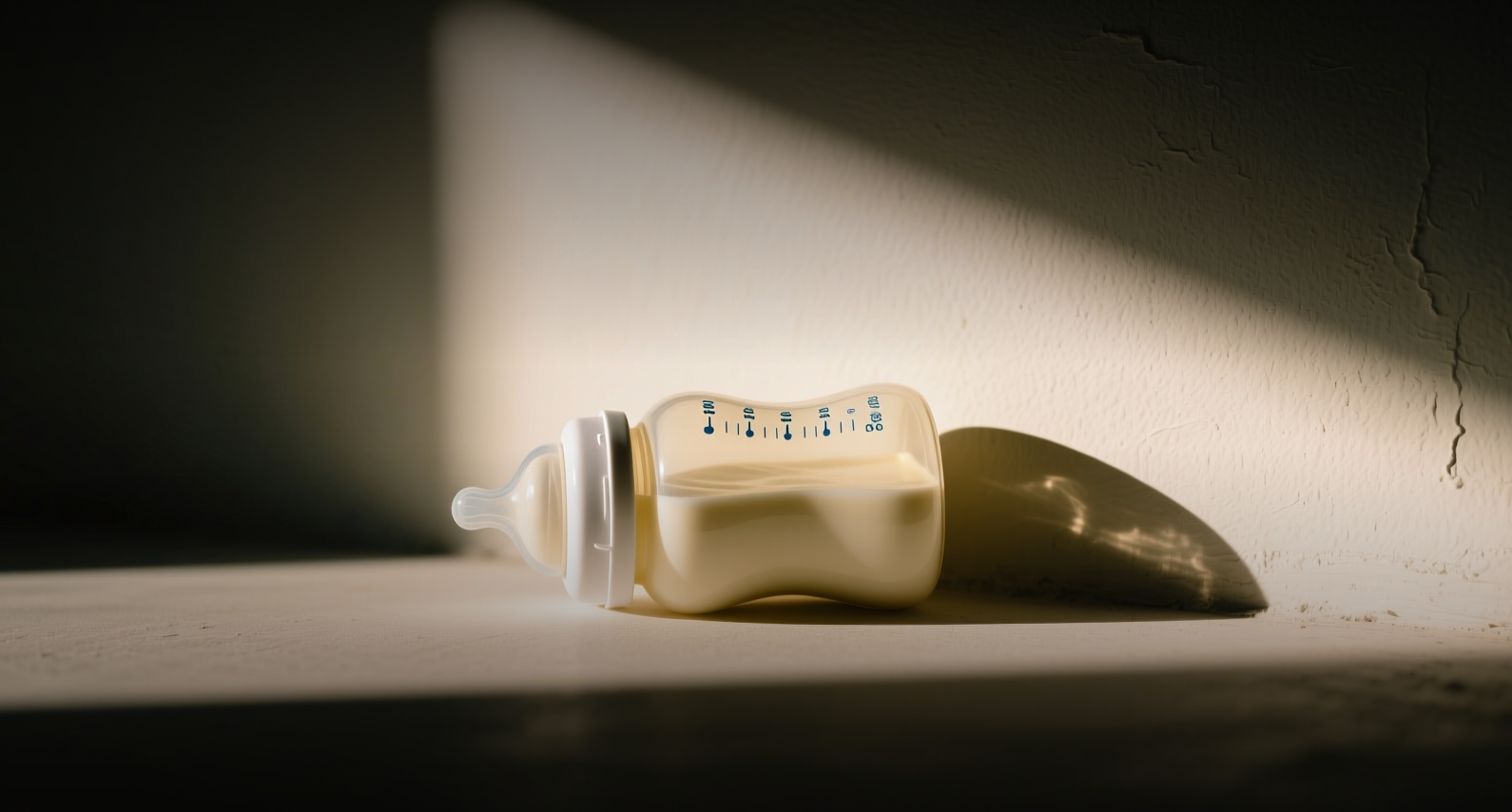
The Justice Department spent three years investigating Abbott Laboratories over a baby formula plant where cronobacter bacteria was found, then walked away from criminal charges.
The Justice Department closed a three-year criminal probe into Abbott Laboratories over its Sturgis, Michigan, baby formula plant where cronobacter bacteria was found, opting for civil penalties instead of charges that some prosecutors believed were warranted.
"Ensuring the safety of our nation's food supply is a top priority for the Trump administration, however, this Department of Justice does not believe in regulation by prosecution," a DOJ spokeswoman said, confirming the probe's closure.
Prosecutors had weighed a misdemeanor charge under the Food, Drug and Cosmetic Act and a separate count for misleading the government, some of the people familiar said. They also considered charging at least one individual. The department instead pursued clawing back money Abbott earned from selling formula through federally funded nutrition programs — a civil remedy that avoids criminal liability.
The outcome marks a significant shift in corporate enforcement under President Trump, whose May 2025 executive order called for minimizing criminal sanctions where civil penalties could suffice. For Abbott, the resolution removes the threat of criminal prosecution that had hung over the company since FDA inspectors found five strains of cronobacter at the plant in 2022, though the company still faces a related civil settlement whose terms have not been disclosed.
FDA inspectors in early 2022 found standing water in multiple locations, employees who worked directly with baby formula failing to adequately wash their hands, and the bacteria in multiple spots inside the plant. A former FDA official later testified to Congress that the facility was "out of control." Cronobacter infections had sickened four babies who drank Abbott formula produced at the plant, two of whom died.
Abbott has consistently denied a link between the plant's conditions and the infant illnesses. No unopened, distributed Abbott infant formulas have tested positive for the bacteria that sickened the babies, a company spokesman said.
The Civil Path
The Justice Department said in November, as part of a related civil lawsuit joined by 31 states, that Abbott "knowingly" failed to follow manufacturing standards to protect against contamination. The suit alleged that Abbott had a "culture of concealment" at Sturgis and withheld information from the FDA. The department and Abbott have reached a settlement to resolve that case, which focuses on the company's participation in federal programs that pay for baby formula for lower-income families. The terms were not revealed.
Enforcement Shift
The decision reflects a broader recalibration of corporate enforcement under the Trump administration. Acting Attorney General Todd Blanche has said he supports penalizing companies when prosecutors also can identify and charge individuals, but has criticized pursuing cases where prosecutors lack evidence to charge individuals or that appear unwinnable at trial. Trump has nominated Blanche to the permanent position, and senators are expected to press him on his enforcement views during a confirmation hearing next month.
Bill Marler, a lawyer who represents victims of food-borne illnesses, said the executive order "brought a big sigh of relief to CEOs across the country." The use of criminal penalties, he said, "did keep CEOs and people in the food business on their toes."
Abbott's defense team included Mark Filip, who served as deputy attorney general under President George W. Bush. Filip last year urged the Justice Department to overhaul the consumer-focused office that steered the investigation and to remove its ability to bring criminal cases, people familiar said.
This article is for informational purposes only and does not constitute investment advice.