
A record 61.4 million Americans will drive at least 50 miles over July Fourth week, AAA said, as falling gas prices encourage summer travel.
A record 61.4 million Americans will drive at least 50 miles over July Fourth week, AAA said, as falling gas prices encourage summer travel.
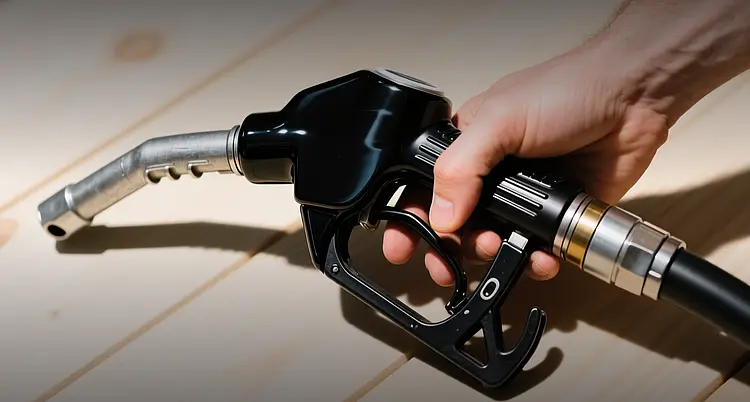
A record 61.4 million Americans will drive at least 50 miles over July Fourth week, AAA said, as falling gas prices encourage summer travel.
Americans are getting relief at the pump just in time for the holiday, with regular gasoline falling to $3.84 a gallon on July 2 from a peak above $4.50 after the Iran war.
"While the overall number of Independence Day travelers appears to be plateauing, we're still expecting record volumes this year," Stacey Barber, vice president of AAA Travel, said in a statement.
The 61.4 million projected car travelers represent a slight increase from 61.3 million in 2025, with 72.2 million total Americans expected to travel more than 50 miles from home across all modes of transportation. About 85% of holiday travelers will drive, AAA said. The forecast comes as the U.S. unemployment rate stood at 4.2% in June, supporting consumer confidence and travel spending.
The decline in gas prices leaves more cash in consumers' pockets for restaurants, lodging and activities along the way, potentially boosting spending at businesses that depend on summer tourism. A Bank of America Institute survey found 77% of respondents planned summer travel, up from 74% in 2025, though about 10% said high gas prices caused them to cut trips.
Gas Prices Fall From War-Driven Peaks
The national average of $3.84 a gallon on July 2 is down sharply from $4.35 on May 30 and well below the peak above $4.50 that followed the outbreak of the Iran war. Prices have declined for six consecutive weeks as crude oil stabilized around $70 a barrel after the U.S. and Iran agreed to halt hostilities, reopening the Strait of Hormuz to tanker traffic.
Still, the current price remains 86 cents higher than before the conflict began, and analysts caution the outlook remains fragile. "The declines came despite a turbulent week, as fresh attacks were traded between the U.S. and Iran before both sides agreed to halt hostilities just in time Sunday, preventing what could have been a significant spike in oil prices," said Patrick De Haan, head of petroleum analysis at GasBuddy. "The situation remains anything but predictable."
Some states have seen prices fall faster than others. Indiana has the cheapest gas in the nation at $3.18 a gallon, followed by Texas at $3.29 and Oklahoma at $3.37, according to AAA data. By contrast, drivers in Washington state are paying about $5.16 a gallon, more than $1.30 above the national average.
Travel Demand Holds Up Despite Economic Uncertainty
Summer travel plans appear resilient even as consumers adjust their behavior at the margins. Vacation rental bookings in the U.S. for July and August are running 10% higher than a year ago, according to AirDNA. The 100th anniversary of Route 66 has also helped encourage road trips along the historic highway stretching from Chicago to Santa Monica, California.
Some travelers are making trade-offs to manage costs. Shelby Starling, 22, who drove from Jacksonville, Florida, to the Florida Keys, said lower gas prices made budgeting less stressful. Others are staying closer to home or cutting trips entirely. Jay Flynn, a 63-year-old business analyst at the University of Virginia, said he is skipping his annual trip to Shenandoah National Park because of lingering concerns about fuel costs and the potential for renewed conflict in Iran.
Consumer spending data suggests the broader economy remains on solid footing. Inflation-adjusted spending rose 0.3% in May, the Commerce Department reported, strengthening from a flat reading in April.
This article is for informational purposes only and does not constitute investment advice.
