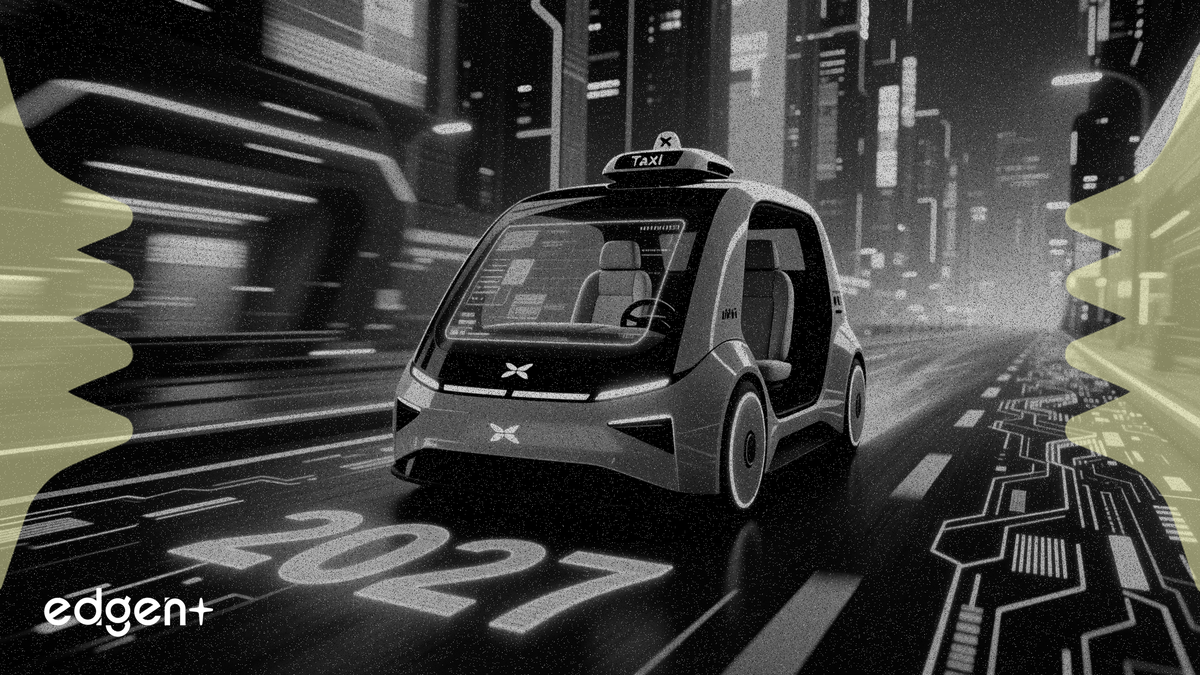
Chinese electric vehicle maker XPeng Inc. has started mass production of its first in-house robotaxi, a move that accelerates its push into autonomous mobility and challenges established ride-hailing services. The company aims to have a pilot program running in the second half of this year, with fully driverless operations targeted for early 2027.
"Mass production of a production-ready robotaxi shifts the story from ‘demo’ to ‘scaling,’ and it supports higher long-term margins if autonomous mobility becomes a second revenue engine," an AI-driven analysis of the announcement noted. The analysis registered a bullish sentiment score of 72 out of 100.
The new robotaxi is built on XPeng's GX platform, which the company says is China’s first production-ready, pre-assembled robotaxi developed entirely with in-house technologies. XPeng President Brian Gu previously stated the company would likely produce hundreds to thousands of these vehicles over the next 12 to 18 months. The vehicles are equipped with advanced AI models, including VLA 2.0, designed to navigate complex urban environments without human intervention.
The strategic shift pits XPeng against not only EV competitors like Tesla but also mobility-as-a-service providers and the suppliers that support them. If XPeng’s in-house system proves successful and scalable, it could reduce reliance on third-party autonomy suppliers like Hesai Technology. The key risk remains whether the robotaxis can meet stringent safety and regulatory hurdles required for commercial deployment, a failure of which could significantly delay the company's scaling ambitions.
From Vehicles to Mobility Services
XPeng's investment in autonomous driving is a core part of its strategy to build a comprehensive "smart mobility ecosystem." This extends beyond passenger cars to include humanoid robotics and flying vehicle concepts. The robotaxi initiative represents the most commercially immediate of these ventures, creating a potential new revenue stream from software and fleet operations.
The company's existing vehicle lineup, which includes the P7 sedan and G9 SUV, has established it as a significant player in China's competitive EV market. With its expansion into Europe and other international markets, XPeng is leveraging its technology to differentiate itself from a crowded field. The success of its robotaxi fleet could provide a significant long-term advantage, transforming the company from a pure automaker into a vertically integrated transportation technology firm.
This article is for informational purposes only and does not constitute investment advice.