


XPeng's new flagship SUV enters a crowded market, leveraging a shared platform strategy that underpins its ambitious robotaxi plans.
XPeng's new flagship SUV enters a crowded market, leveraging a shared platform strategy that underpins its ambitious robotaxi plans.
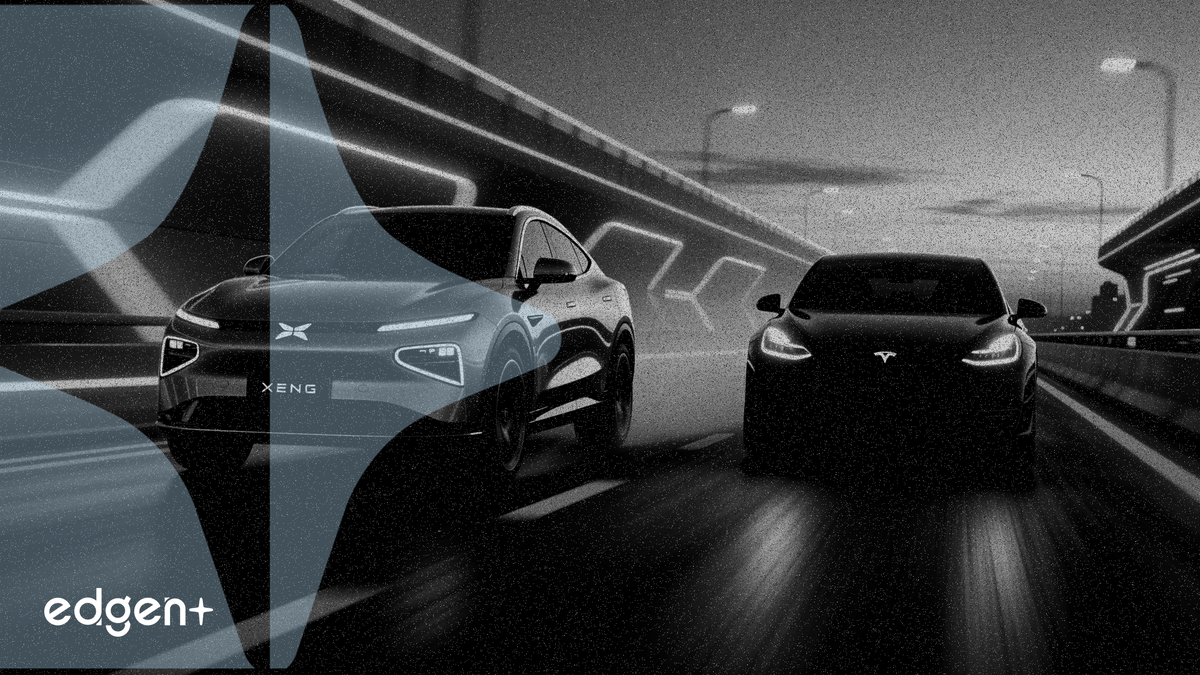
XPeng's new flagship SUV enters a crowded market, leveraging a shared platform strategy that underpins its ambitious robotaxi plans.
Chinese automaker XPeng Inc. (NYSE: XPEV) launched its first full-size, six-seater flagship SUV, the GX, with a limited-time starting price of 269,800 yuan ($37,250). The launch intensifies an already fierce price war in China’s electric vehicle market, positioning the GX against established players and testing the company’s strategy of using a common platform for both consumer vehicles and future autonomous fleets.
"The GX is not just a flagship consumer model; it's the foundation of our next-generation mobility ecosystem," a company executive said during the launch event. "By leveraging the same proven, cost-efficient platform for our robotaxi fleet, we can accelerate autonomous vehicle deployment at a scale and cost structure our rivals cannot match."
The new SUV is available in a pure electric version, with prices ranging from 279,800 to 359,800 yuan, and a super extended-range hybrid version priced between 289,800 and 359,800 yuan. The initial promotional price brings the entry point down to 269,800 yuan, a direct challenge to competitors in the premium family SUV segment.
For investors, the GX launch is a critical test of XPeng's ability to capture market share in a segment dominated by rivals like Li Auto Inc. (NASDAQ: LI) and NIO Inc. (NYSE: NIO). The vehicle's success will be a key indicator of whether XPeng's platform-sharing strategy can translate into a sustainable cost advantage. The company's US-listed shares have faced pressure, slipping alongside Li Auto's in recent trading sessions, while NIO has outperformed year-to-date.
Rather than developing a bespoke vehicle, XPeng’s forthcoming robotaxi is being built on the same GX platform that underpins the new consumer SUV. This strategy aims to reduce costs and speed up development, a stark contrast to Tesla's purpose-built "Cybercab" or Geely's EVA Cab.
XPeng's robotaxi, which has already started mass production, is engineered for L4 autonomous standards and controversially relies on a "pure vision" solution, forgoing the expensive LiDAR sensors and high-definition mapping used by most Western competitors. The system is powered by four proprietary Turing AI chips, which the company claims reduces response latency to under 80 milliseconds.
The automaker is targeting a pilot rollout for its robotaxi service in the second half of 2026, with a goal of fully unsupervised operation by early 2027. This aggressive timeline highlights the company's confidence in its vertically integrated approach, where it controls everything from the AI silicon to the vehicle manufacturing.
The launch of the GX comes as competition in China's EV market reaches a fever pitch. While XPeng's first-quarter deliveries of 62,682 units marked a decline from the previous year, rival NIO reported a 98.3% year-over-year increase in deliveries to 83,465 vehicles. Li Auto's deliveries grew more modestly to 95,142 units. The GX is crucial for XPeng to regain momentum and prove its product strategy can resonate with consumers in the face of intense competition.
This article is for informational purposes only and does not constitute investment advice.
