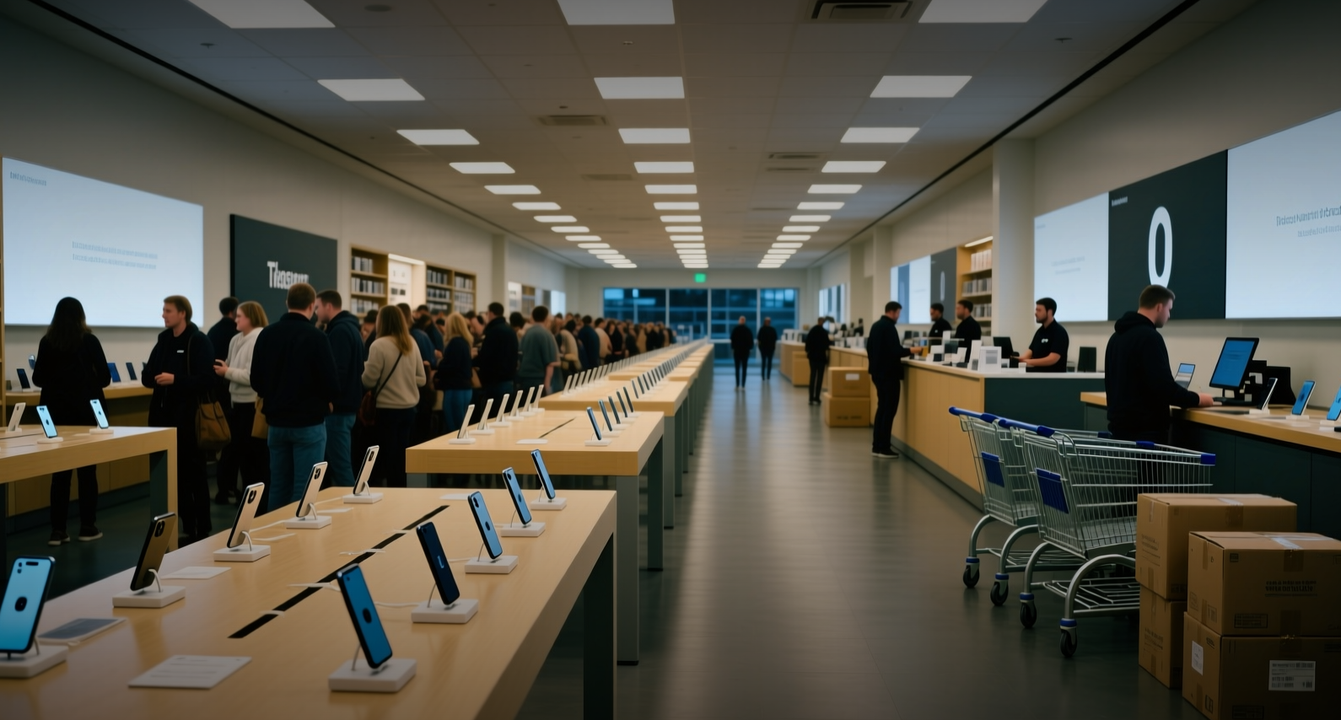
Xiaomi (小米集團, 1810.HK) slid 3.309% to HK$26.30 on Wednesday as short sellers built a 38.435% ratio into the company's autumn launch event, where the Xiaomi 18 Pro series debuts at 7 p.m. HKT as the first device running HyperOS 4.
The stock's decline came on HK$552.75 million of short-selling turnover, according to AAStocks data as of 12:25 p.m. HKT, a ratio that leaves the shares exposed to a sharp reversal if the event lands well. Xiaomi has not disclosed a closing level for the session.
"Short interest this heavy into a product launch is a bet on execution risk, not on the hardware," said Kevin Ip, an analyst covering Hong Kong equities. "The market has already priced the specs. What it has not priced is whether a higher price tag holds in a market where memory costs are squeezing every handset maker."
The 18 Pro is positioned as a dual-size imaging flagship, carrying a 7,000mAh battery on the Pro and 8,500mAh on the Pro Max, a Leica-branded dual 200-megapixel camera system, and a customizable rear display that Xiaomi says adds practical and AI-driven functions. President Lu Weibing said on Weibo that the device represents the largest upgrade in the company's history across performance, secondary display, screen, and imaging, and confirmed it will cost more than its predecessor.
That price increase is the crux. The Xiaomi 17 Pro launched at CNY 4,999 in September 2025 before Xiaomi raised 17-series pricing across the board on September 1 by CNY 600 to CNY 1,100, putting the entry model at CNY 5,699. Counterpoint Research attributes the pass-through to memory, not cameras: chipmakers are prioritizing high-bandwidth memory for AI servers, squeezing standard DRAM supply and lifting smartphone bill-of-materials costs 10% to 25%, with entry-level models up 20% to 30% since early 2025. Counterpoint cut its 2026 global smartphone shipment forecast to a 2.1% decline from 0.45% growth and now expects average selling prices to rise 6.9%, nearly double its earlier 3.6% estimate.
Shorts Build as the EV Story Runs Hot
The positioning sits against a business that is otherwise accelerating. Xiaomi's Pengcheng EV lineup drew more than 10,000 locked-in orders within four minutes of its September 7 launch, with the N70 Max and N90 Max priced CNY 20,000 and CNY 30,000 below their July pre-sale levels. Xiaomi Auto deliveries exceeded 30,000 units in August, taking the first eight months to roughly 250,000. Goldman Sachs estimates Pengcheng could deliver 110,000 units in full-year 2026; Deutsche Bank projects 70,000 to 100,000.
The broader China demand backdrop is mixed. Citi expects September NEV retail sales to fall 14% year on year but rise 13% month on month, a seasonal rebound that still leaves the sector below last year's level. Xiaomi shares had risen as much as 3.41% intraday on September 21 to HK$27.30 on HK$1.549 billion of turnover before Wednesday's reversal, a swing that shows how quickly the launch narrative is being repriced.
Xiaomi also confirmed the 18 Pro will launch globally later this year, breaking a pattern that has held since the Xiaomi 13 Pro in 2023, when the 14 Pro, 15 Pro, and 17 Pro all stayed China-only. The device is among the first to use Qualcomm's Snapdragon 8 Elite Gen 6 platform, introduced at Snapdragon Summit 2026 in Hawaii on September 22, which Qualcomm says exceeds 5.0GHz peak clock speeds with a 13% performance gain and 37% better energy efficiency on a 2nm process.
For holders, the next 24 hours carry the answer. A pricing strategy that sticks and a global Pro rollout would support the premiumization case that underpins Xiaomi's handset average selling prices and IoT attach rates; a muted reception would leave a 38.435% short ratio with room to press further. Xiaomi has not disclosed first-sale dates or international pricing.
This article is for informational purposes only and does not constitute investment advice.