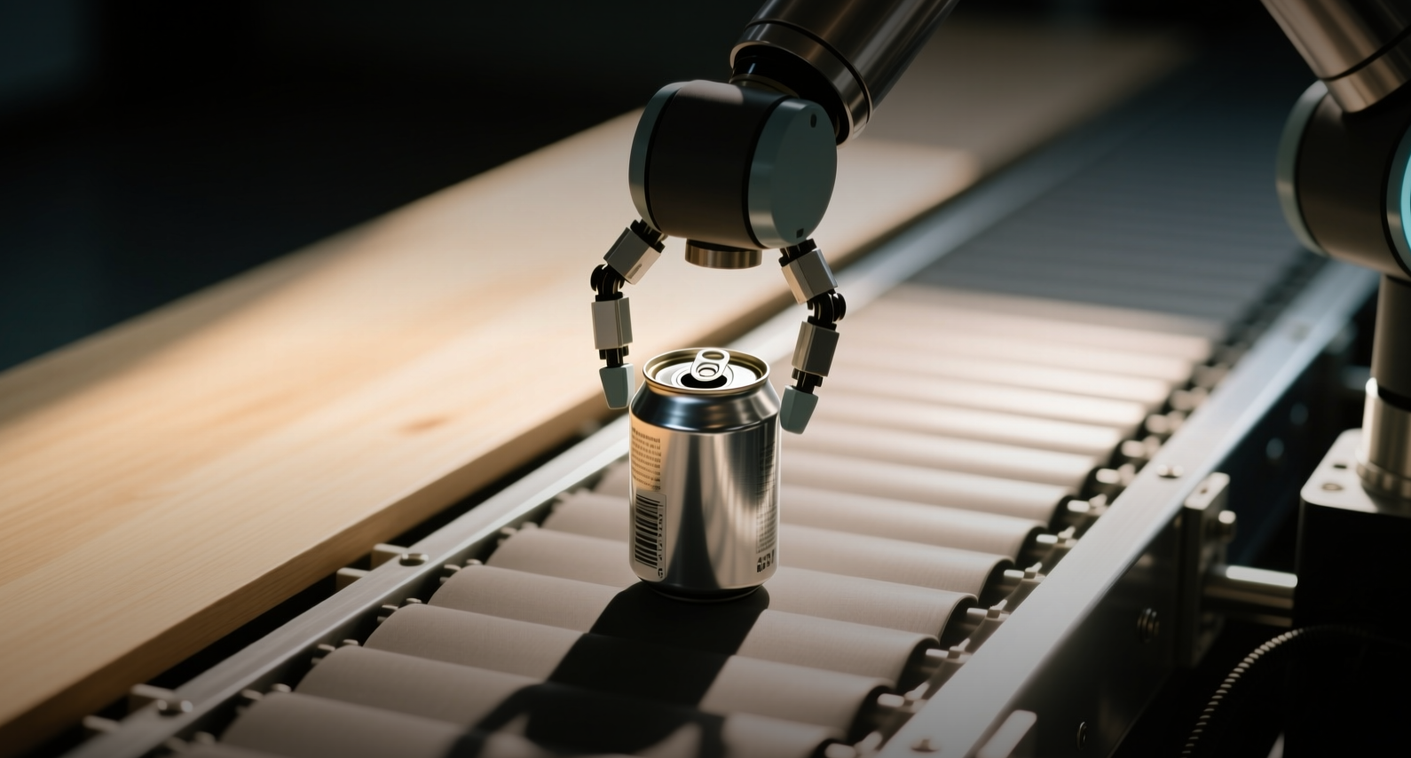
Waste Management is betting $1.4 billion that automation can fix America's broken recycling system.
Waste Management opened a $90 million automated recycling facility in Pembroke Pines, Florida, that can process 60 tons of material an hour — part of a $1.4 billion bet that machines can salvage a recycling industry where less than one-third of household waste ever reaches a collection bin.
"We haven't done a great job as an industry at telling the story," Brent Bell, vice president of recycling at Waste Management, said.
The nation's largest waste and recycling company has spent $1.4 billion since 2022 building and upgrading 39 facilities, aiming to boost material recovery by 60 percent to 25 million tons annually by 2030. The investments have already cut labor at the plants by 30 percent while adding capacity for 2.8 million more tons of material each year, Bell said. In the first quarter, recycling EBITDA rose 18 percent even as commodity prices fell 27 percent from a year earlier.
The push comes as the recycling business faces a crisis of economics and trust. Only 21 percent of the 47 million tons of residential recyclable material generated annually gets recycled, according to the Recycling Partnership, while a flood of cheap imported plastic has forced the closure of a quarter of U.S. plastics recycling capacity since early 2025. Waste Management projects the automation drive will generate an additional $290 million in EBITDA annually starting this year.
How the Automated Facility Works
The Pembroke Pines facility spans roughly two football fields and houses two miles of conveyor belts that carry mixed recyclables — plastic containers, cardboard, glass, and metal cans — through a series of 18 CP Group optical sorters. Each sorter uses near-infrared sensors to identify specific materials, then fires bursts of compressed air to push items into designated collection areas. One sorter uses artificial intelligence to identify aluminum beverage cans. An eddy current, a vibrating panel that creates a reverse magnet, repels nonferrous metals into their own stream.
The facility replaces what was largely manual sorting, a model that made hiring and retention difficult. Waste Management let 5,000 to 7,000 jobs companywide go unfilled after resignations and retirements during the postpandemic inflation period, shifting remaining workers to skilled roles operating the higher-tech equipment. At full capacity, the plant will process 275,000 tons of material a year, enough to save 1.7 million trees and 981 million gallons of water, the company said.
Regulatory Push and Industry Headwinds
New state laws could accelerate domestic recycling. Five states now mandate that consumer product packaging meet recycled-content targets, while seven states — beginning with Oregon, Colorado, and California — have enacted extended producer responsibility laws that force packaged goods makers to fund recycling infrastructure. The Environmental Protection Agency estimates $36 billion to $43 billion will be needed to improve curbside collection and processing infrastructure by 2030.
Federal support includes $275 million in recycling infrastructure grants from the 2022 Infrastructure Investment and Jobs Act, distributed through 2026. Congress is also advancing the Circular Act, which would create federal tax credits for investment in recycling machinery and software. The bill is backed by Novelis, Ball Corp., Dow, LyondellBasell Industries, and Keurig Dr Pepper.
The economics remain challenging. Republic Services, Waste Management's closest competitor with 93 materials-recovery facilities, slowed plans for a fourth Polymer Center dedicated to plastics recycling because new plastic and imported recycled material were cheaper for packaged goods companies to buy. The Iran war has pushed plastics prices higher, potentially improving the competitiveness of domestic recycled material, but Waste Management's chief sustainability officer Tara Hemmer, recently promoted to chief operating officer, told analysts the company is not betting on a significant improvement yet.
Investment Case for Waste Management
Analysts see the automation strategy as a margin driver even if recycling rates stay low. Noah Kaye, an Oppenheimer senior analyst, rates Waste Management a Buy with a $264 price target, implying 21 percent upside from its current price of $217.54. "Automation is putting intelligence and control into what is a pretty messy process," he said.
TD Cowen's James Schumm, also a Buy, said the investments make sense but "we need a regulatory push." Recycling represents about 10 percent to 15 percent of Waste Management's overall business but is viewed as a strategic growth area. The company's 2025 EBITDA was $7.58 billion, meaning the projected $290 million annual boost from automation represents an incremental 4 percent gain.
Waste Management operates 97 materials-recovery facilities in North America and is upgrading or adding 39 more, some in new markets. The company's closest competitors — Republic Services with 93 facilities and Casella with about 20 — are pursuing similar expansion. The Florida Panthers professional hockey team even bought its own $30,000 baling machine last year, using the rebate from Waste Management to fund community recycling outreach to school groups in South Florida.
This article is for informational purposes only and does not constitute investment advice.