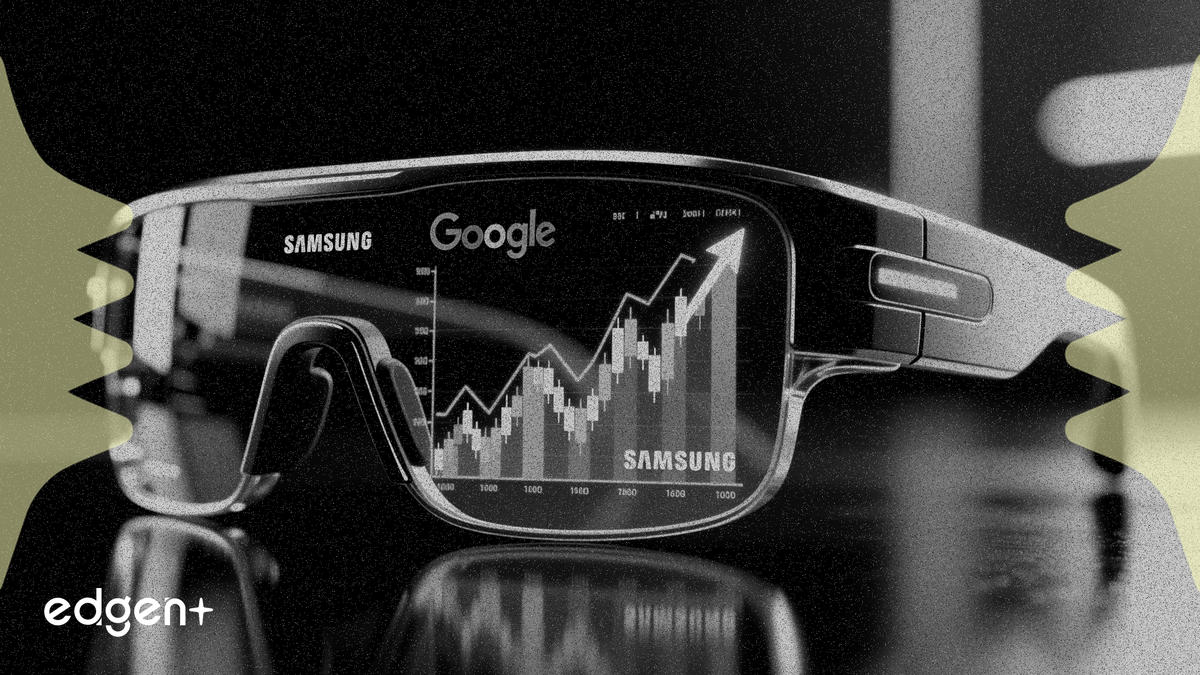
(P1) The smart glasses market has a new heavyweight contender, as Google, Samsung, and Warby Parker Inc. form an alliance that sent Warby Parker’s stock up 2.7 percent. The partnership directly challenges Meta Platforms Inc.'s early dominance in the nascent category.
(P2) The collaboration was detailed during Google's I/O 2026 developer conference, where the company laid out its renewed ambitions for wearable technology and augmented reality, according to conference reports.
(P3) The partnership unites Google's AI and software prowess through its Android XR platform, Samsung's manufacturing scale, and Warby Parker's direct-to-consumer eyewear brand. Two versions are reportedly in development: a lightweight pair with a camera and microphone, similar to Meta's Ray-Ban glasses, and a more advanced model with an in-lens display for contextual information.
(P4) For investors, this alliance reshapes the competitive landscape. It creates a well-capitalized and vertically-integrated challenger that could slow Meta's momentum. For Warby Parker, a company trading at a forward P/E that reflects its traditional retail model, this deal offers a path into the high-growth tech hardware market, justifying the immediate 2.7% boost in its share price.
Google's Renewed Push into Face Computing
Google's return to smart glasses is built on years of development and lessons learned from the ambitious but commercially unsuccessful Google Glass, which first debuted at I/O in 2012. The new effort is powered by Android XR, a dedicated operating system for extended reality devices, and deeply integrated with Google's Gemini family of AI models.
At its I/O 2026 keynote, Google positioned its new hardware strategy as "AI-native computing from the ground up," a vision that extends beyond glasses to include new "Googlebook" laptops running a novel "Aluminium OS." This broader ecosystem suggests the smart glasses will be a key node in a network of interconnected, AI-powered devices, rather than a standalone product. The partnership also includes high-fashion brand Gentle Monster, signaling a focus on aesthetics to avoid the pitfalls of earlier, more conspicuous designs.
A Two-Pronged Product Strategy
The alliance is tackling the market with a dual-product strategy aimed at capturing different consumer segments. The first, a more accessible model, is expected to feature microphones, speakers, and a camera for hands-free interaction with Google's Gemini AI. This product will compete directly with the Meta-Ray-Ban glasses, which have proven a market for stylish, camera-equipped eyewear.
The second, more ambitious product, will feature a micro-display embedded in the lens. This allows for private, contextual information like turn-by-turn navigation or live language translation to be shown only to the wearer. This device represents a step toward true augmented reality and could serve as a development platform for the next generation of applications on Android XR. While Google confirmed the devices are coming in 2026, specific pricing and availability dates have not yet been disclosed. The success of this venture will depend on the trio's ability to integrate complex technology into a product that is both fashionable and genuinely useful, a challenge that has so far limited the market's growth.
This article is for informational purposes only and does not constitute investment advice.