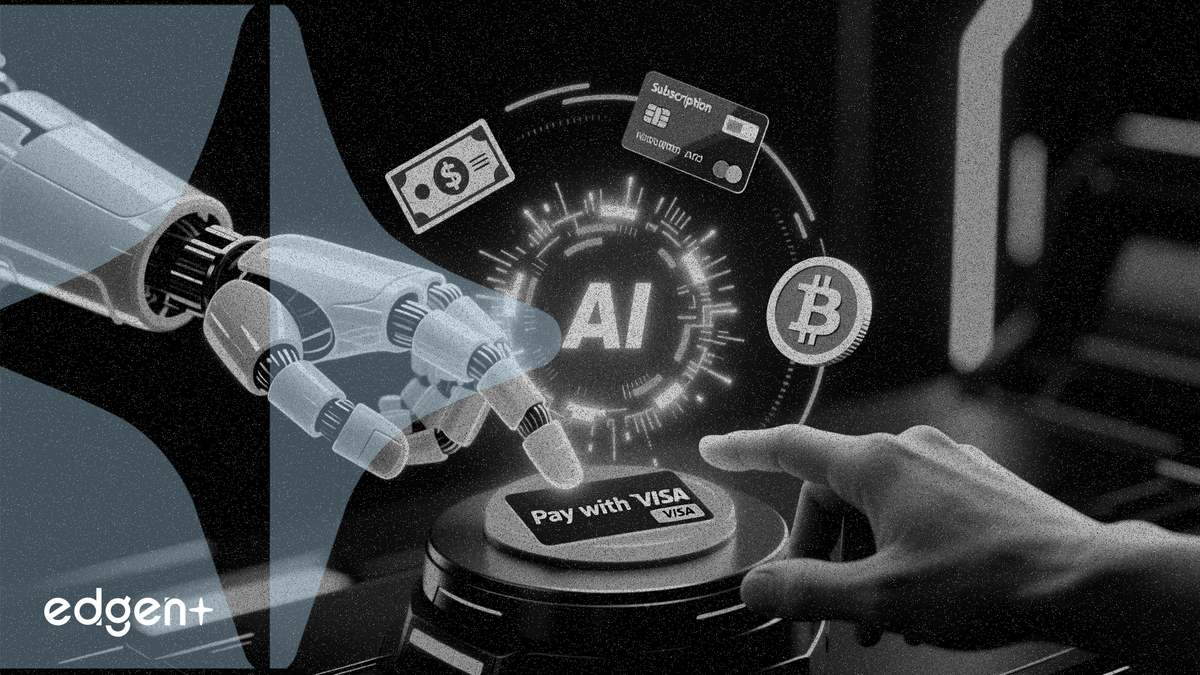
Visa is betting that the future of online shopping involves consumers doing less of it themselves — and that credit cards will become more important, not less, as AI agents take over the checkout.
Visa announced a strategic collaboration with OpenAI at the Visa Payments Forum in San Francisco on Wednesday, part of a broader initiative called "Visa Intelligent Commerce" that lets AI agents discover products, make purchasing decisions, and execute transactions autonomously on behalf of consumers. The initiative, branded "Find and Buy with AI," also includes Anthropic, Microsoft, Mistral AI, Perplexity, Stripe, and Samsung.
"Consumers are increasingly comfortable using AI to research products, but there's a significant gap between researching and actually allowing AI to spend money," said a Visa executive at the forum. "We're building the infrastructure to bridge that gap with security and control."
The Visa Intelligent Commerce framework integrates tokenized credentials and agent-specific APIs to create secure pathways for AI-driven transactions. Each AI agent receives its own secure payment credentials with authentication protocols and spending limits set by the human consumer. The system relies on tokenization, which replaces sensitive card details with unique digital tokens — the same technology Visa already uses for Apple Pay and other digital wallets. Each AI agent authenticates through Visa's infrastructure, adheres to consumer-defined security preferences, and executes purchases within pre-set boundaries.
Why this matters for investors
The partnership positions Visa at the center of what could become a major new payment channel. By working with OpenAI, Anthropic, and Mistral AI simultaneously, Visa isn't picking a single AI winner — it's building infrastructure that works across competing AI platforms, much as its card network works across competing banks. This multi-platform strategy mirrors how Visa's network effects have historically protected its moat: the more AI agents that use Visa credentials, the harder it becomes for merchants or AI platforms to switch.
For OpenAI, the deal adds transactional credibility at a time when the company is expanding beyond chatbot subscriptions into broader commerce use cases. The partnership could pressure rival payment networks — Mastercard and American Express — to form similar AI alliances or risk losing share in a nascent but fast-growing segment.
Stablecoin expansion adds another revenue stream
Separately, Visa's stablecoin settlement pilots are projected to reach a $7 billion annualized run rate by April 2026, according to the company. Those pilots now span nine blockchain networks and more than 130 programs targeting stablecoin-heavy transaction flows. Earlier this year, discussions surfaced about stablecoin wallet capabilities involving Sam Altman's World Network, the biometric identity project formerly known as Worldcoin.
The stablecoin expansion is the more immediately measurable revenue signal for Visa. A $7 billion annualized run rate across nine blockchains means Visa is actively validating stablecoin utility in institutional-grade payment flows — a development that could open additional fee income beyond traditional card processing.
Visa shares have gained roughly 12% year-to-date, outperforming the S&P 500's financial sector index. The partnership roster includes OpenAI, Anthropic, Microsoft, and Samsung — the kind of multi-party collaboration that tends to move slower than any single company would like, but one that gives Visa early positioning in what could be a transformative shift in how consumers pay.
This article is for informational purposes only and does not constitute investment advice.