Five months after U.S. special forces captured Nicolás Maduro in a nighttime Caracas raid, Venezuela's chavista regime remains firmly in control under acting leader Delcy Rodríguez — and the Trump administration has yet to secure a path to elections or resolve the country's $150 billion in sovereign debt.
"The interim authorities no longer pose the threat to the United States that they did before January, when Venezuela was an open base of operation for Iranian operatives and Cuban intelligence," Secretary of State Marco Rubio told the Senate Foreign Relations Committee last week. "But we have a lot of work to do. We are nowhere near where we want to get to."
Venezuela's oil exports have hit a seven-year high of just over 1 million barrels per day since Maduro's Jan. 3 capture, generating an estimated $8 billion in revenue between January and April, according to Roxanna Vigil, a fellow at the Council on Foreign Relations and former Treasury sanctions adviser. The U.S. controls the dollar flows, which are audited by KPMG, but Vigil warned the funds risk "feeding right back into corrupt structures" without accountability mechanisms.
The political standoff exposes a deeper tension inside the Trump administration. Rubio, who also serves as acting national security adviser — the first to hold both posts since Henry Kissinger — has pushed for free elections, press freedom and an independent electoral body. But President Trump has referred to Rodríguez as Venezuela's "president-elect" and framed success around whether American oil companies maintain profitable arrangements with the regime. Interior Minister Diosdado Cabello, who controls at least half of the country's security forces and its paramilitary apparatus, remains in place to ensure Rodríguez does not go soft.
The influence campaign that failed
The current impasse follows a failed bid by American business interests to steer U.S. policy toward a softer line on Caracas. Harry Sargeant III, a Florida asphalt magnate with extensive Venezuelan oil investments, recruited former Illinois congressman Aaron Schock in early 2025 to build a campaign that would elevate special envoy Richard Grenell over Rubio in shaping Venezuela policy, according to internal documents and messages obtained by POLITICO.
Sargeant paid Schock a $100,000 retainer, and Schock billed $185,000 in expenses over five months starting March 6. The group hired Paris-based public relations firm Forward Global for $422,500 to assemble a coalition of conservative influencers — including Students for Trump co-founder Ryan Fournier and Juanita Broaddrick — to push messaging that American energy interests in Venezuela should take priority over regime change. Chevron promised $100,000 to the effort, while Curaçao Refinery Utilities contributed $200,000 and two investment firms, Fidera and Mangart Capital Management, each put up $50,000.
The campaign secured op-eds from former Trump national security adviser Robert O'Brien and Republican strategist Andy Surabian, and enlisted far-right influencer Laura Loomer to target Mauricio Claver-Carone, the Rubio ally and special envoy to Latin America who had championed a sanctions-based "maximum pressure" approach. Claver-Carone left his post in May 2025, though he told the Miami Herald it was part of a longstanding plan based on his status as a temporary government employee.
The effort ultimately failed to shift policy. Rubio consolidated control after also becoming acting national security adviser, and the Chevron license expired on May 27, 2025, as scheduled. Sargeant's own Treasury Department license was revoked in March 2025 with a two-month wind-down period. The FBI is probing Sargeant's efforts, according to a Justice Department official who viewed internal correspondence collected by investigators.
Debt restructuring and the road ahead
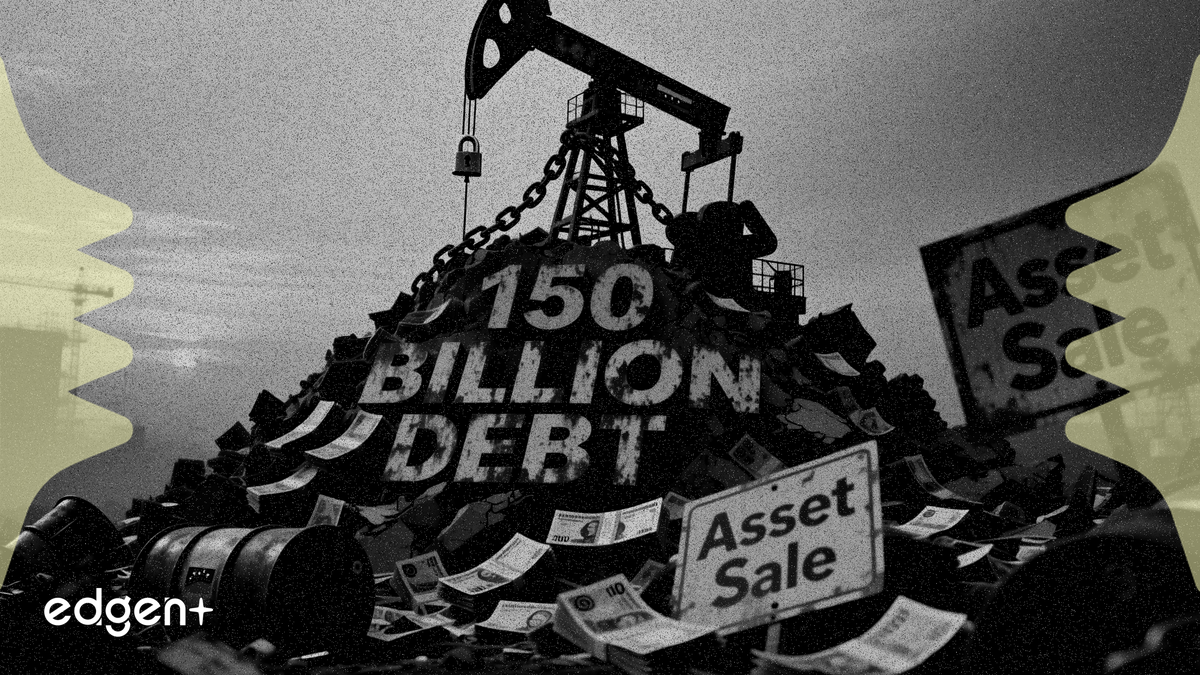
With Maduro in a New York jail awaiting trial on drug trafficking charges, the Trump administration is now facilitating negotiations between bondholders and the Rodríguez government to restructure more than $150 billion in debt owed by the state and state-owned oil company PDVSA. A Caracas delegation met with the International Monetary Fund in Washington in May.
The sequence has drawn criticism. "Only an elected government can rebuild the rule of law and make Venezuelan commitments," Wall Street Journal columnist Mary Anastasia O'Grady wrote, noting that more than 400 political dissidents remain behind bars and that those released are often subject to gag orders and travel bans.
The last time the U.S. pursued a similar strategy of military intervention followed by managed transition — in Iraq after 2003 — the reconstruction period lasted years and cost hundreds of billions of dollars. Venezuela's oil output, while at a seven-year high, still represents only about 1 percent of global supply, limiting its ability to meaningfully affect world energy markets even as the Iran war drives higher fuel prices.
Rubio acknowledged the scale of the challenge in House testimony Wednesday. "Ultimately, in order to truly transition, they have to have multi-party, free and fair elections," he said. "That takes time."
This article is for informational purposes only and does not constitute investment advice.