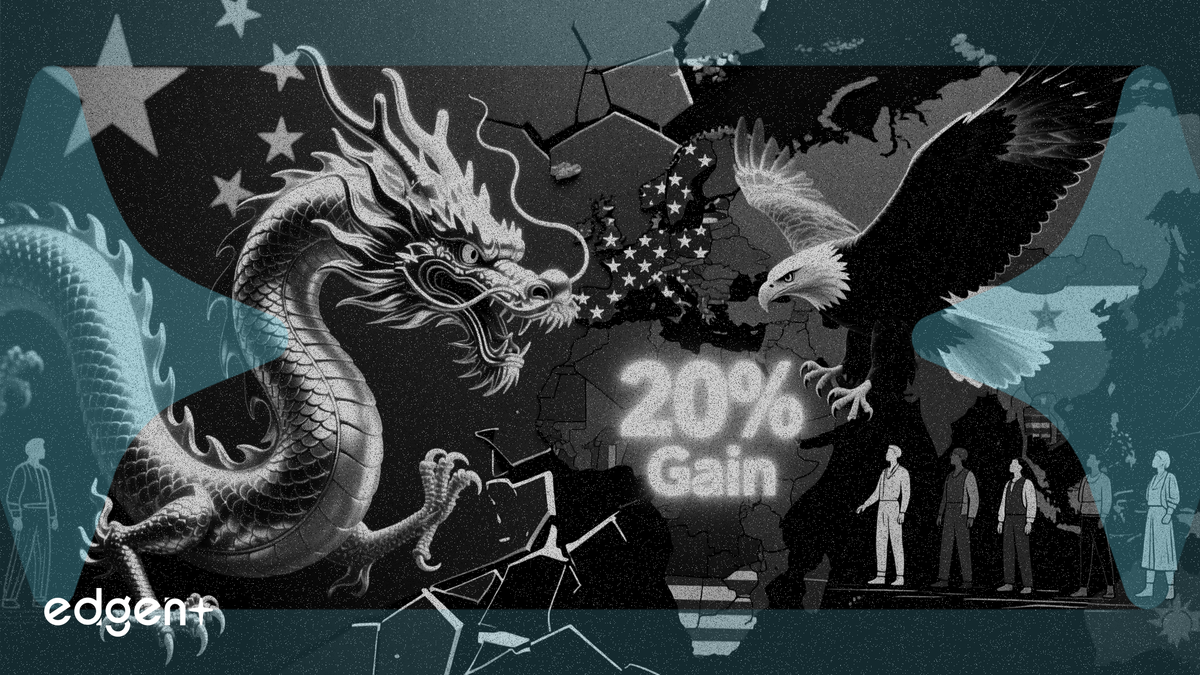
A pivot in US trade policy, marked by increased tariffs and unpredictability, has inadvertently strengthened China's negotiating position on the global stage, according to a recent analysis. This shift has pushed traditional American allies to secure alternative trade agreements, with Beijing emerging as a key beneficiary. The development comes as China's trade with Russia is projected to surpass $200 billion for the third year in a row, underscoring a deepening economic alignment that challenges US influence.
"Countries around the world are turning to Beijing as a primary trading partner not because China earned that position but because U.S. trade policy last year signaled that America is retreating from longstanding alliances," said Ryan Yonk, a senior research fellow at the American Institute for Economic Research. "We did not weaken Beijing’s negotiating position. We helped create it."
The data reflects this evolving landscape. While US-China trade has been fraught with tension and tariffs, China's trade with Russia has flourished, reaching $228 billion in 2025. This growing economic partnership is further solidified by projects like the Power of Siberia 2 gas pipeline, a key topic in recent talks between Vladimir Putin and Xi Jinping. The turmoil in the Middle East and the resulting energy market volatility have only increased China's interest in securing stable energy supplies from Russia, giving Moscow greater leverage in negotiations.
The core of the issue, as Yonk argues, is not just about tariffs but about the message they send. The unpredictability of US trade policy has created a vacuum that China is more than willing to fill. While the US still holds a strong economic hand, the current strategy may be backfiring by fostering the very alliances it seeks to counter. The solution, according to this view, lies not in protectionism, but in bolstering the competitiveness of the American worker and reassuring allies that the US remains a reliable partner.
A Tale of Two Strategies
The US approach has been one of confrontation, with tariffs aimed at protecting domestic industries and punishing China for what it deems unfair trade practices. However, this has had the unintended consequence of pushing allies to diversify their trade relationships. China, in contrast, has been patiently building a network of partnerships, using its economic might to offer an alternative to the US-led global order. This is evident in its recent purchase of 200 Boeing jets, a move that can be seen as both a concession and a sign of its growing economic clout.
The Russian Connection
The war in Ukraine and the subsequent Western sanctions on Russia have only accelerated this trend. With its access to European markets curtailed, Russia has turned to China as a crucial economic lifeline. The Power of Siberia 2 pipeline is a testament to this deepening relationship, promising to deliver a significant volume of Russian gas to China for years to come. This partnership provides both countries with a hedge against Western pressure and strengthens their position in a multipolar world.
This article is for informational purposes only and does not constitute investment advice.