
A top US general's assessment of a crippled Iranian military clashes with Tehran's defiant rhetoric and an ongoing blockade of the world's most critical oil chokepoint.
A top US general's assessment of a crippled Iranian military clashes with Tehran's defiant rhetoric and an ongoing blockade of the world's most critical oil chokepoint.
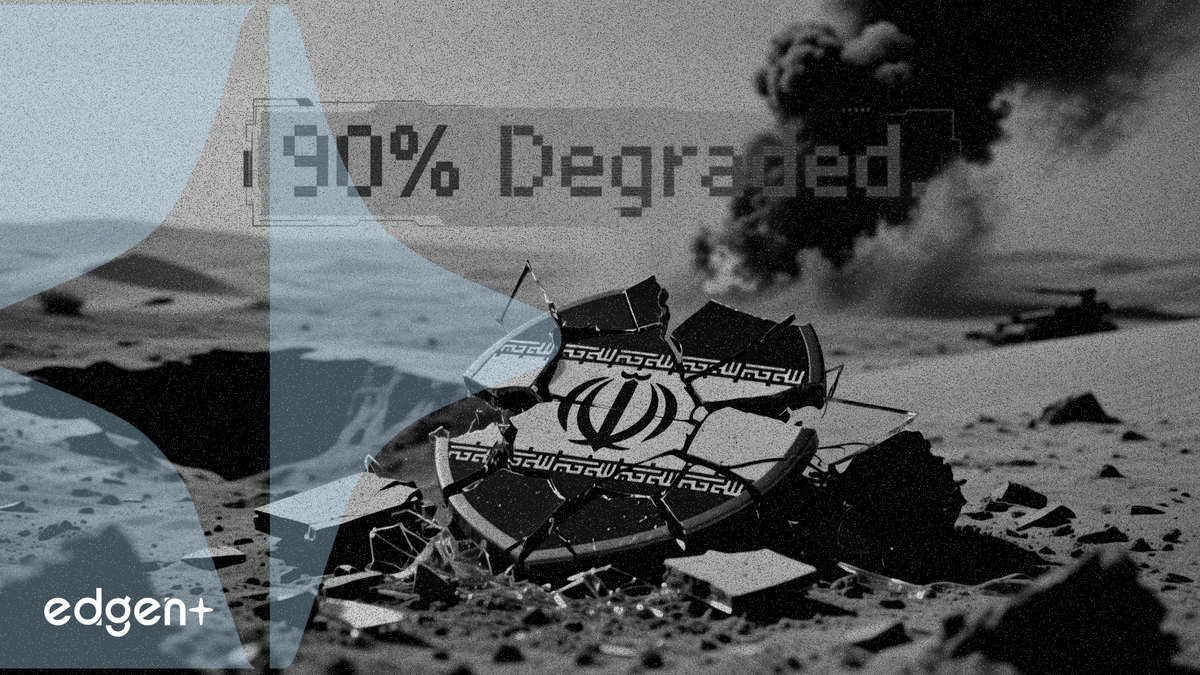
The United States has degraded Iran’s drone, missile, and naval forces by 90 percent in less than 40 days of combat, the head of U.S. Central Command told senators, offering the most detailed assessment of the conflict’s impact on Tehran’s military capabilities.
"By every measure, they are degraded significantly across all measures of national power," Adm. Brad Cooper said in testimony before the Senate Armed Services Committee on Thursday.
The US-led campaign eliminated over 90 percent of Iran’s 8,000 naval mines and shattered its command and control, Cooper said. He added that Iranian fast boat harassment in the Strait of Hormuz has fallen from a typical 20-40 vessels to just two or three, and that Iran's air force is "functionally and operationally irrelevant."
The testimony paints a picture of a crippled Iranian conventional military, potentially creating what Cooper called "an opportunity for a generational shift in the regional balance of power." However, the assessment comes as Iran maintains an effective blockade of the Strait of Hormuz, driving global energy prices higher and creating a tense standoff despite a fragile ceasefire.
The conflict, which began February 28 and led to a ceasefire on April 8, has sent shockwaves through global markets. Brent crude has risen approximately 50 percent to trade around $110.60 a barrel, contributing to inflationary pressures in the US and globally. In a sign of rising borrowing costs, the US recently auctioned 30-year bonds at a five percent yield for the first time in nearly two decades.
Despite its military losses, Iran continues to leverage its control over the Strait of Hormuz, a chokepoint for one-fifth of the world's oil supply. Tehran has deployed Ghadir-class mini-submarines and insists any deal must grant it sovereignty over the waterway, a demand other Gulf states reject. Iranian officials have stated they are preparing a mechanism to manage traffic that would favor "cooperating" parties, while denying access to others. The standoff has prompted proposals for ambitious, long-term alternatives, such as a 100-kilometer "Strait of Union" canal that would bypass Hormuz entirely.
Peace talks mediated by Pakistan have so far failed to produce a breakthrough. The US and Iran remain far apart, with reports of strict US conditions and Iranian complaints of no "tangible concessions." As the diplomatic impasse continues, Iran has ramped up its rhetoric, with Foreign Minister Abbas Araghchi warning of the war's cost to American households and broadcasting calls to arms on state television. The conflict has also seen a drone attack spark a fire at the UAE's Barakah nuclear plant, highlighting the region's fragility.
Adm. Cooper's assessment suggests Iran’s capacity to wage conventional warfare or arm its regional proxies like Hezbollah and Hamas has been severely curtailed for years to come. Yet, Tehran's willingness to absorb economic pain—with its currency near all-time lows and food inflation hitting 115 percent—while using the Hormuz chokepoint as leverage presents a complex challenge for the US. President Trump must now decide how to translate military gains into a diplomatic resolution that reopens the strait without escalating the conflict further.
This article is for informational purposes only and does not constitute investment advice.
