
A US pastor's detention in China has become a critical test of diplomatic leverage, complicating a high-stakes summit focused on stabilizing economic ties between the world’s two largest economies.
A US pastor's detention in China has become a critical test of diplomatic leverage, complicating a high-stakes summit focused on stabilizing economic ties between the world’s two largest economies.
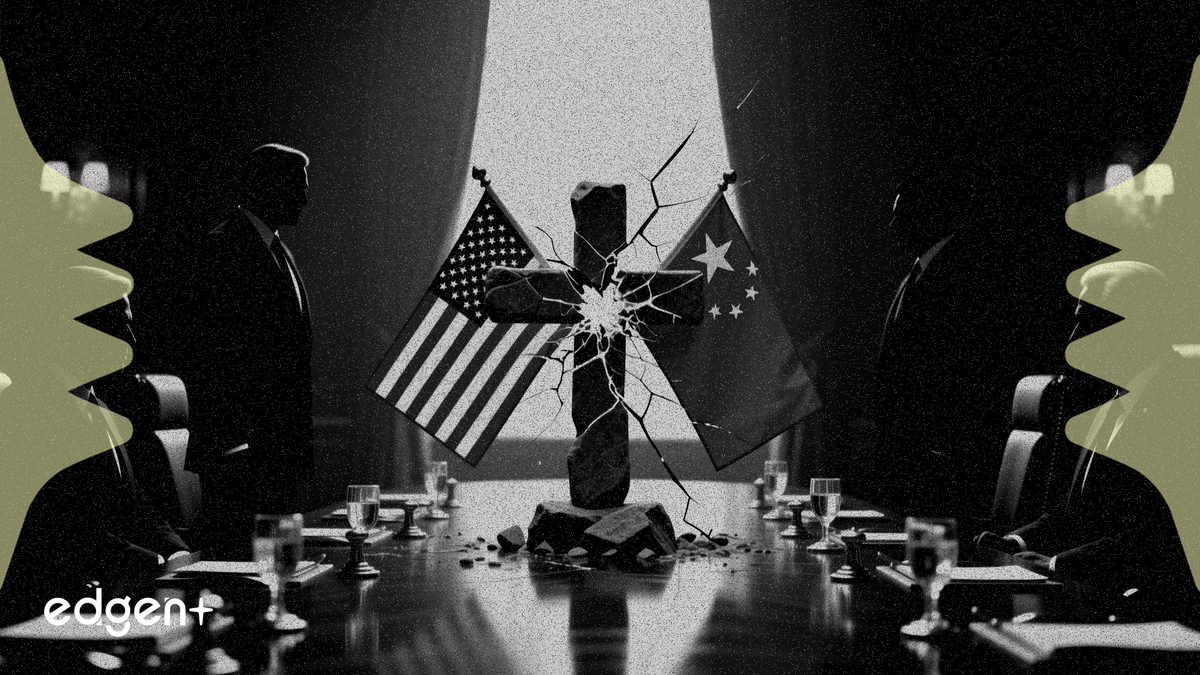
President Donald Trump’s state visit to Beijing, aimed at easing trade tensions and addressing the global fallout from the war in Iran, is now shadowed by the case of one imprisoned Christian pastor, highlighting the persistent friction between US human rights advocacy and strategic engagement with China.
"The fact that the president feels optimistic about getting my father out was just so incredible, like a miracle for us to hear,” Grace Jin Drexel, the pastor's daughter and an American citizen, said in an interview.
The summit's agenda includes extending a trade truce that halted a tariff war that saw rates on Chinese goods hit 145 percent, alongside discussions on AI security and China's role in mediating the Iran crisis. Yet, the October 2025 arrest of Pastor Ezra Jin for “illegal use of information networks” has drawn direct intervention from President Trump, who confirmed he raised the case with President Xi Jinping.
The focus on a single human rights case risks complicating fragile progress on the core economic agenda. For investors, it introduces a new layer of geopolitical risk, questioning whether Washington will prioritize diplomatic principles over securing trade stability and managing the estimated $600 billion in annual bilateral trade.
The detention of Ezra Jin, leader of the prominent unsanctioned Zion Church, has escalated from a domestic Chinese issue to a significant point of contention in US-China diplomacy. Jin was arrested in the southern city of Beihai in October 2025, years after his 1,500-member Beijing congregation was shut down by authorities in 2018. The church then moved its services online, reaching a national audience and drawing the ire of a government that has tightened control over religion and civil society under President Xi.
President Trump’s decision to personally advocate for Jin’s release follows a concerted campaign by the pastor’s family and bipartisan calls from the US Congress. “President Xi would like us not to,” Trump told reporters before the trip, acknowledging the sensitivity around the issue, which sits uncomfortably alongside a packed economic and security agenda.
Both leaders arrived at the summit seeking stability, but for different reasons. President Trump is focused on delivering economic wins ahead of the 2026 midterm elections, including increased Chinese purchases of US soybeans and a potential extension of a trade truce reached last October. For President Xi, the priority is managing China’s slowing economy, which is grappling with deflationary pressure and industrial overcapacity, without ceding ground in the long-term strategic competition with the US.
Analysts note that Beijing is playing a longer game. "Trump arrives seeking headline deals and visible momentum," wrote Zongyuan Zoe Liu, a senior fellow at the Council on Foreign Relations. "Xi is playing a longer game, focused on strategic patience rather than substantive compromise."
This dynamic is further complicated by global crises. Washington has sought Beijing’s help in persuading Iran to de-escalate threats to shipping in the Strait of Hormuz, a critical chokepoint for global oil supply. China, as the largest buyer of Iranian oil, has leverage but has so far been hesitant to act as a primary mediator. From Beijing's perspective, a US entanglement in the Middle East may serve as a useful distraction, diverting Washington’s attention away from China.
President Trump stated Friday that Xi was giving “serious consideration” to releasing the pastor, but no firm commitment has been announced. The outcome of this specific case will be a barometer for the future of US-China relations. A release could signal a willingness from Beijing to make concessions for the sake of a better economic relationship. Conversely, a continued detention would show that China’s domestic political priorities outweigh US diplomatic pressure, potentially leading to a chill in relations and renewed market uncertainty over the stability of the trade truce.
This article is for informational purposes only and does not constitute investment advice.
