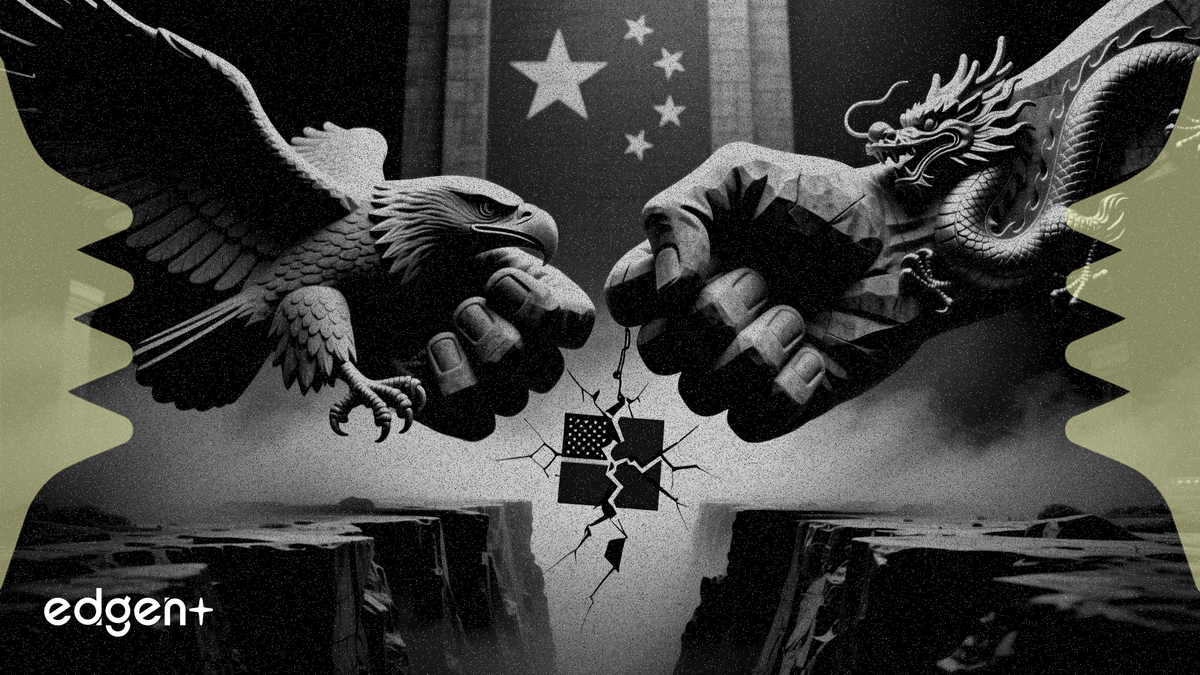
Conflicting signals from Washington and Beijing on May 16 have clouded the outlook for global trade, after China’s Ministry of Commerce claimed a preliminary deal to roll back some tariffs was reached while the Trump administration remained silent.
"The real issue is that are the Chinese interested in buying?" said Shehzad Qazi, managing director at China Beige Book International. "They have lots of serious concerns, apart from the fact that they have a self-sufficiency drive."
The announcement from China suggested a breakthrough following recent high-level talks, but the lack of confirmation from the U.S. side has left markets in a state of confusion. This follows a period where the US has approved sales of H200 chips to China for months, but China has not reciprocated with purchases, possibly holding out for more advanced technology like the Blackwell series chips.
The discrepancy casts doubt on the stability of the recent truce between the two economic giants. According to analysts, the US is actively reconstructing its tariff authority, suggesting that any agreements might be part of a larger, more aggressive strategy rather than a simple de-escalation. The future of billions of dollars in bilateral trade hangs in the balance, with the next move from the White House eagerly awaited by investors.
Tariff Wall Reconstruction
The Trump administration's intentions on tariffs remain a critical focus. Investigations are ongoing to reconstruct tariffs that were previously struck down. The administration's view is that these are not new tariffs but pre-existing ones being levied under new trade authorities. This "rebuilding" of the tariff wall suggests a long-term strategy of economic pressure on China, regardless of short-term agreements.
The Nvidia Sticking Point
A key point of contention is the sale of high-end technology, specifically Nvidia's AI chips. While the US has opened the door for sales of the H200 chip, China has shown little interest. This reluctance is seen as a strategic move, possibly to pressure the US for access to the even more powerful Blackwell chips. This technological standoff is a major factor in the broader trade negotiations and highlights China's push for self-sufficiency in critical technologies.
This article is for informational purposes only and does not constitute investment advice.