
Ukraine's second drone strike on Moscow's oil refinery in a week has exposed gaps in Russia's air defenses and pushed crude risk premiums higher.
Ukraine's second drone strike on Moscow's oil refinery in a week has exposed gaps in Russia's air defenses and pushed crude risk premiums higher.
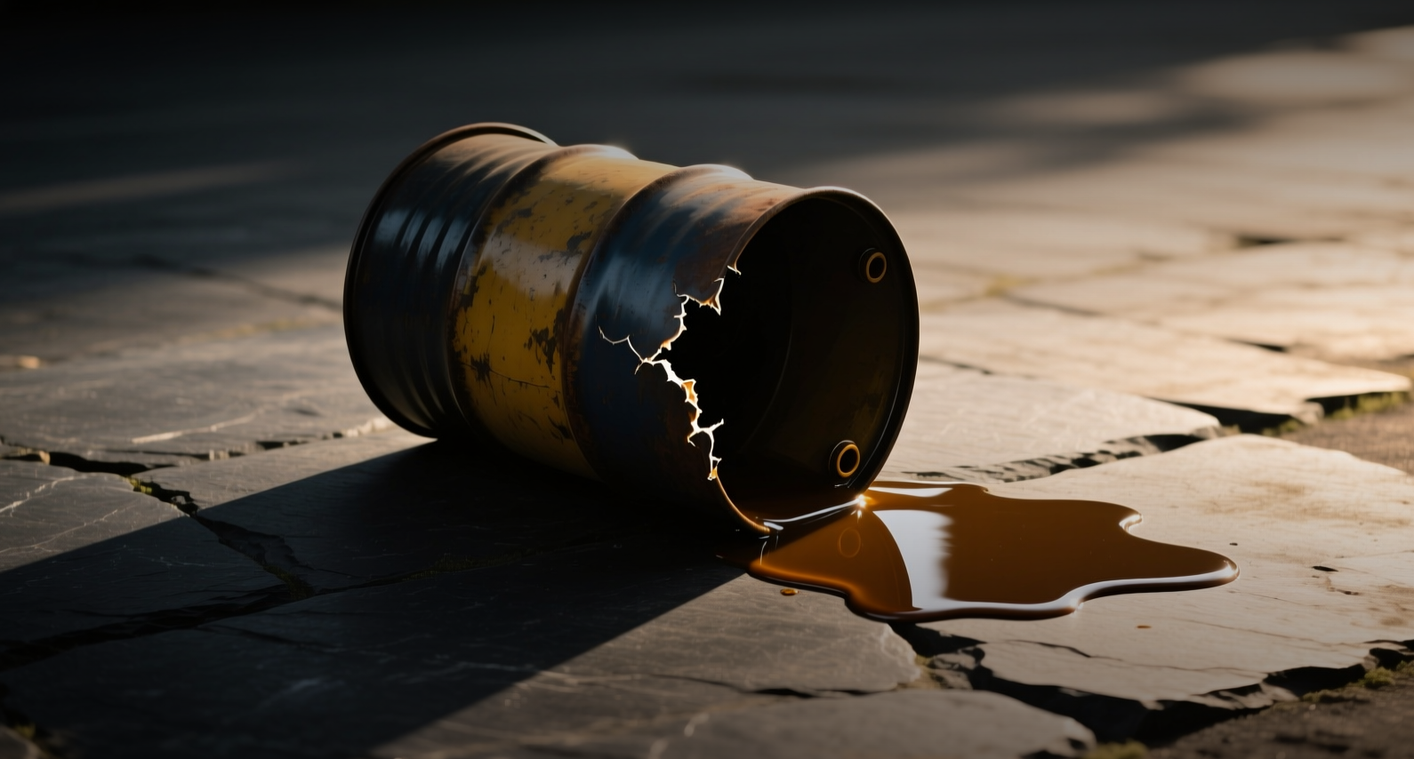
Ukraine struck the Moscow Oil Refinery for the second time in five days on June 18, sending plumes of black smoke over the capital and disrupting flights at four airports, as Kyiv escalated its campaign against Russian energy infrastructure.
"One of the most popular questions asked by Muscovites this morning is 'What is going on?' I can answer. Your country started a war of aggression against ours," Ukrainian Foreign Minister Andrii Sybiha posted on X. "Now that you know what's going on, ask Putin when he is planning to end it."
Russia's Defense Ministry said air defenses shot down 555 drones across the country overnight, with Moscow Mayor Sergei Sobyanin reporting 180 intercepted around the capital alone. The Moscow Oil Refinery in the southeastern Kapotnya district — which supplies about a third of the region's fuel — was hit for the second time since Tuesday, when a previous strike had already halted operations, according to industry sources. Flights were suspended at all Moscow airports, and Sheremetyevo, the city's busiest, was evacuated. More than 500 flights were delayed or canceled, the Russian business daily Kommersant reported.
The attack marks a turning point in the war's fourth year. Ukraine has increasingly targeted Russia's energy infrastructure with long-range drones, and the Kremlin's struggle to defend its own capital — protected by three rings of air defenses — signals a shift in battlefield momentum. Russia, the world's third-biggest oil producer, is now set to import fuel by sea this month as it manages a gasoline shortage caused by Ukrainian strikes on refineries, according to industry sources. Gas station chains in multiple regions have introduced purchase restrictions, with independent outlet Agentstvo reporting that one in four stations now limits what drivers can buy.
President Volodymyr Zelenskyy framed the attack as retaliation for Russian strikes that damaged the nearly 1,000-year-old Kyiv Pechersk Lavra monastery earlier this week. "If Ukraine burns, your Moscow will burn," he said in a voice message to reporters. Zelenskyy has accepted an unconditional ceasefire demanded by U.S. President Donald Trump, but Russian President Vladimir Putin has refused, and U.S.-led peace efforts have stalled.
Putin was in Kazan, 430 miles east of Moscow, hosting leaders from the Association of Southeast Asian Nations when the attack unfolded. Kremlin aide Yuri Ushakov said the strikes pushed back the prospect of any direct contacts between Putin and Zelenskyy, according to the Interfax news agency. Russian hawk Konstantin Malofeyev urged the Kremlin to respond with nuclear weapons, writing on Telegram that the military was "fighting at half-strength in a gentlemanlike way."
The geopolitical risk premium on crude oil has widened as traders price in the growing vulnerability of Russian refining capacity. The last time a major Russian refinery was taken offline by a strike, Urals crude differentials widened by $2 to $3 a barrel relative to Brent, according to trading sources. With Moscow now importing fuel — a reversal for a major exporter — the supply disruption is feeding directly into global diesel and gasoline markets. European diesel margins, already elevated heading into summer driving season, face additional upward pressure from the loss of Russian export volumes.
Beyond oil, the attack has implications for Russian sovereign credit markets. The cost of insuring Russian debt against default, as measured by credit default swaps, has risen in recent weeks as the energy infrastructure campaign intensifies. Defense stocks in Europe and the U.S. have also rallied, with investors pricing in higher military spending by NATO allies responding to the escalation.
Zelenskyy held talks in Brussels on Thursday with NATO and European Union leaders, where German and Ukrainian defense ministers signed an agreement to jointly develop an air defense system to counter ballistic missiles. EU foreign policy chief Kaja Kallas said on X that "Russia is on the back foot: militarily, economically and politically," adding that "now is the time to provide Ukraine with even greater support."
The question now is whether Putin will escalate further or seek an off-ramp. The last time Russian territory came under sustained attack — during the Chechen conflict in the 1990s — the Kremlin responded with overwhelming force, not diplomacy. But the economic calculus has shifted: Ukraine's drone campaign is now directly constraining Russia's ability to produce and export oil, its primary source of foreign revenue. If the strikes continue at the current pace, Russia's refining capacity could face permanent impairment, reshaping global fuel supply flows for years.
This article is for informational purposes only and does not constitute investment advice.
