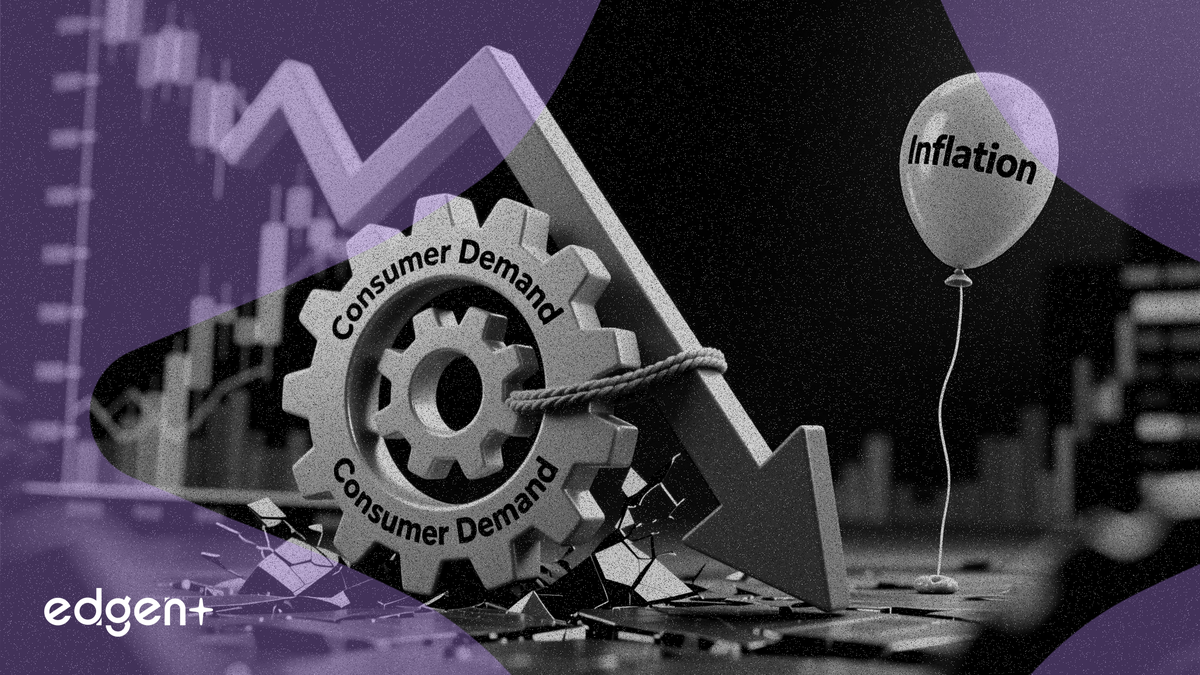
The US stock market’s record-setting run faces a greater threat from a cooling consumer than from inflation, according to UBS Group’s chief strategist, who warns that the market is overlooking signs of weakening spending power.
"If the market today is worried about inflation, then tomorrow it should be worried about growth," Bhanu Baweja, chief strategist at UBS, said in a note. He argues that with real disposable income growth approaching zero and fiscal stimulus fading, the consumer engine that has propped up the economy is set to sputter.
The warning comes as the 10-year Treasury yield has climbed above 4.60 percent and the 30-year yield has surpassed 5 percent for the first time since 2007. While many interpret this as a sign of persistent inflation driven by oil prices over $100 a barrel, Baweja offers a different take.
The core of the issue, according to Baweja, is that the market has become overly focused on the capital spending boom in AI data centers while ignoring the vulnerability in consumer and financial sectors. A slowdown in spending could trigger a significant downward revision of the growth expectations currently priced into equities, threatening the rally.
A Contrarian Reading of the Bond Market
Baweja’s analysis diverges from the consensus view that rising bond yields are purely an inflation story. He contends the move is primarily driven by a rise in real yields, reflecting strong nominal growth in the US economy—growth that has been heavily dependent on the consumer. This makes the current situation precarious; if the consumer falters, the very foundation of this perceived strength collapses.
Other strategists share the concern about rising yields, regardless of the cause. Strategists at Morgan Stanley have noted that a 10-year Treasury yield crossing above 4.50 percent acts as a "noticeable headwind" for stocks, as it makes safer government debt more attractive than riskier equities and raises borrowing costs across the economy.
Geopolitics and Shifting Allocations
The economic backdrop is further complicated by the war between the United States and Iran, which began on February 28 and has effectively closed the Strait of Hormuz, disrupting an estimated 20 percent of global oil supplies. Baweja believes the market is underpricing this risk, suggesting six-month oil futures may be too low given the diplomatic stalemate.
In this environment, Baweja anticipates that large-cap stocks will outperform small-caps, and growth stocks will be favored over value. He maintains a preference for US equities over their European counterparts, despite headwinds on both continents. Central banks globally, including the Federal Reserve and the Bank of England, have adopted a cautious "wait-and-see" approach, holding interest rates steady as they navigate the cross-currents of geopolitical tension and uncertain growth.
This article is for informational purposes only and does not constitute investment advice.