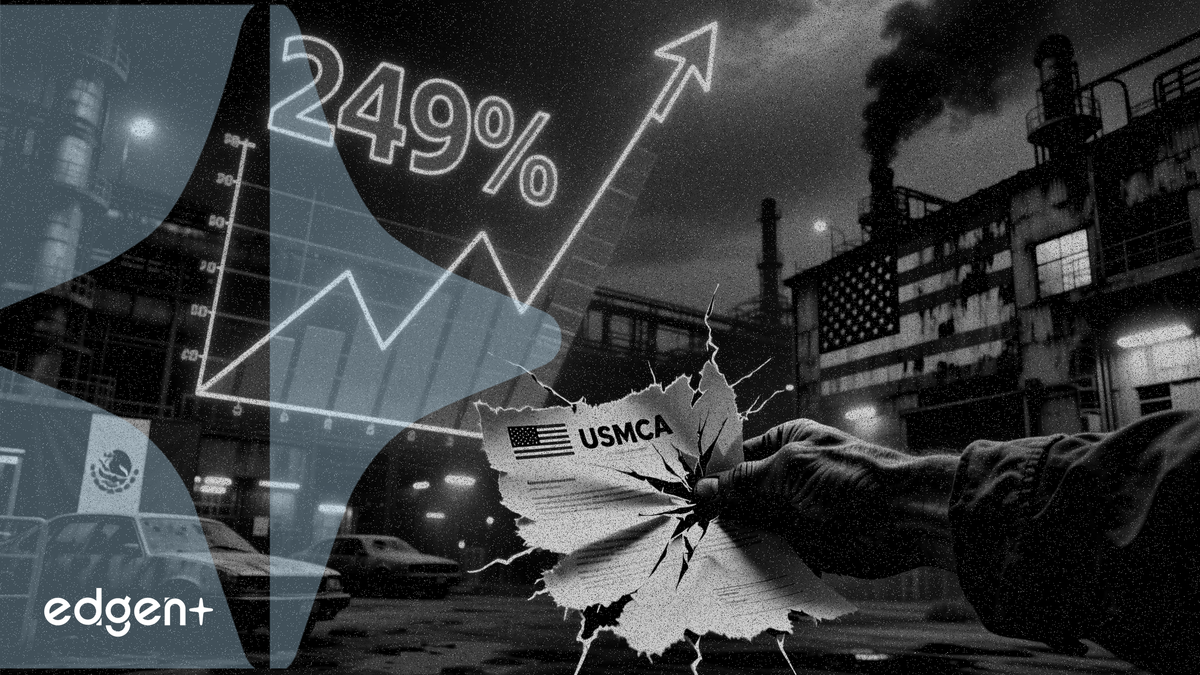
The United Auto Workers union is demanding a radical overhaul of the North American trade deal, citing a production ratio where Mexico builds 249 vehicles for every 100 sold domestically, compared to just 61 in the U.S.
The United Auto Workers union is calling for a complete overhaul or U.S. withdrawal from the US-Mexico-Canada Agreement, arguing the deal has created a "free trade disaster" that benefits corporations at the expense of American jobs. The union's demands come just ahead of a formal review of the trade pact, with UAW President Shawn Fain slamming the agreement for incentivizing the offshoring of auto production to Mexico.
"What finally killed the American dream is what we call the free trade disaster, and if we want to revive the American dream, we need to fix our broken trade deals, starting with the USMCA,” UAW President Shawn Fain said during a webinar on May 21.
The union highlighted a stark imbalance in automotive production and sales ratios across the three nations. For every 100 vehicles sold in the U.S., only 61 are produced domestically. In contrast, Mexico produces 249 vehicles for every 100 sold in its home market, a disparity the UAW says proves the deal is "broken." The current U.S. tariff rate on automotive goods from Mexico and Canada has hovered near 10% since new tariffs were introduced last April, a significant increase from the average of 0.5% before President Trump's second term. These duties have cost businesses approximately $20 billion.
The UAW's hardline stance introduces significant uncertainty for the North American auto industry ahead of the USMCA's scheduled review by July 1. The union is proposing a "build here to sell here" policy via automaker-specific quotas, a unified North American minimum wage to match U.S. autoworker pay, and stronger labor rights enforcement. If these demands are not met, the UAW has called for the U.S. to exit the pact, a move that could disrupt deeply integrated supply chains and significantly raise vehicle prices for American consumers.
The UAW's proposals represent a fundamental challenge to the logic that has governed North American trade for three decades. Since the implementation of the North American Free Trade Agreement (NAFTA) in 1994, which the USMCA replaced in 2020, the auto industry has built a deeply intertwined continental supply chain. Automakers warn that unwinding this system with high tariffs and production quotas would be a costly shock to the system.
Industry executives argue that higher trade barriers would inevitably lead to higher car prices, further squeezing affordability for U.S. buyers. Foreign-based automakers have reportedly warned the Trump administration they might pull their most affordable models from the U.S. market entirely if the deal is scrapped.
A New Era of Tariffs
President Trump, despite signing the USMCA, has also expressed dissatisfaction with the agreement and has already imposed a 25% tariff on the non-U.S. content of vehicles that previously qualified for duty-free treatment. This has rattled automotive supply chains and added billions in costs. The administration is publicly considering either ditching the USMCA or splitting it into separate bilateral deals with Canada and Mexico.
The UAW, while politically endorsing Kamala Harris, has found common cause with Trump's protectionist trade policies. "There is no future for the U.S. working class that doesn’t address the free-trade disaster," Fain stated, echoing a sentiment that has fueled both union anger and Trump's political base.
The union's demands include a framework for a wage floor to improve pay in Mexico, arguing that low wages and weak labor law enforcement south of the border create an unfair incentive for companies to move production. The UAW asserts that while the USMCA included a rapid response mechanism to address labor violations, it has proven to be weak and resulted in insufficient remedies for workers.
The upcoming talks in Mexico City on May 25, which will not include Canada, are the first step in a formal review process. While the nominal deadline for the three countries to recommit to the deal is July 1, the agreement is set to remain in place until 2036 unless a member nation actively withdraws.
This article is for informational purposes only and does not constitute investment advice.