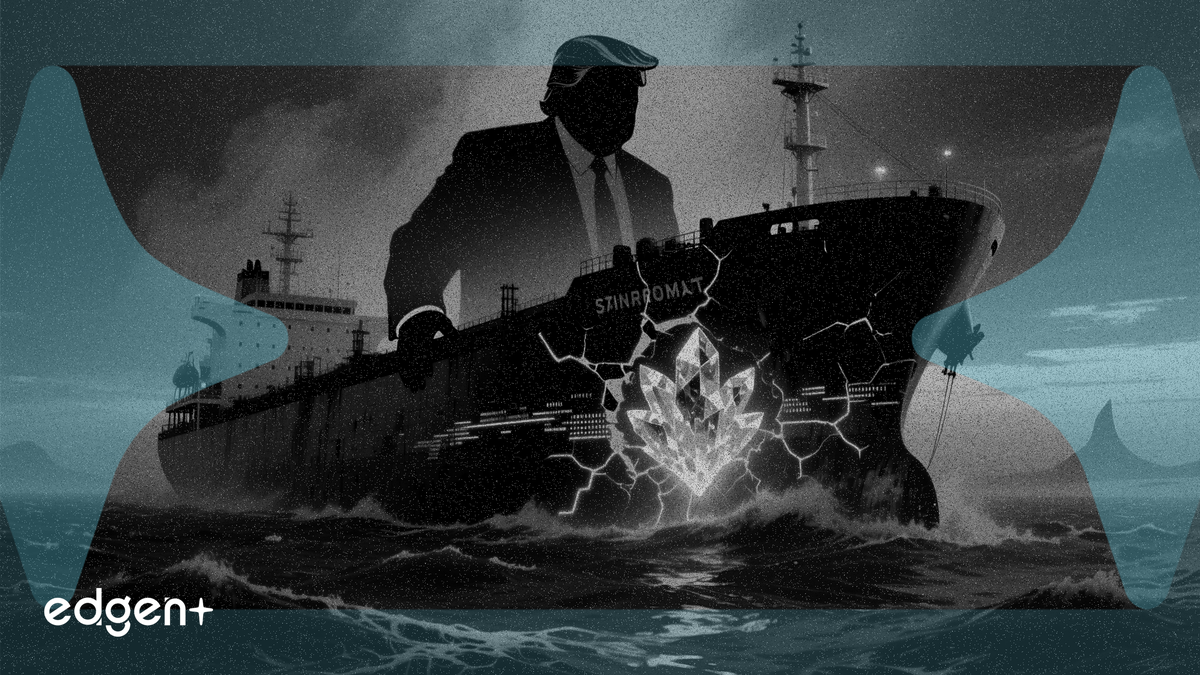
President Donald Trump announced a secret US military mission that escorted more than 200 commercial vessels and 100 million barrels of oil through the Strait of Hormuz, claiming American forces now control the strategic waterway.
Trump said in a social media post Wednesday that he ordered the mission last month to support oil tankers and other commercial ships transiting the narrow chokepoint, which connects the Persian Gulf to the Gulf of Oman and handles about 21% of global oil trade.
"Today, I am pleased to announce that this effort has resulted in more than 100 million barrels of oil making its way through the Strait, and into the open market," Trump wrote. He added that more than 200 commercial vessels safely navigated the waterway during the operation.
"This wildly successful effort is because the United States of America controls the Strait of Hormuz — not Iran," Trump said, declaring that Iran's military had been defeated and its economy was "lost."
The announcement comes amid escalating military confrontation in the region. The US launched overnight strikes against roughly 20 Iranian-linked targets after a US Apache helicopter was downed near the Strait of Hormuz, according to earlier reports. Trump separately told Fox News he was close to ordering new strikes against Iranian power plants and bridges, accusing Tehran of stalling during negotiations.
The Strait of Hormuz is one of the world's most critical energy chokepoints. An estimated 17 million barrels of oil and liquefied natural gas pass through daily, making any disruption a direct threat to global supply. The last major escalation in the strait occurred in 2019, when attacks on tankers and Saudi Aramco facilities temporarily knocked out about 5.7 million barrels per day of production and sent Brent crude surging 15% in a single week.
Oil Supply and Market Implications
The successful passage of 100 million barrels through the strait could ease near-term supply concerns and reduce the geopolitical risk premium embedded in crude prices. Brent crude has fluctuated in recent weeks as traders weighed the risk of a full blockade against diplomatic efforts to de-escalate. If the US can credibly guarantee safe passage, the supply-side risk that has supported prices may partially unwind.
However, the assertion of US control over the waterway represents a significant escalation in the region's power dynamics. Iran has long threatened to close the Strait of Hormuz in response to sanctions or military action, and any perceived loss of Iranian influence could provoke retaliatory measures — including mine-laying operations, drone attacks on tankers, or asymmetric naval tactics that are difficult to defend against.
Broader Regional Conflict
The Strait of Hormuz operation is unfolding against a wider conflict that has already exacted a heavy toll. Israeli strikes in Lebanon have killed 3,696 people since March, according to reports, and Trump has warned Israeli Prime Minister Benjamin Netanyahu that the US would not support a renewed war with Iran. "I said, 'Bibi, you better be careful, or you will be on your own very soon,'" Trump told Axios.
The White House did not provide additional details about the military operation, and the claims could not be independently verified. Iranian authorities have not yet responded.
The last time the US conducted overt military operations in the Strait of Hormuz was in 2019-2020, following the killing of Iranian General Qassem Soleimani. During that period, the US and its allies formed the International Maritime Security Construct to patrol the waterway, but oil flows were never fully interrupted. The current operation, if confirmed, would represent a far more direct assertion of US military control over the chokepoint.
This article is for informational purposes only and does not constitute investment advice.