

A new government-backed mortgage policy allows homebuyers to use Bitcoin for down payments, but the high-risk program requires holding collateral worth 250% of the loan.
A new government-backed mortgage policy allows homebuyers to use Bitcoin for down payments, but the high-risk program requires holding collateral worth 250% of the loan.
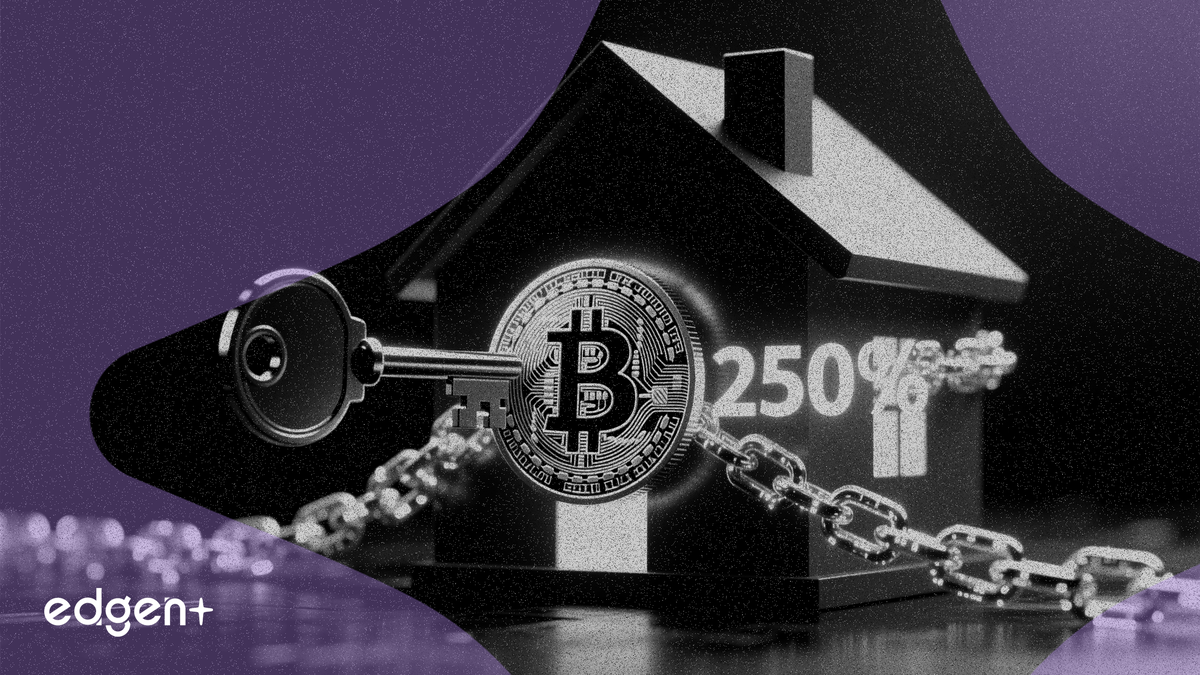
The Trump administration has given a green light for government-sponsored enterprise Fannie Mae to accept cryptocurrency as collateral for home loans, a policy shift that integrates digital assets into the U.S. housing market starting in June.
"This isn’t just evaluating your holdings. It’s also saying, hey, how about a zero-down loan?" said Joel Larsgaard, co-host of the "How to Money" podcast, who called the structure a "house of cards."
Under the new rules, lender Better will be the first to offer mortgages where the down payment is financed by a loan against a borrower's Bitcoin or stablecoin holdings. Due to crypto’s price volatility, the program requires collateral worth at least 250 percent of the down payment loan, a steep requirement designed to cushion the lender from market swings.
The policy creates a direct channel between the volatile crypto market and the stability of the housing sector, exposing homeowners to the risk of margin calls on their primary residence. A significant crypto market downturn could force borrowers to either sell their digital assets into a falling market, add more cash, or face foreclosure.
The high collateral requirement introduces a new form of permanent risk for homebuyers. For a typical $400,000 home with a 20 percent down payment of $80,000, a borrower would need to pledge approximately $200,000 in Bitcoin as collateral. Given Bitcoin's history of severe drawdowns—including a 28 percent drop over the past year—a standard market correction could have severe consequences.
A 60 percent decline in the value of the pledged Bitcoin would wipe out $120,000 of the collateral's value, leaving only $80,000 to back the $80,000 loan. This event would trigger an immediate margin call, forcing the homeowner to liquidate other assets or risk losing both their crypto and their home. This contrasts sharply with traditional securities-backed loans against assets like Amazon (AMZN) stock, which are backed by tangible corporate assets.
Financial commentators suggest the product trades the one-time difficulty of saving for a cash down payment for a persistent solvency risk. The interest rates on these crypto-backed mortgages may also be higher than conventional loans, further increasing the cost to the borrower.
For most potential buyers, a more prudent path remains to sell the necessary amount of cryptocurrency, pay the associated capital gains tax, and use the resulting cash for a traditional down payment. This strategy converts the ongoing volatility risk into a predictable, one-time tax event. The new program is only potentially viable for investors whose crypto holdings represent a small fraction of their total liquid net worth, allowing them to absorb a margin call without risking their home.
This article is for informational purposes only and does not constitute investment advice.
