
President Donald Trump called off planned military strikes on Iran for the second time in two months, claiming a breakthrough in nuclear talks that could end a 3-month-old war and reopen the Strait of Hormuz.
President Donald Trump called off planned military strikes on Iran for the second time in two months, claiming a breakthrough in nuclear talks that could end a 3-month-old war and reopen the Strait of Hormuz.
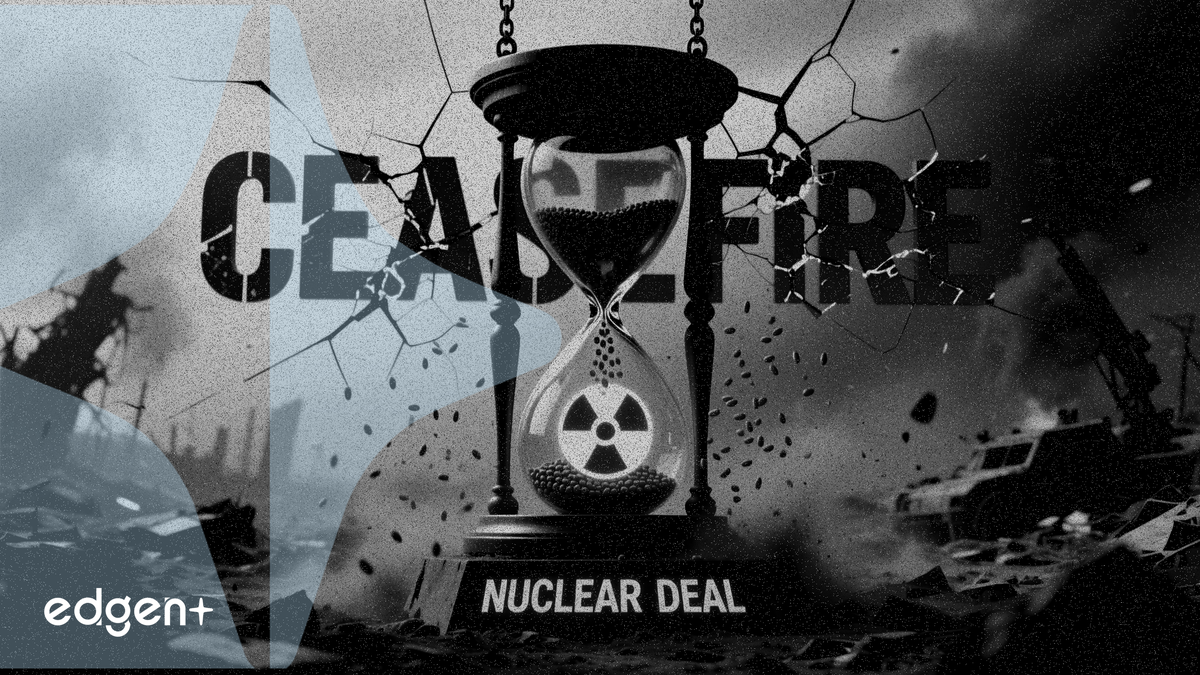
President Donald Trump called off planned military strikes on Iran for the second time in two months, claiming a breakthrough in nuclear talks that could end a 3-month-old war and reopen the Strait of Hormuz.
Trump's whipsaw from threatening to seize Iran's Kharg Island oil terminal to announcing a "great settlement" within hours underscores the volatility of a conflict that has removed about a fifth of the world's seaborne crude supply from global markets.
"The problem is that the contradictions in America's position has caused turbulence to this process," Esmail Baghaei, spokesperson for Iran's Foreign Ministry, said on state television Thursday night, confirming that most of the deal text is finalized but no final conclusion has been reached.
Trump posted on Truth Social that he had "cancelled the scheduled strikes and bombings against Iran this evening" after "discussions with the Islamic Republic of Iran have been brought to the highest level of Iranian leadership and approved." The naval blockade will remain in force until the transaction is finalized, he said, with a signing to be announced "shortly." Earlier Thursday, Trump had threatened to hit Iran "VERY HARD TONIGHT" and seize Kharg Island, through which 90 percent of Iran's oil exports pass, before acknowledging in a Fox News interview: "I don't know that America has the stomach for it."
The war, which began Feb. 28 when the US and Israel jointly attacked Iran, has driven Brent crude above $90 a barrel and pushed global food prices higher as Iran's stranglehold on the Strait of Hormuz — a waterway carrying about a fifth of the world's energy supply — crimped shipments. A durable ceasefire would remove the single largest geopolitical risk premium in oil markets, though the US has already disabled nine merchant vessels attempting to evade its blockade, including one strike that killed three Indian sailors.
The rapid shift from escalation to negotiation follows a pattern that has defined Trump's approach to the conflict. In April, he warned Iran that "a whole civilization will die tonight" before extending a fragile ceasefire. This time, the about-face came after two days of back-and-forth strikes between the US and Iran that had pushed the Middle East closer to full-scale war.
Iran's parliamentary speaker, Mohammad Bagher Qalibaf, responded to Trump's earlier threats by warning that "wrong strategies and impulsive decisions" would wreak havoc on energy markets and "create an endless quagmire that you will be stuck in for years."
Nuclear program remains the core sticking point
The main obstacle to a final agreement remains Iran's nuclear program, which the US and Israel fear could produce an atomic weapon. Tehran insists its enrichment activities are peaceful. Trump said Thursday that a nuclear understanding had been reached "conceptually," though no details were provided. Netanyahu's office said Israel is not a party to the emerging agreement, signaling potential friction ahead.
The last time the US and Iran approached a nuclear framework — the 2015 Joint Comprehensive Plan of Action — oil markets priced in a gradual return of Iranian supply of about 1 million barrels per day over 12 to 18 months. A similar dynamic could unfold if a deal is finalized, though the current blockade and the nine vessel interdictions suggest any restart of Iranian exports would face logistical hurdles.
Beyond oil, the conflict has cascading economic effects. US Treasury Secretary Scott Bessent said the US would extract funds from frozen Iranian accounts to offset costs to American allies and any tolls Iran has imposed on ships transiting the Strait of Hormuz. For ordinary Iranians, the war has compounded triple-digit food inflation and mass job losses, with one 25-year-old student in the city of Babol telling the Associated Press that "everything is going wrong and there is no hope among the people."
Iran has insisted that any deal must also end fighting in Lebanon between its ally Hezbollah and Israel, a condition that complicates negotiations given Netanyahu's stated goal of destroying the militant group. The coming days will test whether Trump's latest claim of a breakthrough translates into a signed agreement — or becomes another false start in a conflict that has already seen multiple.
This article is for informational purposes only and does not constitute investment advice.
