

President Trump has secured a commitment from China for 200 Boeing aircraft, though details remain unconfirmed by the manufacturer or Beijing.
President Trump has secured a commitment from China for 200 Boeing aircraft, though details remain unconfirmed by the manufacturer or Beijing.
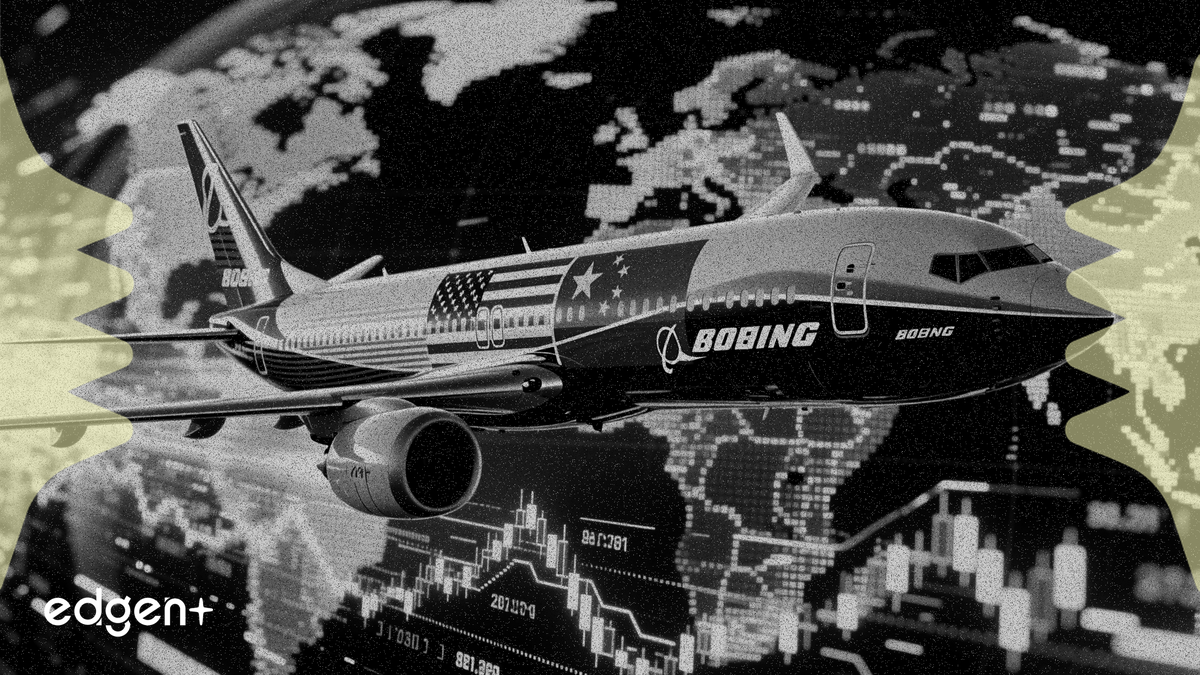
President Donald Trump announced a sweeping trade deal with China centered on an initial purchase of 200 Boeing aircraft, the first such order in nearly a decade, aiming to reset economic relations between the two superpowers. The agreement, unveiled during the president’s trip to Beijing, also includes significant commitments on agricultural products and the establishment of new bilateral bodies to manage trade and investment.
"All that we have is really what the president has told the world that China has agreed to," said Bonnie Glaser, managing director of the German Marshall Fund’s Indo-Pacific program, highlighting the uncertainty surrounding the announcements. Neither Boeing nor the Chinese government immediately issued statements to confirm the aircraft purchase.
According to a White House fact sheet, the deal charters two new institutions: the U.S.-China Board of Trade and the U.S.-China Board of Investment. Beyond the 200-plane order for Boeing (NYSE: BA), which Trump said could expand to 750 aircraft, the agreement includes a commitment from China to purchase at least $17 billion per year of U.S. agricultural products from 2026 to 2028 and restores market access for U.S. beef. The planes would require 400 to 450 engines from General Electric (NYSE: GE).
The deal, if it materializes as announced, could provide a critical lifeline to Boeing after a tumultuous period and mark a significant, if tentative, de-escalation in U.S.-China trade friction. However, the lack of immediate confirmation from either Boeing or the Chinese government leaves the market waiting for concrete purchase orders to validate the administration's claims.
The announced agreement would be a landmark for Boeing, which has not had a major aircraft commitment from China since 2017. The U.S. aerospace giant has faced significant headwinds, including a 2024 incident where a door plug blew off a 737 Max, intensifying scrutiny over its production quality. The company also endured a costly eight-week strike by machinists in the fall of that year. A substantial order from China would signal a crucial reopening of a market that was once central to its long-term growth strategy.
The framework laid out by the White House extends beyond industrial goods. China will reportedly address U.S. concerns regarding supply chain shortages of rare earths and other critical minerals. The agreement also sees China resuming imports of U.S. poultry and lifting suspensions on over 400 U.S. beef facilities, reopening key markets for American farmers that had been subject to restrictions.
This article is for informational purposes only and does not constitute investment advice.
