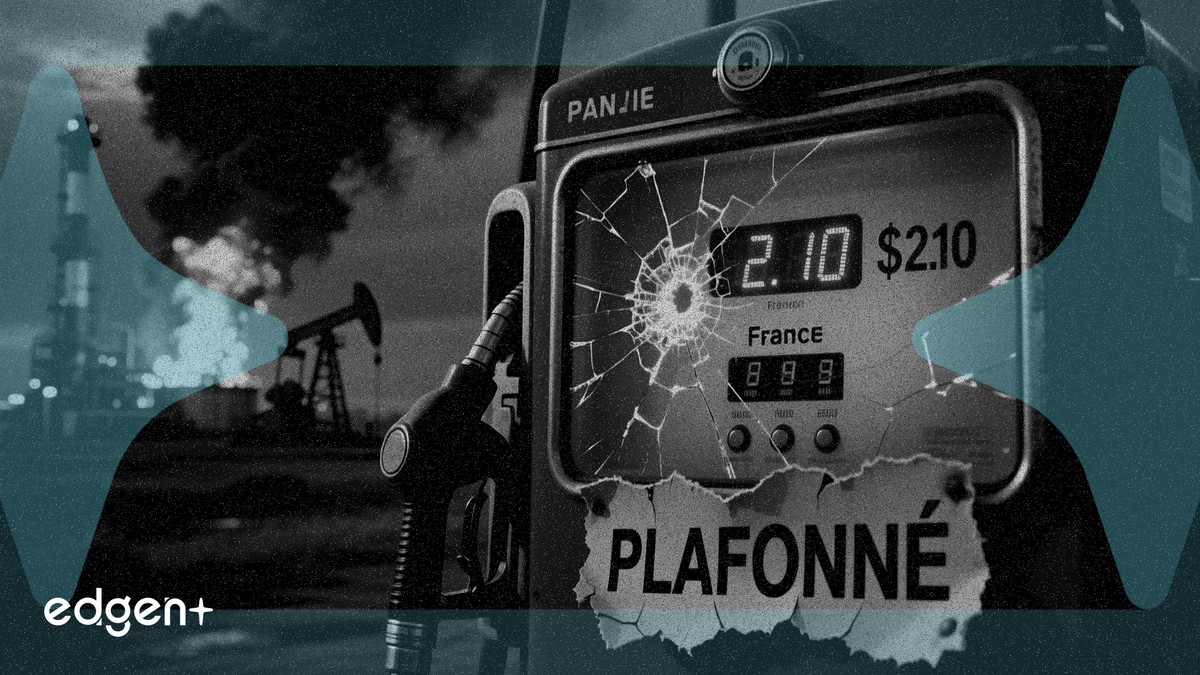
TotalEnergies is the only Western oil major to cap retail fuel prices, a bet that social license in France is worth more than short-term downstream profit.
PARIS — TotalEnergies capped gasoline at €1.99 a liter across its 3,300 French stations for the duration of the Iran war, a unilateral move that pits social stability against market economics.
"We do it because we are French. We are quite patriotic in that regard," Chief Executive Patrick Pouyanné told French media, before warning the caps would end if lawmakers impose a windfall tax on refineries.
The cap translates to roughly $8.50 a gallon, more than double the $4.22 U.S. average, with the difference largely reflecting French fuel taxes. TotalEnergies' first-quarter profit surged 51% to $5.8 billion, intensifying calls from far-left politicians for a windfall tax on energy companies benefiting from elevated crude prices.
The caps cost TotalEnergies between €400 million and €500 million in 2023, a price the company appears willing to pay to avoid the kind of mass protests that paralyzed France during the yellow-vest movement. But smaller operators without refinery networks say they cannot match the capped prices and are preparing an unfair competition complaint.
A Patriotic Pledge With a Price Tag
Pouyanné, sometimes called chef d'état bis — head of state B — for his role representing French interests abroad, has extended the caps from the 2023 Ukraine war era into the current Middle East conflict. The company raised its ceiling from €1.94 a liter for all fuels to €1.99 for gasoline and €2.25 for diesel after the Iran escalation. Last month, Pouyanné temporarily lowered the diesel cap to €2.09 over several holiday weekends, including France's Mother's Day. "And for Father's Day a bit later in June, so we don't leave anyone out," he said to applause at the company's shareholder meeting.
TotalEnergies' French employees own 5.5% of the stock, making them the second-largest investor after BlackRock, a fact that aligns the company's retail pricing strategy with its shareholder base. The company operates thousands of gas stations outside France but has reserved the caps exclusively for French drivers.
Rivals Cry Foul as Political Pressure Mounts
American oil majors Exxon Mobil and Chevron have largely resisted pressure over rising pump prices, with the Trump administration opting for a federal gas tax suspension rather than industry jawboning. Shell Chief Executive Wael Sawan criticized price caps as counterproductive, saying they blunt demand signals needed to manage supply disruptions. "If you don't manage it that way, what you're going to have is significant challenges in the long run," Sawan said.
Smaller French operators say TotalEnergies' integrated refinery network gives it an unfair advantage, allowing it to absorb costs that independent stations cannot. A group of operators is preparing a complaint to French authorities alleging unfair competition, arguing the caps are below wholesale market prices in many regions.
"The French don't like seeing people who are too rich, and they don't like seeing Total make so much money," said Jean-Pierre Favennec, an economist based in Paris.
Pouyanné has drawn a clear red line: the caps are contingent on the absence of a windfall tax. "If there's a windfall tax on refineries, we can't keep the caps at our stations in France," he said. With far-left lawmakers still demanding such a tax and TotalEnergies' profit at $5.8 billion for a single quarter, the tension between political pressure and corporate strategy is far from resolved.
This article is for informational purposes only and does not constitute investment advice.