
A decontamination company and a nuclear-grade graphite developer are merging to create the first publicly traded pure-play on America's atomic energy revival.
A decontamination company and a nuclear-grade graphite developer are merging to create the first publicly traded pure-play on America's atomic energy revival.
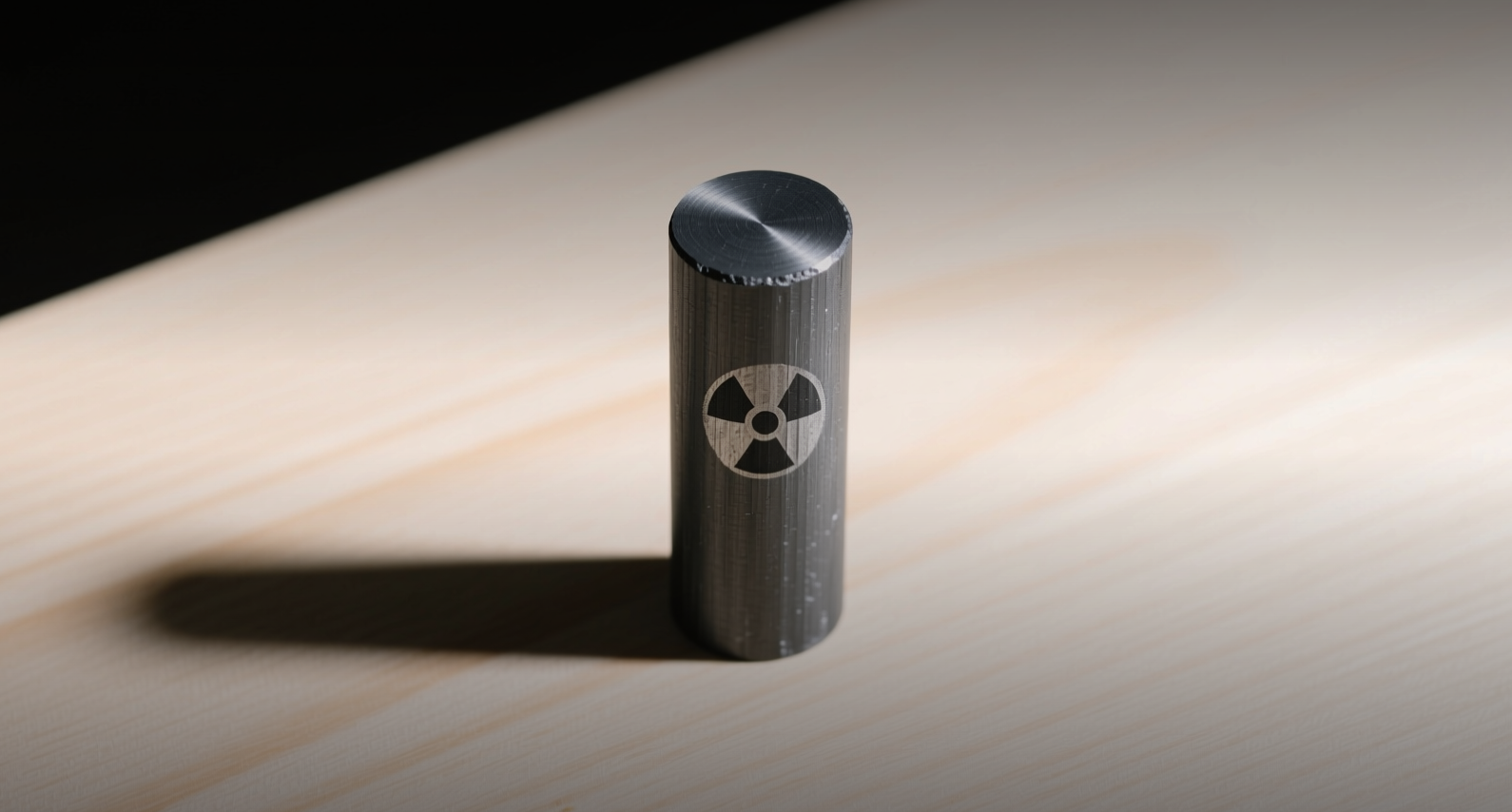
A decontamination company and a nuclear-grade graphite developer are merging to create the first publicly traded pure-play on America's atomic energy revival.
TOMI Environmental Solutions agreed to merge with Carbonium Core in a deal that will create a publicly traded company focused on supplying graphite and rare earth metals for advanced nuclear reactors, betting on surging electricity demand from artificial intelligence data centers.
"This transaction represents the beginning of an exciting new chapter," said Dr. Halden Shane, Chief Executive Officer of TOMI. "Advanced nuclear power is increasingly recognized as a key solution, and Carbonium Core aims to become a critical supplier to that ecosystem."
Under the agreement announced June 29, Carbonium shareholders will receive shares of TOMI common stock and a new series of non-voting preferred stock that, after conversion, will give them about 90 percent of the combined company's outstanding common shares. The transaction, expected to close in the third quarter of 2026, requires at least $10 million in financing and Nasdaq listing approval.
The deal comes as U.S. data center electricity demand is projected to climb from roughly 176 terawatt-hours toward as much as 580 terawatt-hours by 2028, according to industry estimates, with hyperscalers and utilities increasingly turning to nuclear as a reliable, carbon-free baseload source. Spot uranium briefly topped $100 per pound in early 2026 before settling into the high-$80s, reflecting a structural supply crunch after years of underinvestment.
Why Nuclear-Grade Graphite Matters
Nuclear-grade graphite is an irreplaceable component in many advanced reactor designs, including small modular reactors (typically under 300 MWe, factory-built) and high-temperature gas-cooled reactors. Carbonium Core's strategy centers on building a domestic supply chain for this material, which is currently dominated by foreign producers. The company holds proprietary purification technology licensed from Oak Ridge National Laboratory and says its vertically integrated production model — from domestic feedstock sourcing through graphitization and shaping — allows it to fill a critical gap in the U.S. supply chain.
"Becoming a public company marks a defining step in our mission to rebuild a critical materials supply chain that the United States cannot afford to leave in foreign hands," said Suren Ajjarapu, Chairman and Chief Executive Officer of Carbonium Core. "Nuclear-grade graphite is irreplaceable in the advanced reactors now being deployed to power AI, data centers, and reindustrialization."
The combined company also plans to explore cross-platform technology integration, including incorporating carbonium graphene into TOMI's disinfection robotics platforms and redesigning its biosafety drones to use carbonium core, graphene, and lithium components.
A Sector at an Inflection Point
The nuclear renaissance spans both conventional large reactors and a new generation of small modular reactors designed to power individual facilities, including data centers, directly. The United States and Canada each unveiled plans this month to build 10 new reactors, while the Trump administration announced billions in federal loans to kickstart a domestic nuclear buildout. China, meanwhile, added 34 gigawatts of nuclear capacity over the past decade and is on track to overtake the United States and France as the world's biggest nuclear energy producer within 10 years.
For investors, the nuclear theme carries distinct risk profiles across the sector. Blue-chip producers like Cameco Corp. offer exposure through established mining operations and long-term supply contracts. Domestic-focused developers such as Uranium Energy Corp. align with the push to rebuild American uranium supply chains. Reactor technology developers including NuScale Power and Oklo Inc. represent the higher-risk, higher-reward end tied to regulatory approvals and construction timelines that extend across the decade. Carbonium Core, as a pre-production materials developer, sits at the early-stage end of that spectrum, with its value tied to executing on permitting, financing, and the transition from development toward commercial-scale production.
The combined company plans to advance commercialization efforts, pursue strategic partnerships, and evaluate opportunities to support emerging advanced reactor programs throughout North America and international markets. Management believes the nuclear sector is entering a multi-decade growth cycle driven by energy security concerns, artificial intelligence infrastructure buildout, industrial reshoring, and government support for domestic critical materials production.
This article is for informational purposes only and does not constitute investment advice.
