Elon Musk's Terafab project merges Tesla's AI hardware with SpaceX's manufacturing in a $55B bet on chip independence.
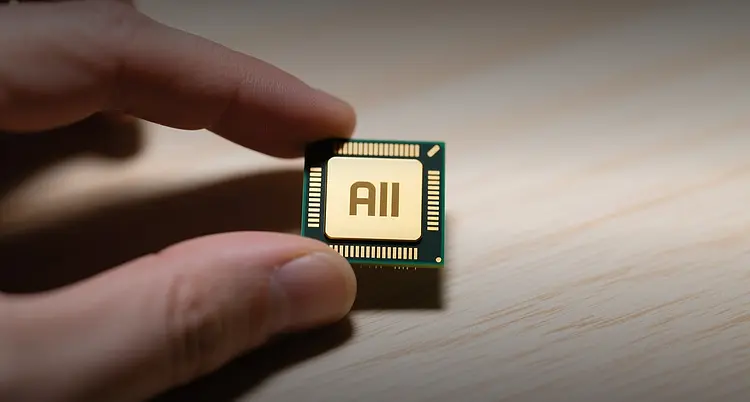
Elon Musk's Terafab semiconductor project, backed by a $55 billion joint investment from Tesla and SpaceX, aims to produce chips for autonomous driving, humanoid robots and data centers using Intel's 14A process technology.
"Without the Terafab, we don't have the chips, and we need the chips, so we build the Terafab," Musk said when he first described the project last year.
The facility, planned for Grimes County, Texas, could see total investment rise to $119 billion across multiple phases. The project is led by SpaceX executive John Federspiel, who manages a team of 34 engineers and managers and reports directly to Musk. Tesla has hired Gary Jiang, a 17-year Intel veteran who oversaw the transfer of Intel's 18A process from development to high-volume manufacturing at Fab 52 in Arizona, to serve as Terafab director.
The deepening integration between Tesla and SpaceX — with executives holding dual roles at both companies and at Musk's AI startup xAI — has fueled speculation about a potential merger, especially after SpaceX's recent IPO valued the company at roughly $2.25 trillion. Tesla shareholders face a question of whether their capital is funding a project not fully under Tesla's control.
SpaceX Takes the Lead on Chip Manufacturing
The Terafab team's composition shows SpaceX's dominant role. Federspiel also serves as senior director of Starlink product engineering, and the team includes SpaceX veterans with more than a decade at the rocket company, including hardware engineer Michael Ornstein and materials engineering head Lora Ulmer. Only two of Federspiel's direct reports — Jiang and chief epitaxy engineer Daner Abdula — are Tesla employees, both hired in recent months.
The organizational structure reflects a broader pattern. Charlie Kuehmann has led materials engineering at both Tesla and SpaceX for more than a decade. Tesla's AI software vice president, Ashok Elluswamy, and vehicle software senior director, Silvio Brugada, also hold roles at xAI, which merged with SpaceX earlier this year. Employees at both companies have privately discussed a potential merger as increasingly plausible, according to The Information.
Intel's 14A Process and the Talent Pipeline
Terafab's reliance on Intel's 14A manufacturing process represents a strategic departure from SpaceX's current chip suppliers, Samsung and TSMC. Musk has described the Terafab chips as "inexpensive and highly efficient" compared with Nvidia's offerings, though the company has not disclosed test conditions for those claims.
Intel's involvement extends beyond process licensing. Four former Intel employees have joined the Terafab team in recent months, including Jiang, whose experience spans 22nm, 14nm and 10nm-class process technologies at Intel's Ocotillo campus in Arizona. Tesla is building a $3 billion semiconductor research and development center at its Texas campus with a pilot line capable of processing several thousand wafers per month. If that pilot line succeeds, SpaceX is expected to construct a full-scale high-volume manufacturing fab.
The project carries significant implications for the semiconductor supply chain. TSMC and Samsung, which currently supply SpaceX's chips, could lose wafer revenue if Terafab reaches its target of producing the equivalent of a terawatt of computing power annually. Nvidia, whose GPUs dominate AI training workloads, faces a potential long-term competitor backed by Musk's capital and Intel's process technology. Tesla trades at roughly 22 times forward earnings, and the Terafab's success could reduce its reliance on external chip suppliers by billions of dollars annually — though the project remains years from volume production.
This article is for informational purposes only and does not constitute investment advice.