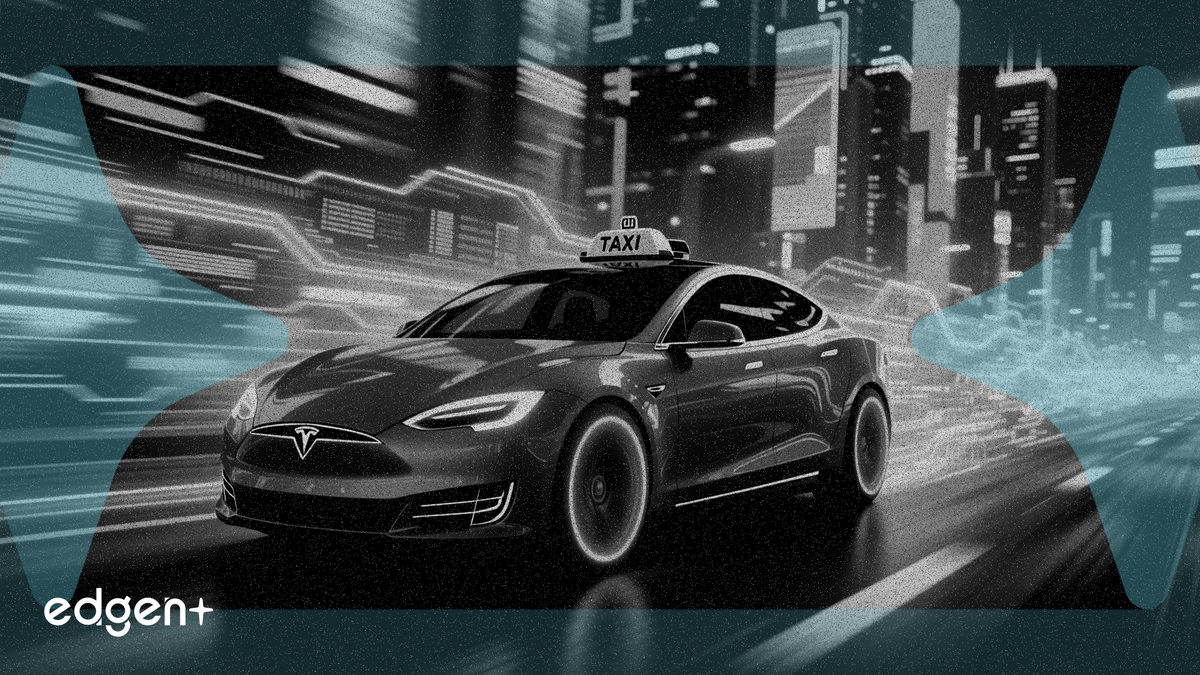
(P1) Tesla Inc. is accelerating its push into autonomous mobility, with Chief Executive Elon Musk projecting the widespread availability of its robo-taxis across the U.S. by the end of 2026. The updated timeline, announced Monday, aims to position Tesla as a leader in artificial intelligence and autonomous vehicles, a market with increasingly fierce competition.
(P2) "We already have some vehicles operating with no people inside and no safety monitors in three cities in Texas and we probably will be widespread in the U.S. by the end of this year," Musk said, speaking remotely at the Samson International Smart Mobility Summit in Tel Aviv.
(P3) The new forecast is an acceleration from Musk's comments in April, when he suggested the service would be in "a dozen states or more later this year." Tesla currently has a limited fleet of unsupervised robo-taxis in Dallas, Houston, and Austin. The company's Full Self-Driving (FSD) technology, which underpins the robo-taxi service, has over 1.3 million subscribers paying $99 per month.
(P4) The aggressive timeline is critical for Tesla to justify its valuation and maintain its lead against a growing field of competitors. The move puts pressure on rivals like Xpeng Inc., which recently began mass production of its own robo-taxis in Guangzhou. For investors, Musk's pronouncement reinforces the narrative that Tesla is more than a car company, with its future tied to high-margin software and AI.
Competitive Landscape Heats Up
Musk's focus on autonomy extends beyond cars. In the same interview, he highlighted the progress of his brain-computer interface company, Neuralink, which he claimed is developing "Jesus-level technologies" to restore sight and mobility. This broader ambition in AI is reflected in the competitive pressure Tesla faces.
While Tesla's FSD has a significant data advantage from its large fleet, competitors are not standing still. In China, a key market for Tesla, Xpeng's recent move into mass production of robotaxis presents a direct challenge. Tesla's stock has been sensitive to news from the region, recently rallying on expectations of FSD approval in China before falling 4.7% amid a broader market selloff. On Monday, shares declined 2.6% to $411.29.
The Road to Full Autonomy
Musk has a history of making bold predictions about autonomous driving, and the 2026 timeline is among his most ambitious. The company's ability to scale its operations from three cities in Texas to a widespread national network in under a year will depend on regulatory approvals and the technology's performance.
"The car feels like it is sentient," Musk said. "As we improve the software, you can feel the sentience growing in the car. It feels alive." This personification of the technology highlights Musk's confidence, but the path to a fully autonomous, "sentient" fleet will be closely watched by regulators, competitors, and investors alike.
This article is for informational purposes only and does not constitute investment advice.