

Taiwan fired 32 rockets from US-supplied HIMARS launchers into the Taiwan Strait on Wednesday, the first such live-fire test directed toward China, as a $14 billion American arms package remains frozen in Washington.
Taiwan fired 32 rockets from US-supplied HIMARS launchers into the Taiwan Strait on Wednesday, the first such live-fire test directed toward China, as a $14 billion American arms package remains frozen in Washington.
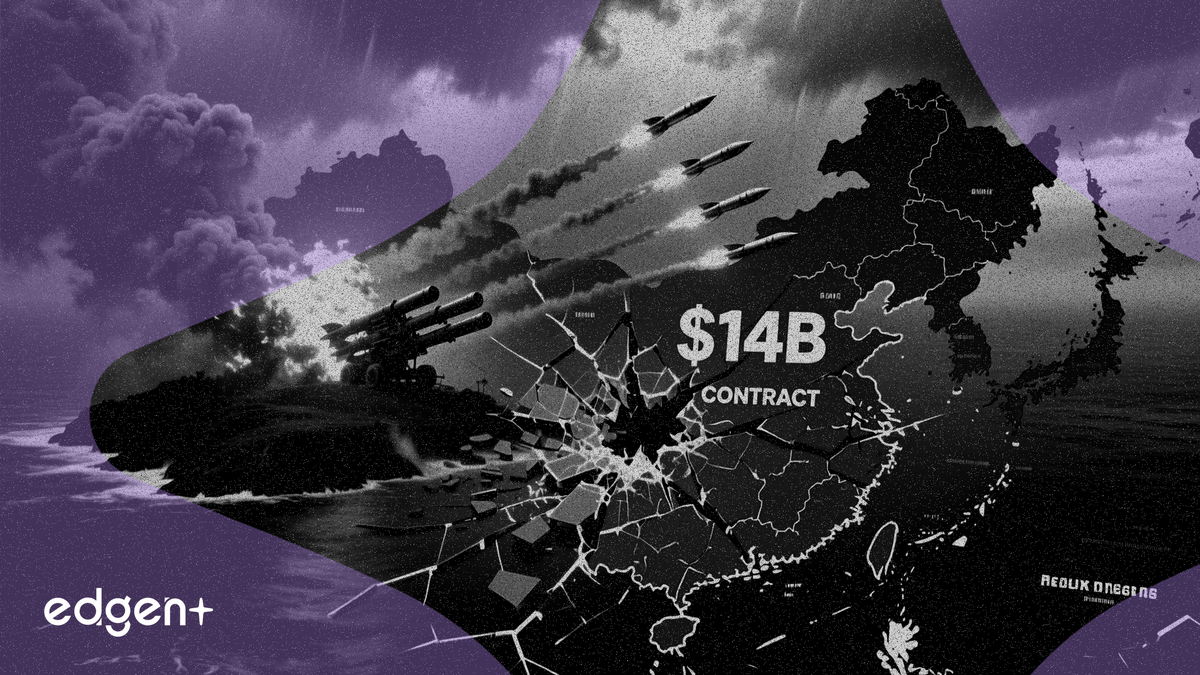
Taiwan fired 32 rockets from US-supplied HIMARS mobile launchers into the Taiwan Strait on Wednesday, the first live-fire test directed at China, as a $14 billion American arms package remains stalled under President Donald Trump.
"This is sending a message to the Chinese that they are going to get hit hard if they try to come across the strait," said Grant Newsham, a retired US Marine Corps colonel who served in several Indo-Pacific roles.
The Taiwanese army launched three rounds of test rockets from a site near a river mouth on the island's western coast, an area long identified as a potential landing zone for a Chinese amphibious invasion. The drill capped two days of military exercises showcasing Taiwan's asymmetric defense strategy against China's much larger military. In the past, live-fire drills were typically conducted at a remote launch test site off Taiwan's southeastern coast facing the Pacific Ocean.
The exercise also served as a signal to Washington that Taiwan is committed to self-defense at a moment when Trump has held off approving the $14 billion arms package, calling it "a very good negotiating chip" with China after his May summit with President Xi Jinping. Xi has made clear he opposes US arms sales to Taiwan, and Beijing refuses to engage with President Lai Ching-te, whom it views as a supporter of Taiwan independence.
The HIMARS — High Mobility Artillery Rocket Systems built by Lockheed Martin Corp. — fired rockets at targets less than six miles offshore, though Taiwan possesses Precision Strike Missiles for the system capable of reaching mainland China. Taiwan received approval in December to buy 82 additional HIMARS and related equipment for roughly $4 billion, a package that includes 420 Atacms missiles putting China's southeastern coast within range. The system carries a launch pod containing either two Precision Strike Missiles, one Atacms missile, or six guided MLRS rockets, with a maximum firing range of 186 miles.
China has highlighted the HIMARS in its own military messaging. During large-scale exercises around Taiwan in December, state broadcaster CCTV aired footage depicting Chinese long-range artillery units targeting Taiwan's HIMARS positions. "When the Chinese complain about something its intended victims are doing, you know they should do more of it," Newsham said.
Defense Budget Faces Political Headwinds
President Lai has made building up the island's defenses a priority, pushing to increase the defense budget to 5% of gross domestic product. Taiwan's Legislative Yuan in May passed a $25 billion special defense bill, substantially pared down from Lai's original $40 billion proposal. Any further delay in US arms approvals could make future defense expenditure bills even harder to pass, according to analysts.
The political dynamics are complicated by the arrival of Taiwan's main opposition leader, Cheng Li-wun, in Washington this week. Cheng met with Xi in April and is presenting herself as someone who can better ensure peaceful cross-strait relations, offering a contrast to Lai's more confrontational stance. Neither the ruling Democratic Progressive Party nor the opposition Kuomintang openly advocates for changing the status quo, with the DPP not pursuing a formal declaration of independence and the KMT not seeking unification with China.
Market Implications of Strait Tensions
The escalation adds to risk premiums across Asia-Pacific markets. Defense contractors including Lockheed Martin may see renewed investor interest, while semiconductor stocks with Taiwan exposure — including Taiwan Semiconductor Manufacturing Co. — face heightened geopolitical uncertainty. Safe-haven assets such as gold and the US dollar typically strengthen during periods of Taiwan Strait tension.
The last time Taiwan conducted major live-fire drills near the strait's median line in August 2022, following then-House Speaker Nancy Pelosi's visit, China responded with ballistic missile tests that landed in Japanese exclusive economic zones, sending the Taiwan dollar down 0.6% and pushing the Taiex index 2% lower over the following week. The current standoff carries additional weight given the frozen $14 billion arms package, which Trump has described as leverage with Beijing.
This article is for informational purposes only and does not constitute investment advice.
