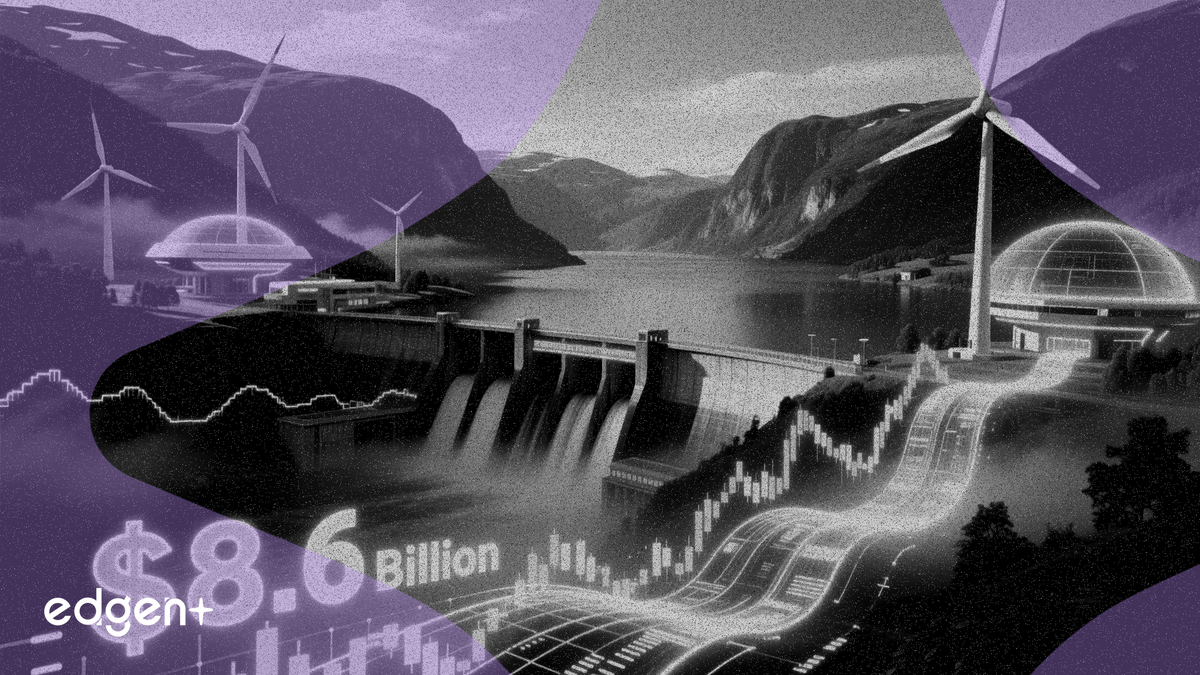
State-owned utility Statkraft will invest 80 billion Norwegian kroner ($8.6 billion) over the next decade to upgrade and expand its power generation capacity in Norway, primarily focusing on its vast hydropower portfolio.
"We are undertaking one of the largest industrial programmes in Norway for many decades," Pål Eitrheim, Statkraft’s Executive Vice President for Nordics, said. "These investments will ensure our power plants can continue generating electricity well into the next century.”
Approximately half of the investment is for major maintenance of existing assets, while the other half is for upgrades and new capacity. Hydropower will receive over NOK 70 billion, with the remainder earmarked for wind power projects, the company said.
The program aims to modernize aging facilities, some nearly a century old, to increase output during peak demand and enhance energy security. Final investment decisions depend on profitability and regulatory approvals from the Norwegian Water Resources and Energy Directorate (NVE).
A significant portion of the investment addresses the age of Statkraft's assets. The company is assessing upgrades for major power plants such as Nore, which opened in 1928, Mår from 1948, and Aura from 1953. "We are now entering a phase where much of the equipment is reaching the end of its service life, while tunnels and waterways require upgrades," President and CEO Birgitte Ringstad Vartdal said. The plan also includes reinforcing older dams to comply with stricter safety requirements amid increasing climate variability.
While hydropower accounts for the bulk of the investment, Statkraft also plans to repower three of its wind farms that are nearing the end of their operational life. The company aims to increase total energy output while reducing the number of turbines, a strategy proven in its repowering projects in Spain. According to Eitrheim, the planned Moifjellet wind farm alone will deliver more new energy than the initial hydropower upgrades combined.
This investment reinforces Norway's role as a key renewable energy supplier to Europe and supports industrial decarbonization efforts across the continent. The next major catalysts will be the specific project approvals from the NVE and the final investment decisions for at least five major upgrade projects Statkraft aims to initiate by 2030.
This article is for informational purposes only and does not constitute investment advice.