

Key Takeaways:
- SpaceX's Starfall pod completed its first orbital test under FAA approval
- The capsule can deliver 2,200 pounds of cargo anywhere on Earth in 45 minutes
- Military logistics is the near-term target; consumer delivery remains years away
Key Takeaways:
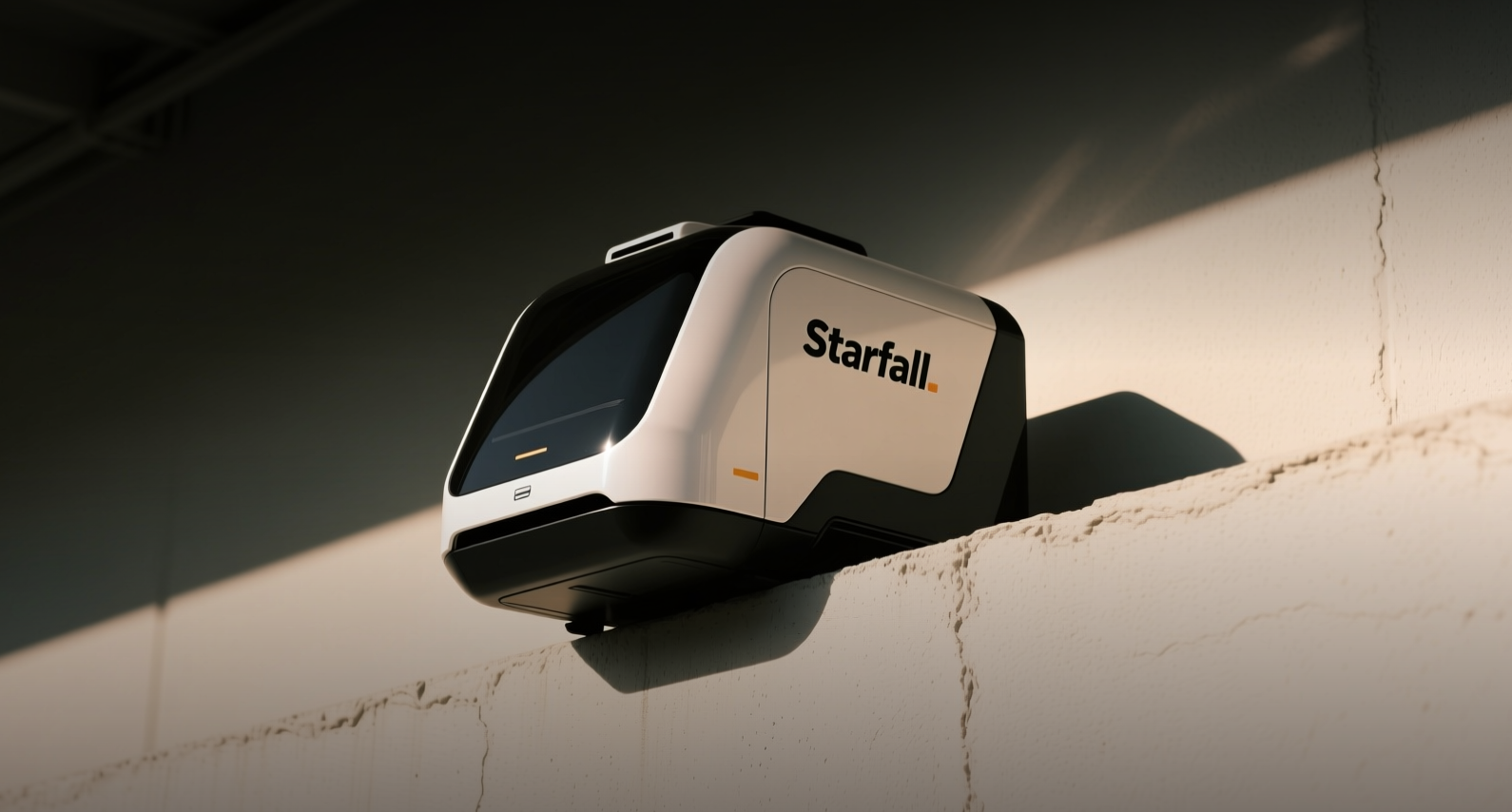
SpaceX's Starfall delivery pod completed its first orbital test, promising to shrink global cargo transit from days to under an hour.
SpaceX's Starfall delivery pod could reshape the $200 billion global express logistics market by transporting cargo to any point on Earth within 45 minutes, using orbital velocity to bypass conventional air freight.
"Starfall will enable point-to-point delivery of critical cargo through space on rapid timelines," according to an FAA environmental assessment that disclosed the program's existence.
The pod weighs 4,600 pounds with a 2,200-pound payload capacity, measures 10 feet in diameter and 2.5 feet tall, and was launched aboard a Falcon Heavy rocket. At orbital velocity of 17,500 mph — 13 times faster than the retired Concorde's 1,350 mph cruising speed — the capsule can reach the opposite side of the planet in roughly 45 minutes. By comparison, the International Space Station completes a full orbit every 90 minutes at the same velocity.
While the technology remains unproven for commercial use, a successful Starfall system could open a new revenue stream for SpaceX beyond rocket launches and Starlink, potentially boosting the company's valuation ahead of any future public listing.
The test, conducted under FAA approval, involved launching the Starfall reentry pod into near-Earth orbit via a Falcon Heavy rocket. The upper stage was scheduled to carry the pod through two orbits before guiding it back into the atmosphere for a parachute-assisted splashdown in the Pacific Ocean. SpaceX confirmed the successful launch and separation of the Falcon Heavy's first stage but has not disclosed details about the upper stage's flight or the pod's reentry.
The concept echoes the engineering ambition that made Jules Verne's "Around the World in 80 Days" plausible in 1873 — the completion of the Suez Canal, the U.S. transcontinental railroad, and the linking of Indian railways. Starfall proposes a similar leap: around the world in 80 minutes instead of 80 days.
The U.S. military represents the most immediate addressable market. A system capable of deploying a one-ton payload anywhere in the world within 80 minutes from a reusable launch vehicle would transform defense logistics, enabling rapid resupply of forward operating bases or delivery of critical equipment to disaster zones. Competitors including Blue Origin and United Launch Alliance have not announced comparable point-to-point orbital delivery systems.
The Economics of Orbital Delivery
For commercial logistics, the path is longer. Starfall capsules currently depend on their launch vehicle to set a reentry trajectory, meaning each delivery consumes an expensive upper-stage rocket until SpaceX's fully reusable Starship comes online. Launch costs, however, are declining sharply as SpaceX improves its technology. If Starship achieves full reusability, the per-kilogram cost of orbital delivery could approach parity with air freight for high-value, time-sensitive cargo.
FedEx, UPS, and DHL — which collectively move billions of packages annually — face limited near-term disruption. The Starfall pod's 2,200-pound payload capacity suits military and emergency cargo rather than e-commerce parcels. Consumer deliveries remain years away, as one analysis noted.
For investors tracking SpaceX's valuation ahead of a potential IPO, Starfall represents a call option on space-based logistics. The company's existing revenue streams — launch services and Starlink's broadband subscriptions — already support a valuation exceeding $150 billion. A functional point-to-point delivery system could add a high-margin, defensible business line. But until SpaceX discloses test results and a commercial timeline, the technology remains speculative. SpaceX trades on the secondary market under the ticker SPCX, with no public earnings disclosures.
This article is for informational purposes only and does not constitute investment advice.
