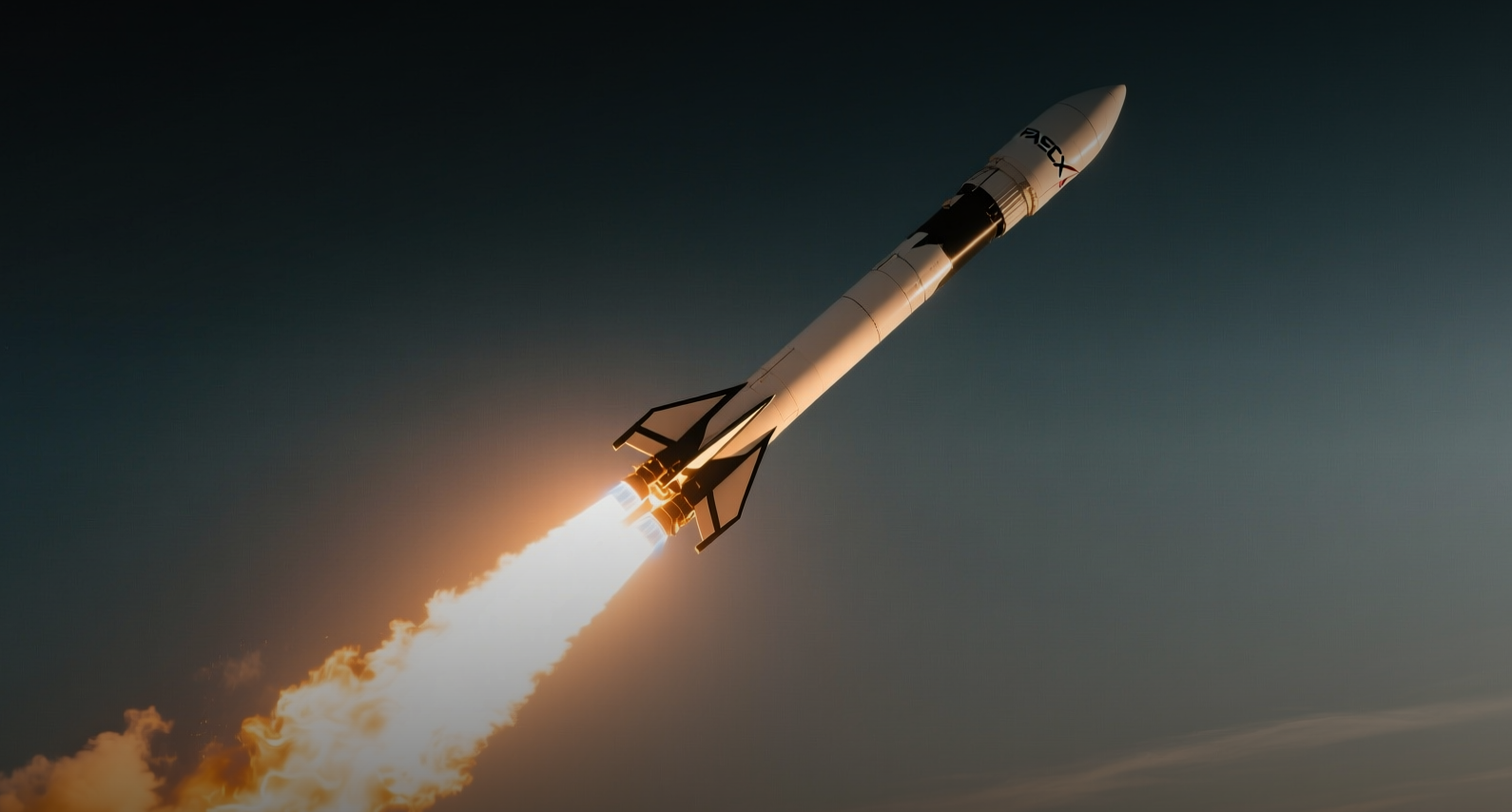
SpaceX's lockup schedule is the most complex in IPO history, with 15 unlock dates that could flood the market with shares starting two days after the company's first earnings report on Aug. 6.
Space Exploration Technologies (NASDAQ: SPCX) raised $85.7 billion in its June 12 IPO — nearly three times the previous record — while selling less than 5% of its outstanding shares. The other 95%, roughly 12.5 billion shares held by insiders, early investors and employees, sits behind a staggered lockup schedule that IPO advisors describe as unprecedented.
"This is one of the most complicated, if not the most complicated lockup we've ever seen," said Avery Marquez, director of investment strategies at Renaissance Capital, which tracks IPO structures.
The lockup contains 15 separate unlock dates across three groups of shareholders, each with different release conditions. The largest group — early investors and employees — can begin selling 20% of their shares two trading days after SpaceX reports its first quarterly results as a public company, currently expected Aug. 6. Additional tranches unlock at calendar milestones: 7% on day 70 after the IPO (Aug. 21), another 7% on day 90 (Sept. 10), 7% on day 105 (Sept. 25), 7% on day 120 (Oct. 10), and 7% on day 135 (Oct. 25). A 28% tranche unlocks after the second quarterly report in November, and the final 7% at day 180.
A separate performance-based provision allows an additional 10% of early-release shares to unlock if SPCX trades at least 30% above its $135 IPO price for five of 10 trading days ending on the second trading day after the first earnings report. At the current price near $164, that threshold sits at $175.50.
CEO Elon Musk faces a separate, stricter regime. Musk holds roughly 6.4 billion shares representing about 82% of voting power through his supervoting Class B stock. His shares are locked for 366 days with no early-release provisions — meaning all of his holdings become eligible for sale on June 12, 2027, in a single event.
The lockup structure reflects an attempt to prevent a single catastrophic selloff, according to Lise Buyer, founder of IPO advisory firm Class V Group. "This is outside the bounds of anything we've seen before," Buyer said. "I would expect their transfer agent will be doing shots of tequila, because it's going to be a little hard to manage."
The math on supply is stark. With only 4% to 5% of shares in public hands, the tradeable float is roughly 555.6 million shares. If early-release insiders sell even a fraction of their eligible holdings, the supply increase could be dramatic. According to 22V Research strategist Jeff Jacobson, multiple lockup windows between August and September could allow insiders to sell up to 44% of SpaceX shares, potentially expanding the tradeable float by approximately 900%.
The forced index buying that supported SPCX's recovery — the stock joined the Nasdaq-100 on July 7 and the Russell 1000 on June 26 — is a one-time event. J.P. Morgan estimated the Nasdaq-100 inclusion alone would direct roughly $4.3 billion in passive buying into the stock. But that mechanical demand does not extend past the rebalancing date.
SpaceX's first earnings report on Aug. 6 will provide the market's first look at the consolidated company's financials, including Starlink's subscriber base of 10.3 million users, the newly integrated xAI division that lost $6.36 billion in 2025, and the $30 billion compute deal with Google. It will also trigger the first lockup early release, giving the market its first real test of insider selling appetite.
Hans Tung, managing partner at Notable Capital and an early SpaceX investor, said the staggered schedule is designed to let shareholders ease out gradually rather than trigger a free-for-all. "Some people need to have exits along the way," he said. "This is designed so that it's done over tranches."
Whether retail investors who bought at $150 or higher will absorb that supply is the open question. At a market capitalization of roughly $2.16 trillion and a price-to-sales ratio of 111 times trailing revenue of $19.3 billion, SPCX trades at a multiple that assumes near-perfect execution across space launch, satellite broadband, and AI infrastructure — three capital-intensive businesses that have yet to produce a consolidated profit.
This article is for informational purposes only and does not constitute investment advice.