Stephen Davies of Javelin Wealth Management said investor enthusiasm for SpaceX, Anthropic and OpenAI has outpaced fundamentals, calling for earnings proof before allocating capital.
Stephen Davies of Javelin Wealth Management said investor enthusiasm for SpaceX, Anthropic and OpenAI has outpaced fundamentals, calling for earnings proof before allocating capital.
Stephen Davies of Javelin Wealth Management said investor enthusiasm for SpaceX, Anthropic and OpenAI has outpaced fundamentals, calling for earnings proof before allocating capital.
Stephen Davies, CEO of Javelin Wealth Management, said valuations for SpaceX, Anthropic and OpenAI have run ahead of fundamentals, with the market pricing in future success before it has been delivered.
"These are extraordinary companies with real technology, but the market is pricing in years of future success before any of it has been delivered," Davies said. "I want to see earnings proof before treating them as core portfolio holdings."
The skepticism extends beyond Davies. Morningstar analysts Nicolas Owens and Suryansh Sharma valued SpaceX at $63 a share, a 53% discount to the $135 IPO offering price, after determining the "cash flow valuation of SpaceX is $780 billion" against a targeted $1.5 trillion. The research firm assigned a 43% probability to a "No Go" scenario for SpaceX's orbital data center ambitions, projecting more than $81 billion in potential capital destruction.
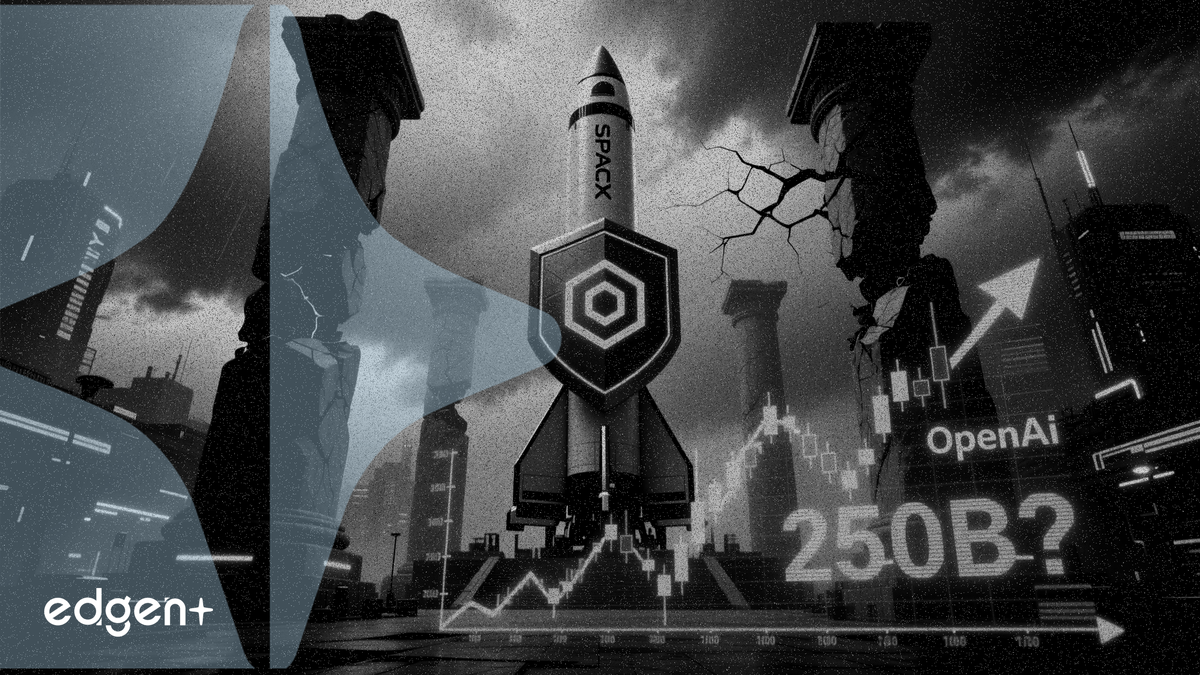
SpaceX's AI segment generated $3.201 billion in revenue in 2025 while losing $6.355 billion from operations, according to its IPO prospectus. In the first quarter of 2026, the division posted $818 million in revenue against a $2.469 billion operating loss. The $250 billion acquisition of xAI — a related-party transaction given Elon Musk's control of both entities — implies a revenue multiple that Brian Hurley, founder of New Space Economy, called "extremely rich" and "hard to justify on financial performance alone."
OpenAI and Anthropic face similar scrutiny. Both companies have commanded valuations exceeding $100 billion in private fundraising rounds, yet neither has demonstrated sustained profitability. OpenAI's revenue has grown rapidly through ChatGPT subscriptions and API licensing, but operating costs — including compute infrastructure and talent — have kept the company in a loss position. Anthropic, backed by Google and Amazon, has focused on safety-focused model development but faces the same capital-intensive cost structure.
Davies said the comparison to the dot-com era is relevant. "Investors in the dot-com boom often paid very high prices for companies with fast-growing narratives, large market claims and heavy operating losses," Hurley said. "The AI sector today shares those characteristics."
For SpaceX, the stakes are particularly high. Morningstar's most optimistic "Moonshot" scenario — which assumes both Starship reusability and successful orbital data center commercialization — values the company at $1.97 trillion, or $154 a share. The firm assigned that outcome just a 7% probability. The more likely "Minimum Viable Product" scenario, at 50% probability, values the AI business at $23.50 a share.
Davies said he would consider allocating to SpaceX only after the company builds a stronger market track record post-IPO. "The launch and Starlink businesses are real," he said. "The AI story is a bet on the future, and the market is asking investors to pay full price for that bet today."
This article is for informational purposes only and does not constitute investment advice.
