
S&P Dow Jones Indices will not bend its rules for the largest IPO in history, leaving SpaceX and other mega-cap companies locked out of the S&P 500 for at least a year after listing.
S&P Dow Jones Indices will not bend its rules for the largest IPO in history, leaving SpaceX and other mega-cap companies locked out of the S&P 500 for at least a year after listing.
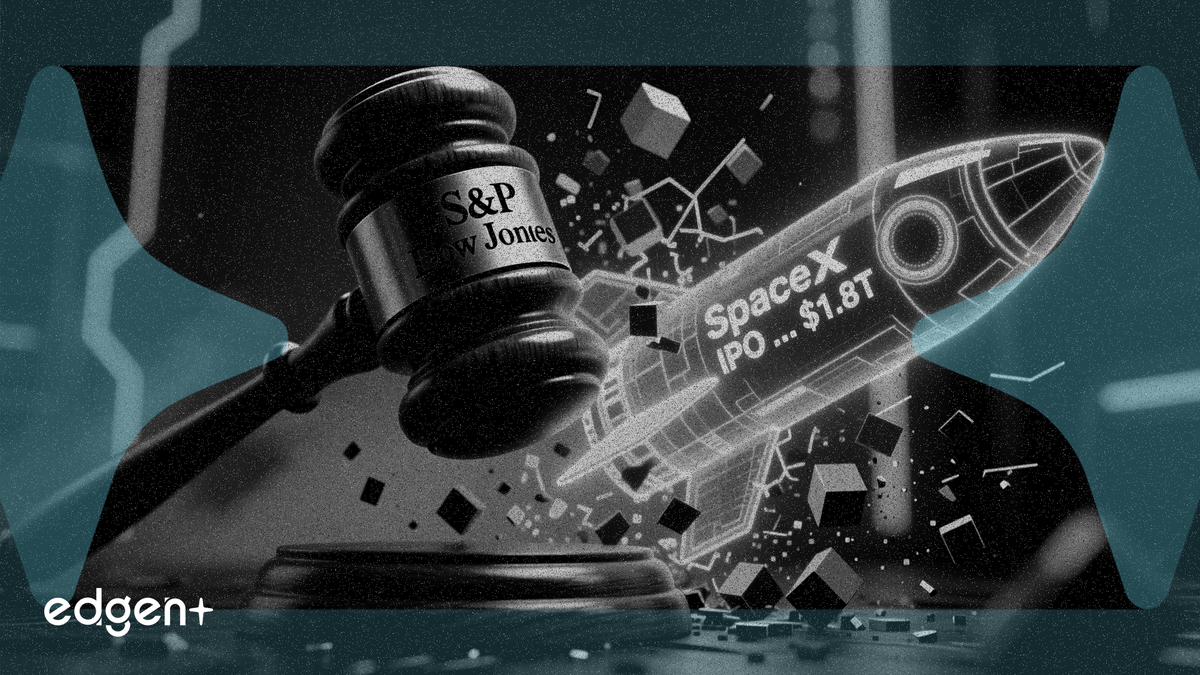
S&P Dow Jones Indices rejected proposals to fast-track mega-cap IPOs into the S&P 500, maintaining a 12-month seasoning period and profitability requirements that will keep SpaceX out of the benchmark for at least a year after its June 12 debut.
"The index is supposed to be a curated list of the country's leading companies, and leading has historically meant profitable," said Nell Minow, vice chair of ValueEdge Advisors. "Bending the rules for one company undermines the entire premise of passive investing."
The decision, announced after a consultation that closed May 28, preserves three longstanding entry requirements: a minimum 12 months of public trading, positive GAAP earnings over the most recent four quarters, and at least 10% of shares in public float. SpaceX, which reported a net loss of $4.28 billion through its latest quarter and plans to float roughly 5% of its stock, would fail all three tests. The company is targeting a $1.77 trillion valuation in what would be the largest IPO on record, with plans to raise $75 billion at $135 per share.
The decision puts S&P at odds with rival index providers Nasdaq and FTSE Russell, which have both adopted fast-entry rules that could let SpaceX join their benchmarks within weeks of trading. The divergence matters because roughly $20 trillion in assets is indexed or benchmarked to the S&P 500, according to S&P DJI estimates. Without inclusion, passive funds tracking the S&P 500 cannot buy the stock, potentially dampening demand from the largest pool of index capital.
A Three-Way Split in Indexing Standards
Nasdaq adopted its own fast-entry rule in March, letting large IPOs join the Nasdaq-100 after just 15 trading days, effective May 1. Goldman Sachs analysts estimated the change could trigger up to $60 billion in forced buying across the Nasdaq-100 alone. FTSE Russell went further, making companies eligible for some of its indexes after just five trading days.
The contrasting approaches create an unusual dynamic for SpaceX. The company will qualify for the Nasdaq-100 within three weeks of listing and for FTSE Russell indexes within days, but it will remain ineligible for the S&P 500 until at least mid-2027 — and only then if it can demonstrate sustained profitability. Elon Musk, who controls 85.1% of voting power in SpaceX, has agreed to a 366-day lockup on his shares, according to the IPO filing.
The last time S&P faced a similar question was with Tesla in 2020. The electric-vehicle maker had been public for a decade and was consistently profitable before it joined the S&P 500 in December of that year. Its inclusion triggered an estimated $80 billion in forced buying from index funds over the following months. SpaceX, by contrast, would enter the public market with a valuation roughly 110 times revenue and no path to near-term profitability under GAAP standards.
For investors, the decision means that the roughly $13 trillion in passively managed assets tracking the S&P 500 will not automatically flow into SpaceX shares at the IPO. Active managers and funds tracking the Nasdaq-100 or FTSE Russell indexes will be the primary institutional buyers in the early months. The S&P 500's refusal to fast-track SpaceX also removes one source of potential volatility: the forced buying that would have occurred if trillions of dollars of index capital had to absorb a stock with only 5% of shares available for trading.
This article is for informational purposes only and does not constitute investment advice.
