
South Korea will train every active-duty soldier to operate drones as a standard combat tool, deploying 60,000 unmanned systems by 2029 to counter North Korea's rapidly advancing drone capabilities gained through battlefield experience in Ukraine.
South Korea will train every active-duty soldier to operate drones as a standard combat tool, deploying 60,000 unmanned systems by 2029 to counter North Korea's rapidly advancing drone capabilities gained through battlefield experience in Ukraine.
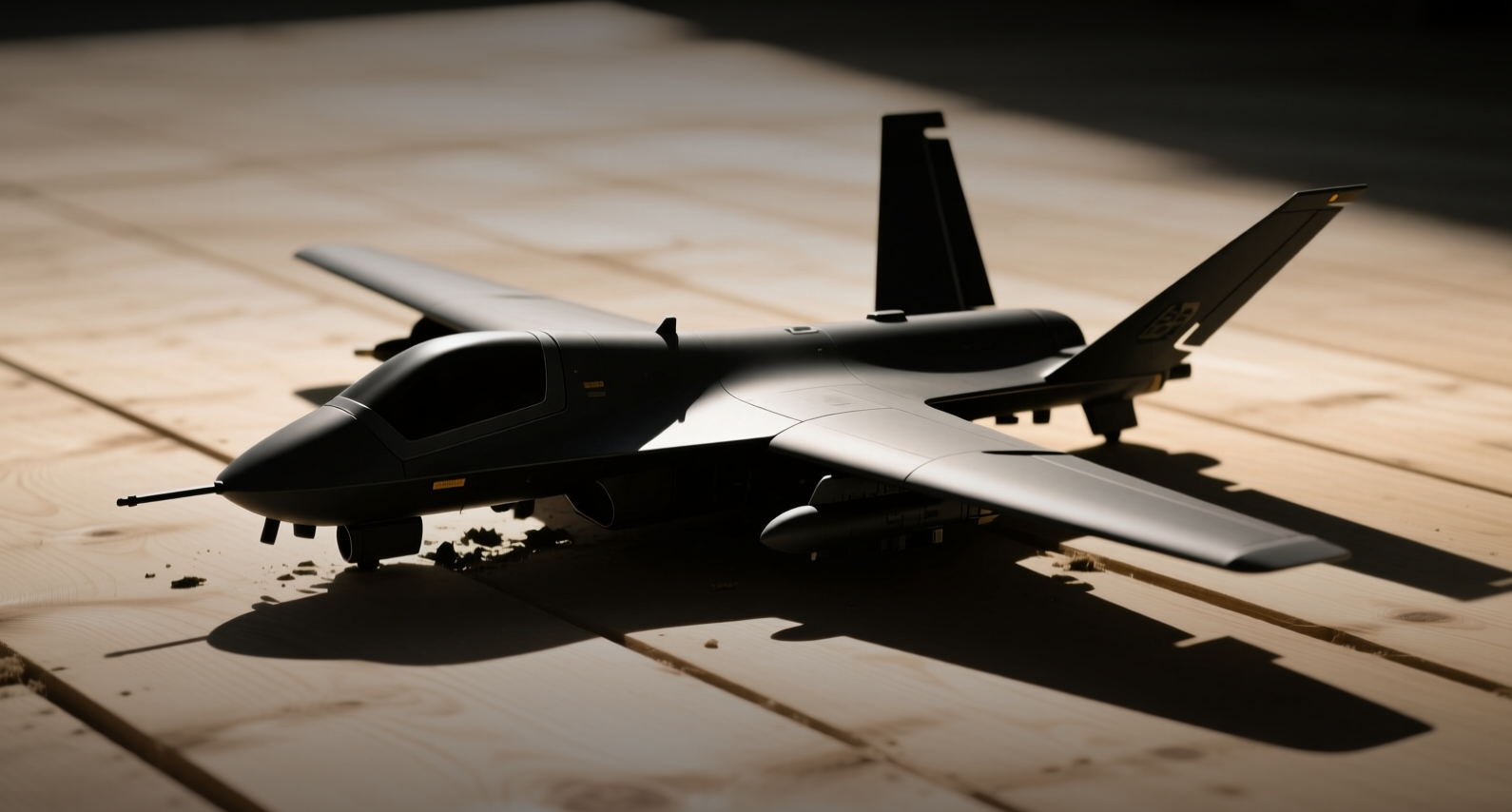
South Korea plans to train all 500,000 active-duty troops as drone operators and deploy 60,000 unmanned systems within three years, Defense Minister Ahn Gyu-back said Friday, as lessons from the Ukraine war reshape military strategy on the Korean Peninsula.
"Drones should no longer be equipment used by a limited number of units, but a universal combat tool," Ahn said in a briefing, adding that troops should use drones like a "second personal weapon." The military aims to produce 110,000 drones by 2029 for distribution across the army, navy, air force and marines, with 11,000 training drones arriving this year and more than 20,000 low-cost disposable combat drones by 2030.
The initiative reflects a stark demographic and numerical reality. South Korea's active-duty force has shrunk roughly 20 percent over the past six years to about 450,000 personnel, while North Korea fields more than 1.2 million soldiers. The South also faces a declining birth rate that continues to shrink the pool of military-age recruits. "Low-cost drones operated in large numbers are fundamentally changing the nature of warfare," Ahn said, warning that North Korea was advancing its own unmanned systems and increasing threats to military and civilian facilities.
North Korea's drone capabilities have grown considerably through its deepening military partnership with Russia. Pyongyang has deployed thousands of troops to fight alongside Russian forces in Ukraine, giving its military direct exposure to drone warfare at scale. North Korean soldiers who survived encounters with Ukrainian drone operations have rotated back home to instruct their own forces, according to South Korean defense officials. A Ukrainian military intelligence report published in February said North Korean forces are now operating surveillance drones and offering increasingly skilled assistance on the battlefield.
The urgency behind Seoul's plan also stems from a deeply embarrassing episode in December 2022, when five small North Korean drones breached South Korean airspace. One entered the no-fly zone above the presidential office in Seoul. The military scrambled jets and attack helicopters and fired about 100 shots without downing a single drone.
South Korea's plan includes expanding counter-drone systems such as laser and high-power microwave weapons, shifting operations so each service can conduct surveillance and strike missions independently rather than relying on a centralized command. The military is also accelerating development of the K-Lucas, a long-range loitering munition based on the American Lucas concept, itself reverse-engineered from Iran's Shahed-136 suicide drone that Russia deploys extensively in Ukraine.
A significant constraint, however, is the supply chain. The defense ministry has imposed a strict requirement that all drones use 100 percent domestically produced components with no Chinese parts, citing security concerns. China dominates the global commercial drone market through manufacturers such as DJI, and South Korean companies may struggle to source enough non-Chinese components to train hundreds of thousands of conscripts. The military also faces a shortage of noncommissioned officers and instructors expected to train new recruits on drone operations.
The announcement comes amid political sensitivity over drone operations under the previous administration. A South Korean court this month sentenced former President Yoon Suk Yeol to 30 years in prison over a military drone incursion into North Korea that prosecutors said was aimed at justifying his 2024 martial law bid. Current President Lee Jae Myung's government dismantled the drone operations command in the fallout, with Friday's plan replacing it with a new organization focused on policy and capability development while leaving operations to individual military units.
North Korean leader Kim Jong Un this week vowed to expand the country's nuclear arsenal at an "exponential rate" and oversaw tests of tactical ballistic missiles and an upgraded rocket artillery system with a 90-kilometer firing range. The last time North Korea conducted similar weapons tests in rapid succession, in 2022, South Korea's Kospi index fell 3 percent over the following week while the won weakened 1.5 percent against the dollar, according to data from the Bank of Korea.
This article is for informational purposes only and does not constitute investment advice.
