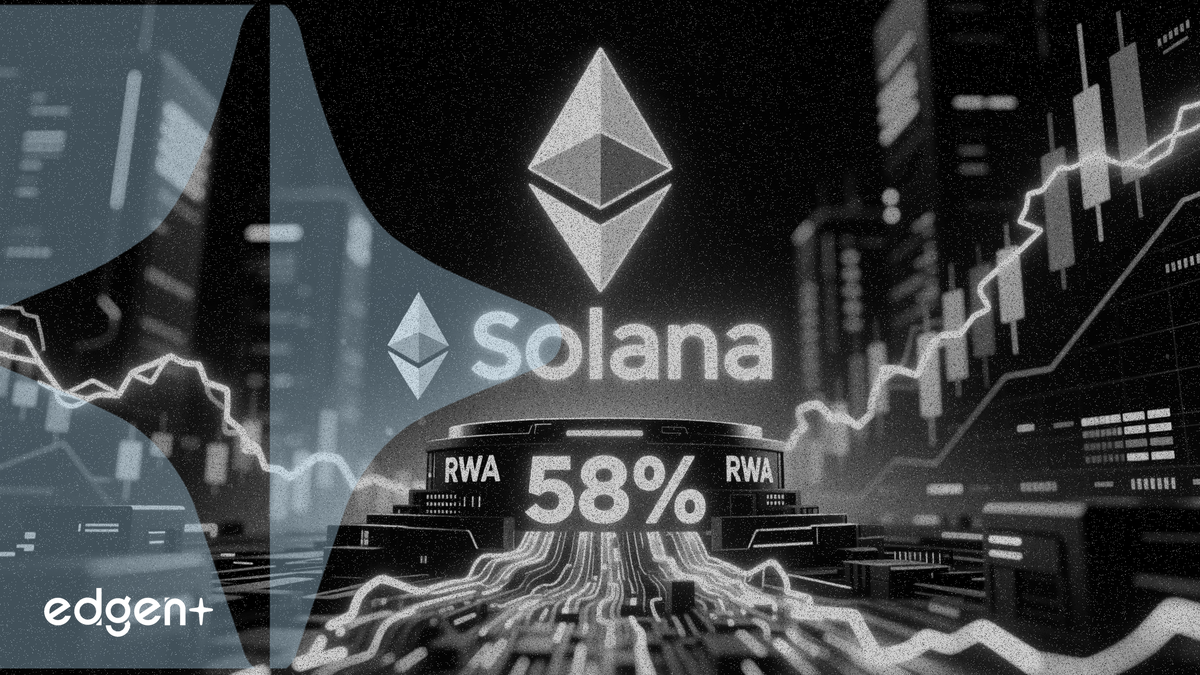
Solana’s share of the tokenized real-world asset (RWA) lending market reached 58 percent as of April 30, pushing it ahead of rival Ethereum’s 40 percent and marking a significant shift in the competition for on-chain finance.
"The question isn’t just whether a chain can process transactions; it’s whether assets, users, compliance flows, and applications can actually operate together in one environment," Wish Wu, Co-founder and CEO at Pharos, a new RWA-focused Layer 1, said in a recent interview.
The change in market position comes as Solana’s total value locked in RWA-related protocols reached $2.5 billion, according to market data. The network has benefited from its reputation for high throughput and low transaction costs, attracting $208 million in inflows to Solana-linked exchange-traded products in the first quarter of 2026 alone. The broader DeFi market now manages assets worth about $260 billion, according to April 2026 data.
This battle for the RWA market represents a new phase of competition among Layer 1 blockchains, moving beyond raw transaction speed to the ability to support complex financial systems. With major financial players like BlackRock and JPMorgan Chase building their own blockchain-based tokenization infrastructure, the platforms that can provide compliant and efficient distribution will be positioned to capture a share of a multi-trillion dollar market.
The Infrastructure Race
While early blockchain development focused on decentralization and scalability, the current focus is shifting toward creating integrated financial systems. Competitors like Aptos, Sui, and Avalanche are also targeting the RWA sector, but Pharos's Wu argues most are general-purpose systems, whereas finance requires a more specialized approach.
Solana's recent performance, with its Firedancer client enabling a stable throughput of 100,000 transactions per second, has made it a preferred platform for applications requiring high efficiency. This technical capacity is critical for handling the demands of tokenized real estate, private credit, and treasury bonds, which are increasingly being brought on-chain by projects like Securitize, Ondo Finance, and Centrifuge.
Institutional Capital Follows
The growth in Solana's RWA market share is not just a technical story; it's a narrative about capital flows. The successful launch of the pAlpha High Yield RWA Vault on the new Pharos network, which hit its $50 million cap within days, shows strong early demand for such products.
This trend is consistent with a broader market shift from short-term speculation to interest in projects with real-world utility. The entrance of institutional giants like Franklin Templeton, which has pioneered tokenized money market funds, confirms that RWA is moving from a crypto-native experiment to a core part of institutional strategy. For Solana, capturing this flow is key to solidifying its position against Ethereum, which still leads the overall DeFi market with over 55% of total value locked.
This article is for informational purposes only and does not constitute investment advice.