

Key Takeaways:
- Snap Inc. launched SPECS AR glasses for $2,195, shipping fall 2026
- The 132-gram device offers 51-degree field of view and 4-hour battery
- Snap faces well-capitalized rivals Meta and Google in the AR market
Key Takeaways:
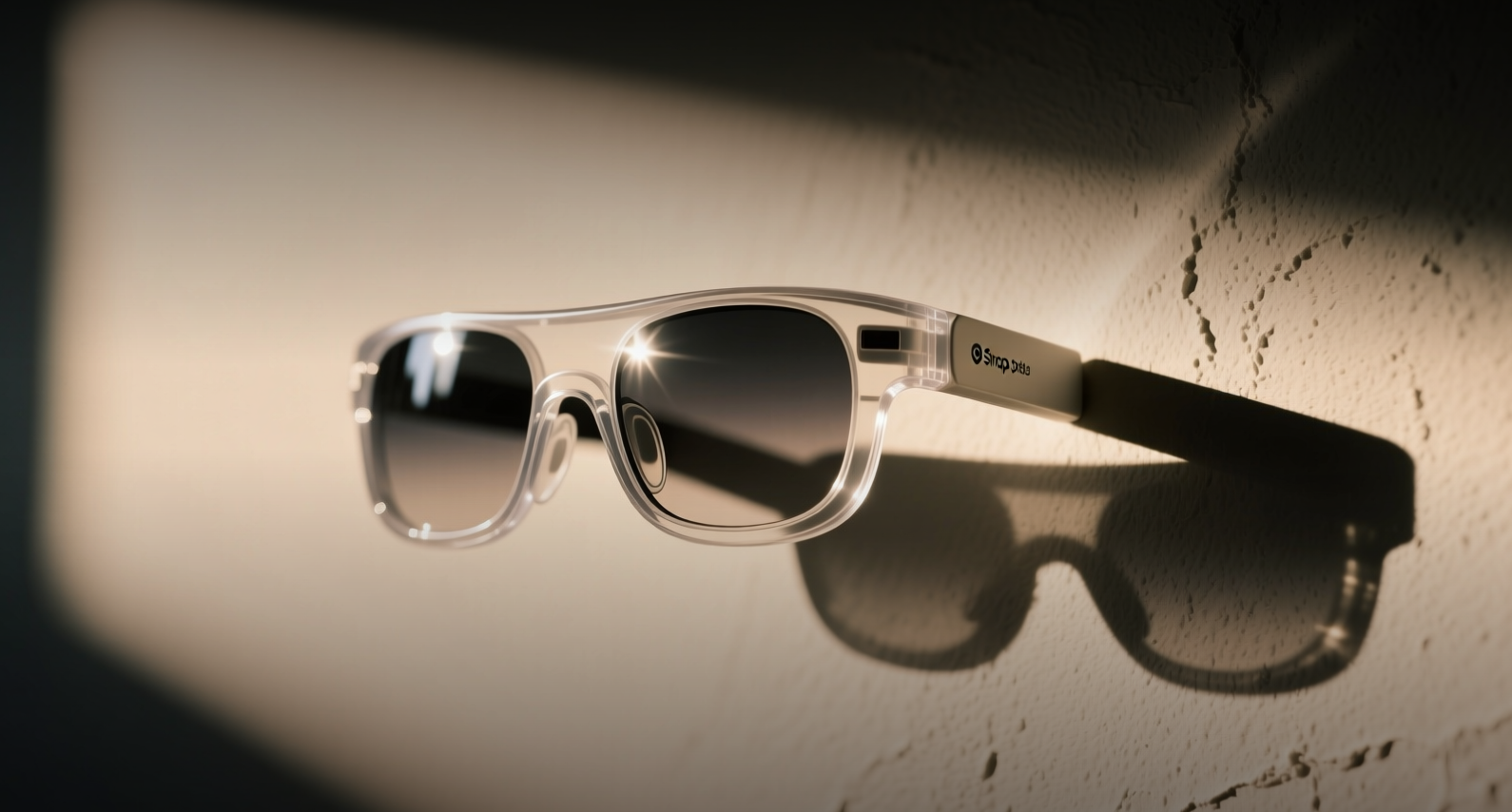
Snap Inc. is betting consumers will pay $2,195 for augmented reality glasses that overlay digital visuals onto the physical world, challenging Meta and Google in a nascent market that remains unproven at scale.
"Almost 20 years since the launch of the iPhone, people are ready to think about computing differently," Evan Spiegel, co-founder and chief executive officer of Snap, said in an interview with CNBC. "Specs really represents a way to use computing together in shared experiences in the real world, looking up through see-through lenses rather than at an opaque screen."
The sixth-generation device, unveiled Tuesday at the Augmented World Expo in Long Beach, California, weighs 132 grams in its smaller 47mm size — roughly 40 percent lighter than the previous developer-focused version at 226 grams. Powered by two Snapdragon processors, the glasses deliver a 51-degree field of view with 16 million colors through proprietary liquid crystal on silicon display technology. Electrochromic lenses transition from clear to tinted in 10 seconds. The charging case provides four additional charges for 20 total hours of mixed use.
Snap's bet comes as the global wearable tech market reaches an inflection point. Grand View Research estimated the sector at $92.9 billion in 2025, projecting growth to $229.97 billion by 2033. But the AR glasses category remains a high-risk frontier: Apple's $3,500 Vision Pro has failed to become a mass-market product, and Meta has shifted its VR ambitions toward mobile apps. Meta's Ray-Ban smart glasses, built with EssilorLuxottica, have found modest traction as audio-first wearables, while Google showed off AI-powered glasses in May developed with Samsung, Warby Parker and Gentle Monster.
Spiegel dismissed audio-only smart glasses as "very lightweight glasses that really don't do much," calling them "kind of like a phone accessory or an open-ear headphone." But Meta and Google operate dominant digital ad businesses that can absorb hardware losses — Snap has lost money every year as a public company and created a subsidiary called Specs Inc. in January to house the AR glasses division.
The company has filed more than 7,000 patents related to the technology and counts 450,000 developers building AR lenses through its Lens Studio platform. Developers can now use Anthropic's Claude Code, OpenAI's Codex and Cursor's coding tools to create AI agent-like experiences for the device. Snap also partnered with Google to let developers use Gemini to give their Lenses AI capabilities.
Snap tapped five "Visionaries" — Golden State Warriors forward Jimmy Butler, singer Imogen Heap, model and actress Hoyeon Jung, rapper Jack Harlow and model Kaia Gerber — photographed by Steven Meisel for the launch campaign. Each worked with Snap engineers to develop original Lens experiences debuting alongside the consumer launch.
The glasses are available for pre-order with a $200 refundable deposit and are expected to ship this fall in the US, UK and France. Spiegel, a father of four boys, said he has been testing Specs at home, describing multiplayer experiences like laser tag and dinosaur learning as alternatives to children staring at smartphone screens. The company plans to release parental controls later this year that allow limited Lens access for teenagers.
Snap shares fell nearly 3 percent in midday trading after the announcement. IDC research manager Jitesh Ubrani noted that "this is like the worst time for any company to be launching any kind of premium product," adding that Snap's core audience "has always skewed young, and typically that audience can't afford to spend a lot."
This article is for informational purposes only and does not constitute investment advice.
