
The AI boom is creating a new supercycle in the semiconductor memory market, with SK Hynix’s latest earnings report showing just how profitable the new era is.
The AI boom is creating a new supercycle in the semiconductor memory market, with SK Hynix’s latest earnings report showing just how profitable the new era is.
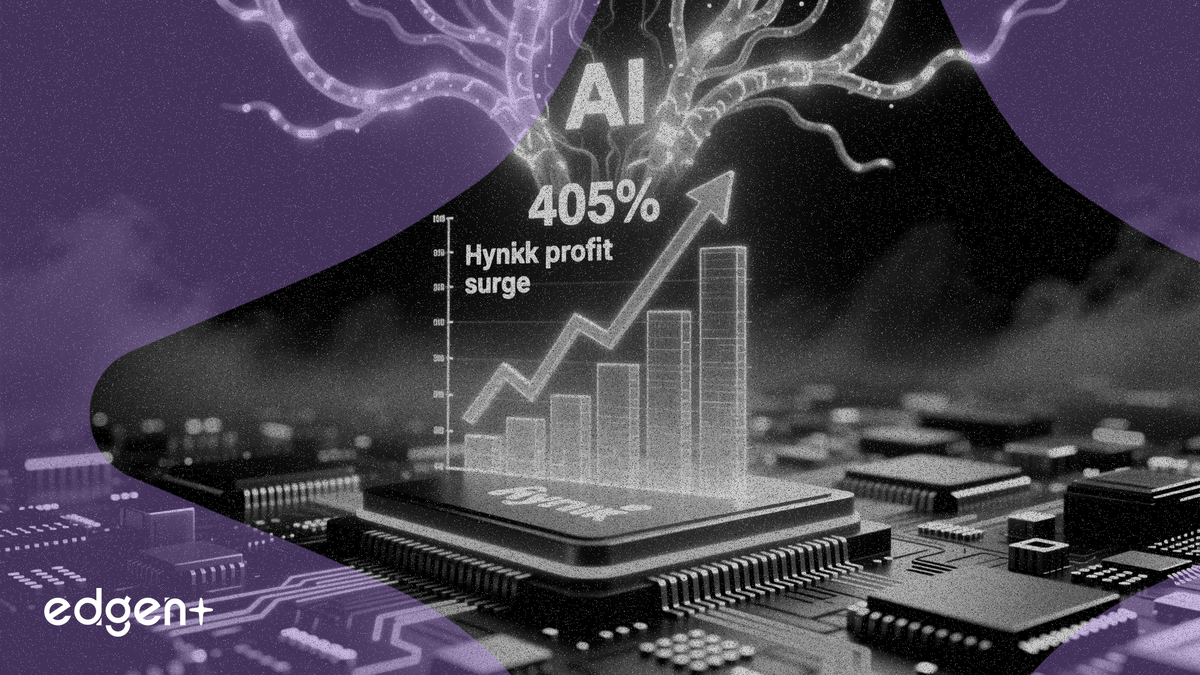
SK Hynix Inc.’s first-quarter operating profit surged 405% from the previous year to 37.6 trillion won, a clear sign of the immense profitability from its leadership in high-bandwidth memory (HBM) chips essential for artificial intelligence accelerators. The South Korean chipmaker’s operating margin reached an unprecedented 72%, surpassing even industry giants like TSMC and Micron.
“Our Data Center business was the primary growth driver, delivering record revenues of $5.8 billion, which surged 57% year over year,” an SK Hynix representative said, reflecting sentiments from the company’s CEO. The performance is driven by strong demand for the company’s EPYC processors and the continued ramp-up of its Instinct GPUs.
The stunning results are a direct consequence of the company’s dominance in the HBM market, a critical component stacked on top of AI GPUs from companies like Nvidia. SK Hynix currently commands over 50% of the HBM market, and its entire 2026 production capacity is already sold out. This has allowed the company to move beyond the commodity pricing of traditional DRAM and secure long-term, high-margin contracts.
This success has propelled SK Hynix’s market capitalization to $825 billion, making it the 16th largest company in the world. The concentration of SK Hynix and Samsung now accounts for two-thirds of the South Korean stock market, a figure that highlights both the nation’s technological prowess and a potential systemic risk if the semiconductor cycle turns.
The boom isn’t limited to SK Hynix. Shares of Advanced Micro Devices Inc. jumped 15% after its own better-than-expected first-quarter results, with a second-quarter revenue forecast that beat Wall Street estimates. AMD’s growth is also fueled by its Data Center business, with strong demand for its EPYC server CPUs and a strategic partnership with Meta to deploy its Instinct GPUs.
This industry-wide surge, driven by massive capital expenditure in AI infrastructure, has pushed semiconductor stocks to new highs. However, it also brings company-specific risks, such as supply chain constraints in advanced packaging and volatile memory pricing, which could pressure margins.
For investors, the rapid price appreciation of stocks like SK Hynix and AMD presents a dilemma. While the growth is compelling, the high valuations expose investors to significant volatility and potential near-term pullbacks. SK Hynix, for example, now trades at a price-to-book ratio of 9.6, far above its historical median of 1.8.
A more diversified approach is to invest in exchange-traded funds (ETFs) with significant exposure to the semiconductor sector. This strategy allows investors to capture the upside of the AI hardware boom while mitigating single-stock risk. Several ETFs offer concentrated exposure to the key players:
While the current AI-driven cycle is powerful, the semiconductor industry is historically prone to boom-and-bust periods. The record profits and valuations of today are built on the expectation of sustained AI growth. For investors, the key will be balancing the enormous opportunity with the inherent cyclical risks of the sector.
This article is for informational purposes only and does not constitute investment advice.
