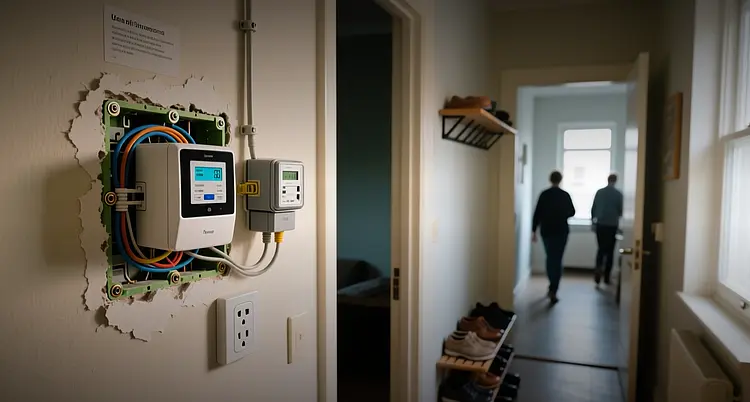
Schneider Electric plans a voluntary public takeover offer for Bulgarian smart-home device maker Shelly Group at 70 euros a share, a 27% premium to Shelly's undisturbed reference price of July 28, valuing the company at about 1.2 billion euros ($1.4 billion).
The all-cash bid is a "sensible bolt-on acquisition that is a continuation of their smart buildings strategy," Mark Fielding, an analyst at RBC Capital Markets, said in an email, noting the price is less than 1% of Schneider's roughly 165 billion euro market capitalization, with an operating profit contribution of a similar scale.
Shelly shares closed Wednesday at 64.40 euros and traded at 66.90 euros on Thursday, up 3.72%, leaving the stock about 4.4% below the offer price — a spread that implies the market assigns meaningful probability to completion but not certainty. Schneider slipped 0.5% to 295.60 euros in Paris, a move small enough to read as neutral on capital allocation rather than a verdict on the asset. Jefferies, which reaffirmed its Buy rating on Schneider the same morning, said the deal has "strong rationale and high potential for synergies" with Schneider's residential business, which accounts for about a third of its buildings exposure.
Founders' 57% stake removes the usual deal risk
Shelly's two founders, Dimitar Dimitrov and Svetlin Todorov, hold roughly 57% of the share capital between them and have conditionally agreed to sell their stakes. That pre-commitment is the single most important structural feature of the transaction: with a majority block locked up, the offer does not depend on winning over a dispersed retail register, and Shelly's board said it has taken the preliminary view that the bid "would be in the interests of the company, its shareholders, employees and other stakeholders."
The transaction is subject to customary regulatory approvals and is expected to close by the first quarter of 2027. Shelly is listed in both Sofia and Frankfurt, so the offer will run across two venues and two supervisory regimes — a detail that adds procedural time but not, on the disclosed terms, a financing condition.
Shelly sells smart plugs, meters, locks and cameras alongside cloud services, and has grown revenue by more than 40% a year since 2022. That growth rate is the asset Schneider is buying. Schneider's existing residential, retrofit and small commercial building technology is largely hardware and installation-led; Shelly's software-led home energy platform supplies the metering, control and cloud layer that turns installed devices into recurring data and service revenue. The strategic logic is the same one that has driven building-technology consolidation for a decade: whoever owns the endpoint owns the energy data, and whoever owns the energy data owns the retrofit upsell.
Legrand, ABB and Plejd now face the same question
The deal pushes Schneider deeper into the connected home market, where it competes with French rival Legrand, Sweden's Plejd and Switzerland's ABB. At 1.2 billion euros, the price is small enough that it does not reset sector valuations — but it does establish a clearing level for software-led home energy platforms with 40%-plus revenue growth, and that is the number peers will be measured against.
For Schneider shareholders, the arithmetic is straightforward. A sub-1% market-cap outlay with a proportionate operating profit contribution is close to earnings-neutral in the near term, which is why the stock barely moved. The return case rests on cross-selling Shelly's platform through Schneider's residential channel and on defending the retrofit segment against Legrand and ABB, not on the deal's standalone accretion. The next hard datapoints are the offer document, the regulatory filings in Germany and Bulgaria, and confirmation of the acceptance threshold — all of which must land before the Q1 2027 target close.
This article is for informational purposes only and does not constitute investment advice.