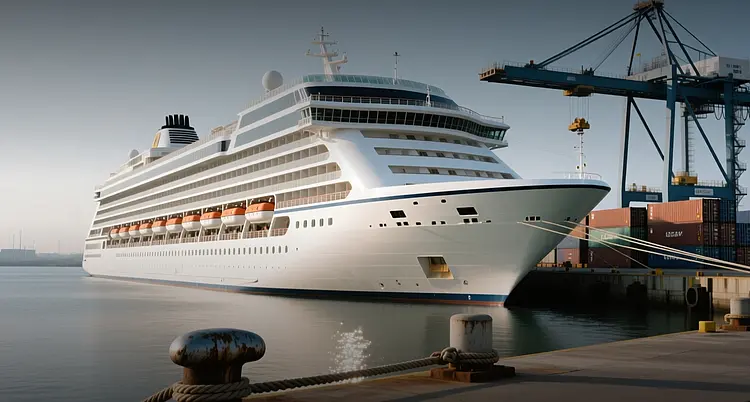
Royal Caribbean Group will pay about $3 billion for half of Sandals and Beaches Resorts, a bet on land-based vacations that cost the cruise operator 5% of its market value in a single session and dragged its two largest peers down with it.
The deal, signed Sept. 23 at Royal Caribbean's Miami headquarters, values the Caribbean all-inclusive operator at roughly $6 billion, or about 10 times forward EBITDA. Royal Caribbean is funding the 50% equity interest with committed debt financing arranged by Morgan Stanley, and expects the transaction to close in early 2027 subject to customary approvals. The company said the investment should be accretive to earnings next year.
"For nearly 60 years, we've reimagined what a vacation can be, constantly expanding the ways we inspire our guests to explore, connect and create lifelong memories," Jason Liberty, chairman and CEO of Royal Caribbean Group, said. Adam Stewart, executive chairman of Sandals Resorts, will keep his role and share board leadership of the joint venture with Liberty.
The market's answer was swift and negative. Royal Caribbean shares fell 5% intraday, their worst session in six months, while Carnival and Norwegian Cruise Line Holdings each dropped about 3% — a read-across that priced the deal as a sector-wide signal rather than a company-specific one. The transmission ran through capital allocation, not through the deal's arithmetic: at roughly 10 times forward EBITDA, the multiple is unremarkable for Caribbean hospitality, but the $3 billion is cash that investors had earmarked for buybacks and further deleveraging.
That distinction matters because Royal Caribbean has spent three years rebuilding a balance sheet wrecked by the pandemic, and its equity story has rested on converting record cruise demand into free cash flow returned to shareholders. The company declared a quarterly dividend of $1.50 per common share on Oct. 8, 2026, and completed a $1.25 billion offering of senior unsecured notes due 2034 — both markers of a company that had reached the reward phase of its recovery. Adding $3 billion of new debt for an adjacent, capital-intensive business resets that narrative.
The read-across is the harder problem
Carnival and Norwegian have no exposure to Sandals and no announced plans to buy resorts. Their 3% declines are a repricing of a shared risk: that the cruise industry's capital discipline, which investors have rewarded since 2023, is loosening at the top of the cycle. Royal Caribbean's move also puts a cruise operator in direct competition for the same Caribbean consumer wallet against the all-inclusive resorts that have historically been the alternative to a cruise, not a sibling of it.
The strategic logic Royal Caribbean is selling is distribution. Sandals and Beaches bring more than four decades of Caribbean resort operations, beachfront real estate across Jamaica, Antigua, Saint Lucia, The Bahamas, Barbados, Grenada, Curaçao and Saint Vincent, and a customer base that can be cross-sold into Royal Caribbean, Celebrity Cruises and Silversea. Royal Caribbean already operates 71 ships, a portfolio of private destinations under the Perfect Day and Royal Beach Club banners, a 50% interest in TUI Cruises, and plans to enter river cruising in 2027 with Celebrity River Cruises. Sandals fills the one gap in that platform: a place to put guests when they are not on a ship.
The precedent is instructive. Royal Caribbean's 50% joint venture in TUI Cruises, built over more than a decade, gave it exposure to the German market without full ownership and without integrating a separate operating culture. That structure worked because the partner ran the business. The Sandals arrangement mirrors it — Stewart stays as executive chairman, existing reservations, loyalty programs and resort operations continue unchanged — which limits integration risk but also limits how quickly Royal Caribbean can extract cost savings.
BofA Securities and PJT Partners advised the Sandals Group, with Latham & Watkins and Jones Day as legal counsel. Perella Weinberg Partners and Morgan Stanley advised Royal Caribbean, with Kirkland & Ellis as legal advisor.
What happens next is a two-part test. First, whether Royal Caribbean's multiple recovers as investors model the earnings accretion management has promised for next year, or whether the stock stays de-rated on the view that $3 billion of debt-funded expansion into resorts is a permanent change in capital priorities. Second, whether Carnival and Norwegian follow with adjacent-category deals of their own — the read-across will only unwind if they do not. The transaction is expected to close in early 2027, and the first hard evidence on accretion arrives with Royal Caribbean's guidance for the following fiscal year.
This article is for informational purposes only and does not constitute investment advice.