Rocket Lab (NASDAQ: RKLB) climbed 7% to $69.03 in Monday morning trading after Cantor Fitzgerald kept its Overweight call and $122 target on the stock, a level that implies about 89% upside.
"Neutron is uniquely positioned to become the only viable alternative and most direct commercial competitor to SpaceX's Falcon 9 once operational," analyst Andres Sheppard wrote, calling the current price an attractive entry point ahead of the rocket's debut.
The note restates a view Cantor already held rather than changing it. No prior rating or target was revised, and the firm attached no date to either of the two events it names as the reason to buy.
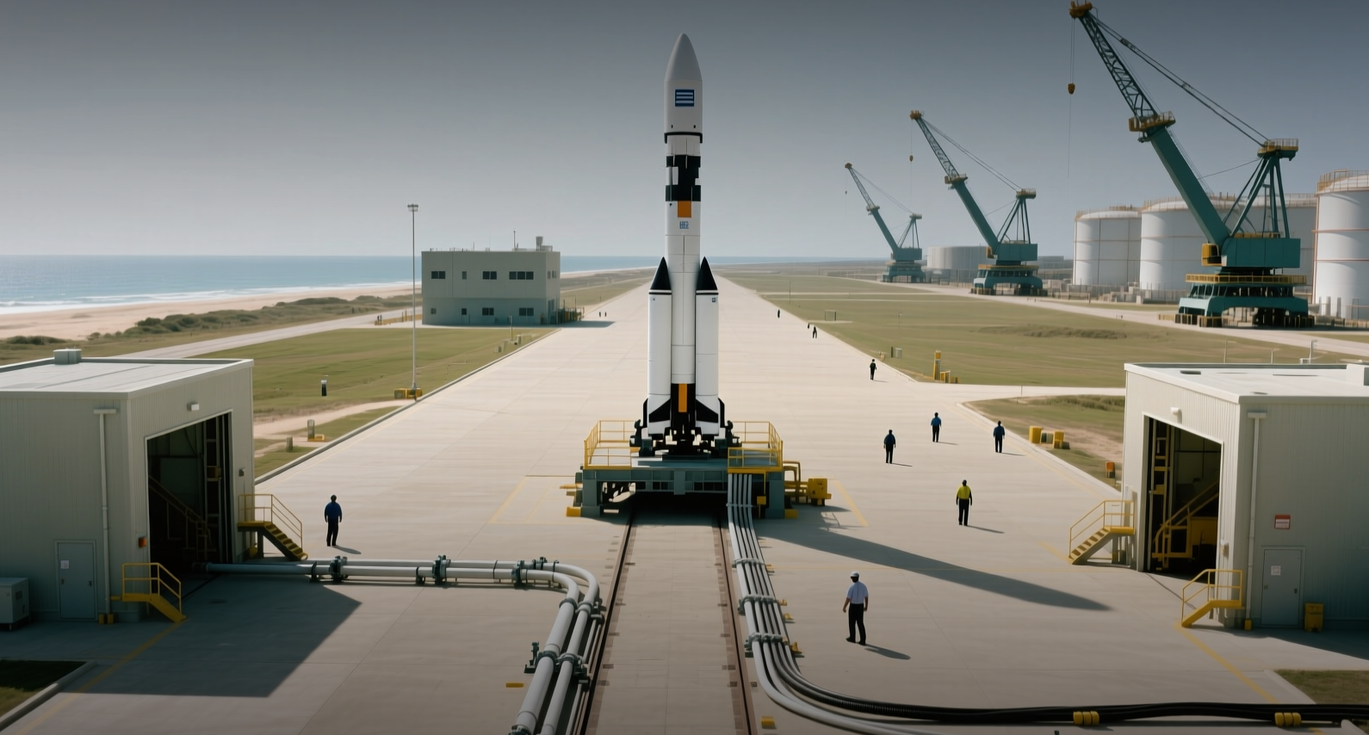
The first of those events is Neutron, Rocket Lab's medium-lift vehicle. It is designed to carry roughly 13,000 kilograms of payload, against about 300 kilograms for the Electron small-launch rocket that has carried the company to date. Management targets an average selling price of $50 million to $55 million per Neutron launch and as many as 20 flights per engine, with first flight still targeted for later this year.
The second is Rocket Lab's pending acquisition of satellite operator Iridium Communications (NASDAQ: IRDM). Rocket Lab has raised $1.944 billion through an at-the-market share offering, removing the main financing hurdle, and the deal is expected to close in mid-2027 subject to regulatory approval. Sheppard models the combined company roughly doubling annual revenue, producing an end-to-end platform spanning launch, satellites and services.
Cantor's confidence rests partly on Rocket Lab's existing execution. The company completed its 96th Electron mission on Sept. 19, its 17th launch of 2026, and has 15 more dedicated missions planned for Synspective through the end of the decade. Q2 FY26 revenue reached a record $234.07 million, up 62.0% year over year, with non-GAAP gross margin at 41.5% and backlog up 137% to $2.36 billion, including more than 90 launches. Chief Executive Peter Beck has flagged more than $1 billion in new contracts signed in Q3, including a $397 million Flatellite award for the U.S. Space Force's SB-AMTI program. Guidance calls for Q3 revenue of $250 million to $265 million.
The note also leans on Rocket Lab's dedicated launchpads in New Zealand and the United States and a customer base split between commercial and government buyers, which Cantor frames as durable barriers against rivals chasing the same contracts. SpaceX currently accounts for somewhere between 80% and 90% of total Earth mass to orbit annually, leaving Rocket Lab as the only listed pure-play building a scaled second source. The U.S. Space Force named Rocket Lab an NSSL prime contractor in its FY2027 budget.
The tape did not treat the note as a Rocket Lab-specific repricing. Intuitive Machines (NASDAQ: LUNR) rose 10% to $15.28 in Monday morning trading without any research note or announcement of its own, outpacing Rocket Lab's gain, while AST SpaceMobile (NASDAQ: ASTS) added 6% to $61.81. The Procure Space ETF (NASDAQ: UFO) was up 2% at $44.19 against a 1.13% gain for the SPDR S&P 500 ETF Trust (NYSE ARCA: SPY) at $770.32. Friday's session had run the other way for the same cluster, so part of Monday's move was a reversal inside a group that has traded in both directions.
For holders, the reiteration leaves the investment case resting on execution rather than the Electron business alone. Investors should watch whether Neutron launches on schedule and reaches commercial reliability, and whether regulators clear the Iridium transaction, which carries integration and dilution risk after Rocket Lab issued roughly 29.3 million shares. Delays in either would compress the $122 case; both landing would strengthen it.
This article is for informational purposes only and does not constitute investment advice.