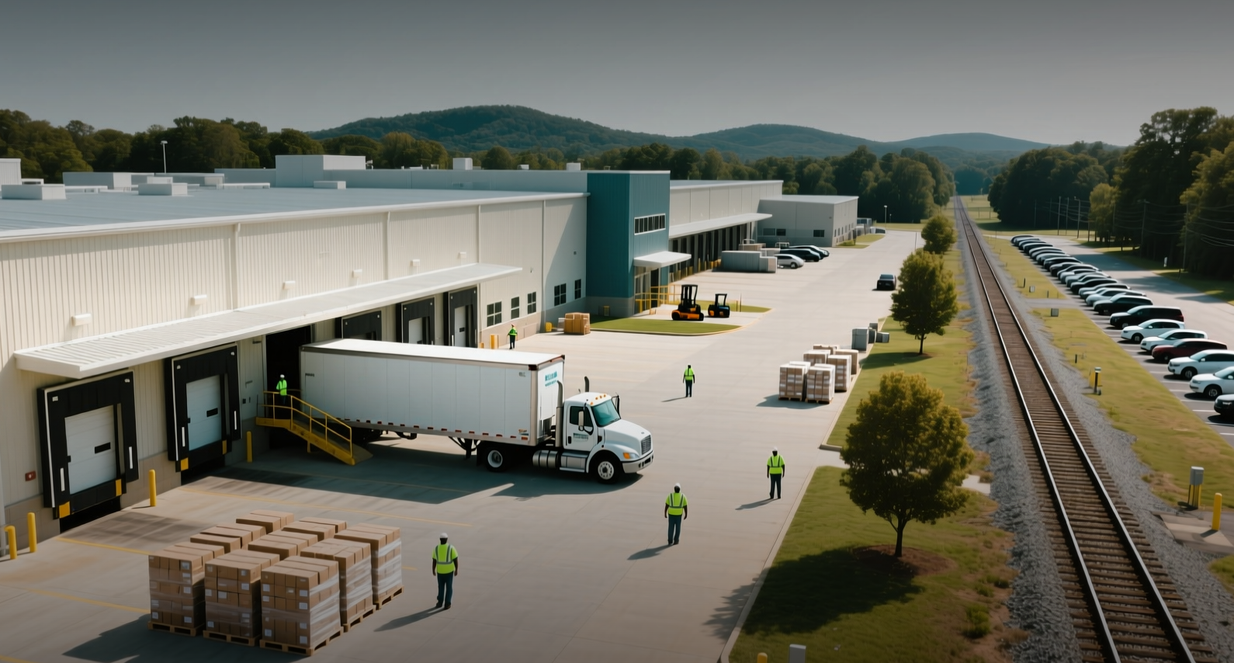
Reckitt is adding $400 million to its U.S. manufacturing footprint, expanding a North Carolina plant and a New Jersey campus as the Mucinex maker moves production closer to the consumers buying its products.
The investment, disclosed Sept. 16, deepens a supply-chain shift already under way across consumer staples, where companies are trading the cost advantages of offshore sourcing for shorter lead times and insulation from import disruption. Reckitt did not disclose the split of the $400 million between the two sites, the capacity it adds, or the timeline for completion.
"Consumer demand patterns have changed, and the companies that can respond fastest will take share," said Elena Fischer, a trade policy analyst at Edgen, who tracks how tariff exposure is reshaping where consumer goods are made. "Moving production into the market you sell into is the most direct hedge against that volatility."
The spending lands against a backdrop of rising U.S. import costs on consumer-health and household products, a category that includes over-the-counter medicines, vitamins and personal care. Reckitt's portfolio — Mucinex, Durex, Nurofen and Lysol among its brands — spans exactly the goods most exposed to freight costs and border friction, because they are bulky, low-margin and replenished on short cycles.
Why a cold-and-flu brand needs a factory next door
For a company like Reckitt, the economics of localization turn on a simple mismatch: demand for cold and flu remedies spikes within weeks, but goods sourced from overseas can take months to arrive. Domestic capacity shortens that gap, letting a manufacturer restock shelves during a season rather than a quarter.
That logic has pulled peers in the same direction. Haleon, the consumer-health company spun out of GSK in 2022, and Kenvue, carved from Johnson & Johnson in 2023, have both leaned on regional manufacturing to protect margins as input and logistics costs rose. Procter & Gamble, the largest U.S. household-products maker, has spent years consolidating production into fewer, larger North American sites to cut distribution distance.
Reckitt's North Carolina plant and New Jersey campus sit inside that pattern. North Carolina has become a magnet for advanced manufacturing because of its port access, rail links and a state incentive regime that has drawn billions in corporate investment over the past decade. New Jersey gives the company proximity to the dense Northeast consumer market and to the pharmaceutical and consumer-health talent clustered around it.
The company has not said how many jobs the expansion creates, what product lines the new capacity will serve, or whether the spending replaces existing offshore production or adds to it. Those details typically surface in subsequent filings and site-level announcements.
The tariff math behind the move
The case for onshoring rests on arithmetic that has shifted in recent years. When a company imports a finished consumer-health product, it pays freight, duties and the working capital cost of holding inventory in transit. Domestic production removes the duty and the transit time but adds U.S. labor and facility costs, which are typically higher.
The bet is that the first set of costs has risen faster than the second. For bulky, low-value-per-unit goods, freight and duty can represent a meaningful share of landed cost, which is why household and personal-care manufacturers have been among the most active reshoring spenders. Reckitt's $400 million is a wager that this gap stays wide enough to justify building rather than buying abroad.
There is a competitive dimension, too. Capacity is a moat in consumer staples: a company with domestic plants can fill orders during a demand surge while a rival waits on a container ship. If Reckitt's expansion lifts its U.S. service levels, it can win shelf space at retailers such as Walmart, Target and CVS, where in-stock rates drive category share.
The risk is that the demand shift Reckitt is chasing proves temporary. If consumer demand normalizes toward pre-pandemic patterns, or if tariff pressure eases, the company will be left with fixed costs it cannot easily shed. Manufacturing investments are difficult to reverse; a plant built for a demand spike becomes a drag if the spike fades.
Reckitt's next scheduled update on its North American operations will be its quarterly results, where investors will look for any change to capital-expenditure guidance and for commentary on U.S. volume trends. Until then, the $400 million stands as a statement of intent: the company is betting that the shortest path to the American consumer runs through American factories.
This article is for informational purposes only and does not constitute investment advice.