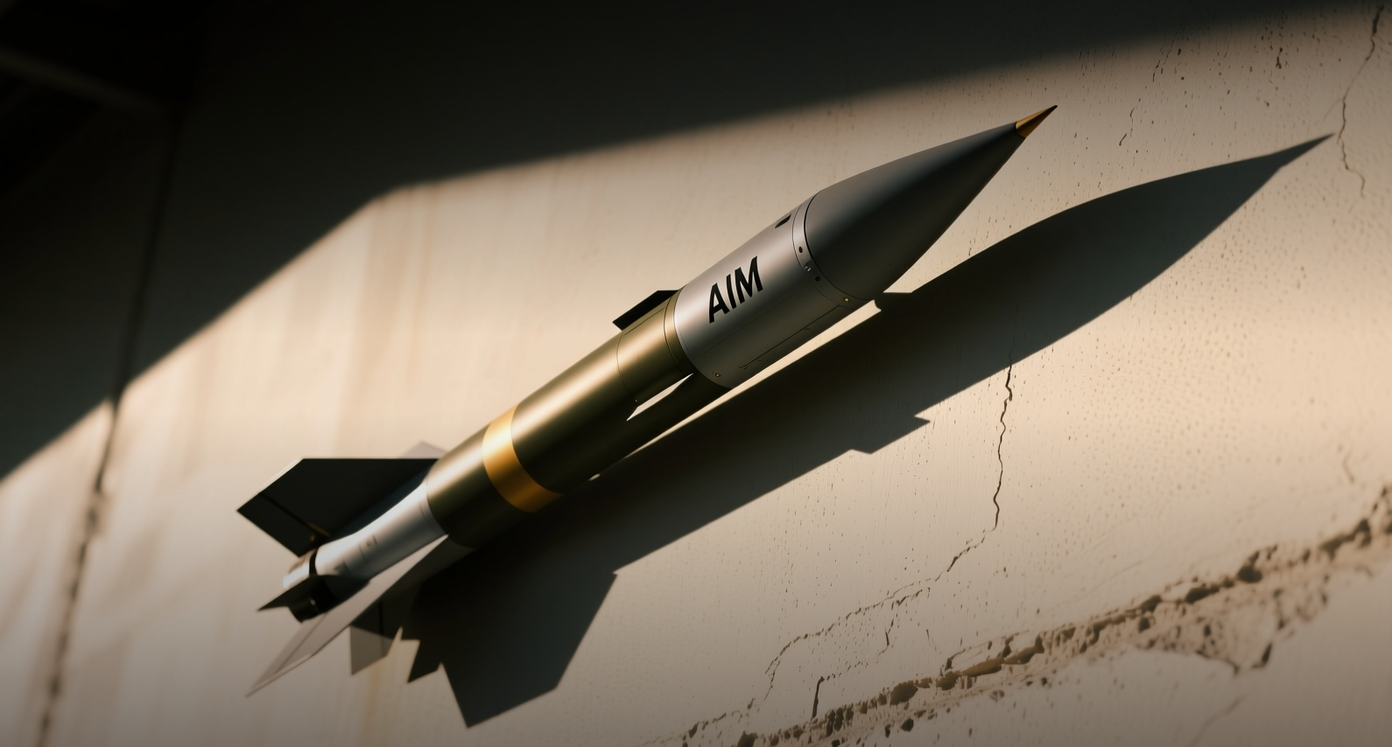
Raytheon secured a $1.1 billion U.S. Navy contract to produce AIM-9X Block II missiles, expanding capacity to 2,500 units a year as demand surges from allied nations.
"Our teams have streamlined production, shortened lead times and ramped up deliveries of AIM-9X missiles to keep pace with growing demand," Barbara Borgonovi, president of Naval Power at Raytheon, said. "This contract, along with our close partnership with the U.S. Navy, allows us to sustain that momentum and ensure U.S. and allied forces have this advanced, combat-proven capability they depend on in high threat environments."
The fixed-price incentive contract, a modification to a previously awarded agreement, covers missile production along with associated hardware and software for U.S. and Foreign Military Sales customers. Work is expected to be complete by September 2029, with the majority taking place at Raytheon's Tucson, Arizona facility. The company is expanding its engineering workforce in Tucson to support the program.
AIM-9X is the most advanced infrared-tracking, short-range air-to-air and surface-to-air missile in production, trusted by the U.S. and more than 35 allied and partner nations. The system integrates with the National Advanced Surface to Air Missile System (NASAMS) and is configured for installation on a wide range of modern aircraft. The contract strengthens RTX's defense backlog and signals sustained demand for precision munitions as global defense spending rises.
RTX, the parent company formed by the merger of Raytheon and United Technologies, reported 2025 sales of more than $88 billion and employs more than 180,000 people globally. The company's shares closed at $186.59 on the New York Stock Exchange on June 25, up 0.83 percent on the day and 1.74 percent year to date. Analysts tracked by MarketScreener rate the stock a consensus outperform with an average price target of $215.73, implying roughly 16 percent upside from current levels.
The award comes as the U.S. and its allies accelerate weapons procurement amid elevated geopolitical tensions. The Pentagon has prioritized replenishing munitions stockpiles drawn down by transfers to Ukraine and other theaters, while allied nations in Europe and the Indo-Pacific are expanding their own inventories. Raytheon's ramp to 2,500 missiles annually positions it to capture a larger share of that demand.
This article is for informational purposes only and does not constitute investment advice.