

Qualcomm unveiled the Snapdragon 8 Elite Extreme Gen 6 at Snapdragon Summit 2026 on Sept. 22, its first 5GHz smartphone CPU and the first consumer chip to capture 8K/60fps video, with support for on-device AI models above 30 billion parameters.
Qualcomm unveiled the Snapdragon 8 Elite Extreme Gen 6 at Snapdragon Summit 2026 on Sept. 22, its first 5GHz smartphone CPU and the first consumer chip to capture 8K/60fps video, with support for on-device AI models above 30 billion parameters.
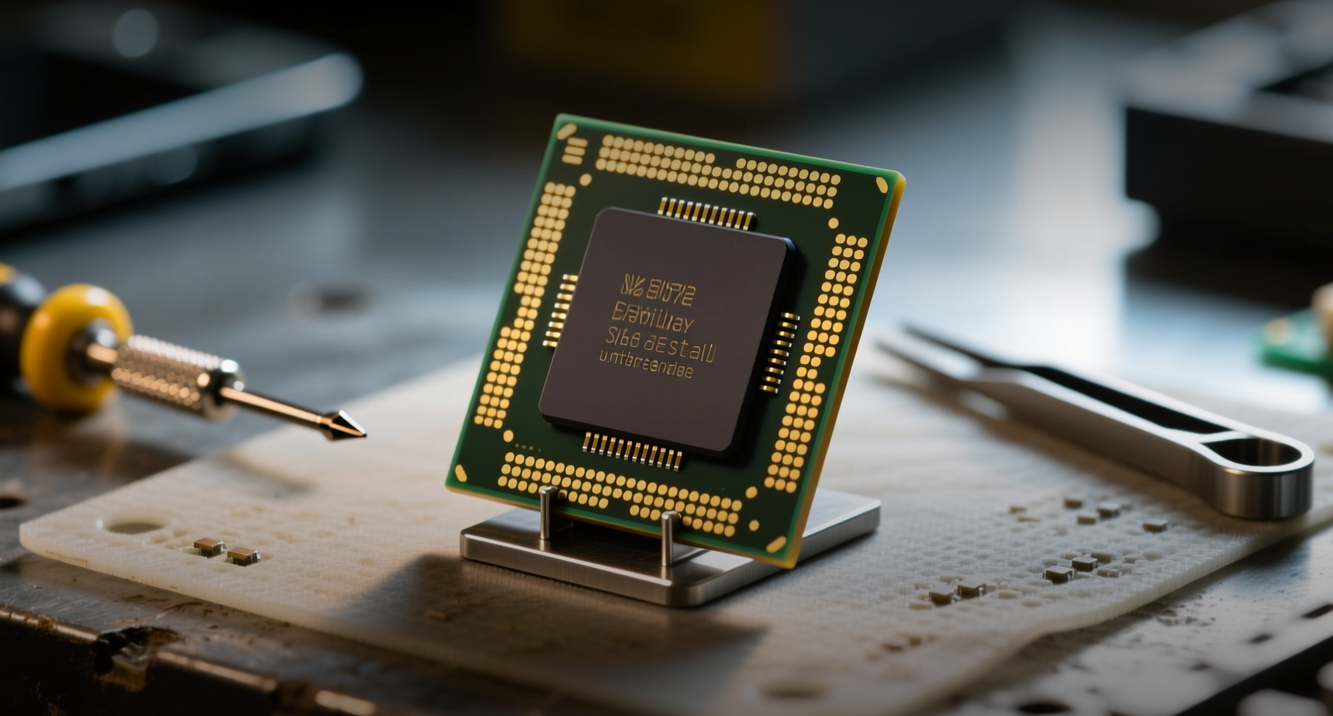
Qualcomm's new top mobile chip runs 30-billion-parameter AI models entirely on a handset, a capability that until now required a data center rack. The Snapdragon 8 Elite Extreme Gen 6, announced at Snapdragon Summit 2026 on Sept. 22, is the first smartphone processor with a 5GHz CPU and the first consumer camera chip to capture 8K video at 60 frames per second.
"It's less about navigating apps and more about completing tasks for you, and it's going to handle a lot of the details required to get things done for you," Qualcomm CEO Cristiano Amon said during the keynote. "Whether the agent runs on the device or is built into the OS, it needs to do a lot of coordination, but your experiences need to remain useful, instantly secure, and always available."
Qualcomm split its 2026 flagship into two tiers for the first time. The Extreme Gen 6 (model SM8975) carries 50% more shared memory than the standard Snapdragon 8 Elite Gen 6 (SM8950) and supports Mixture-of-Experts models above 30 billion parameters — an architecture that activates only a fraction of a model's weights per query, cutting the memory bandwidth needed to run large models locally. Both chips use a 2+6 Oryon CPU layout with two prime cores at 5GHz and six performance cores at 4GHz, built on TSMC's 2nm process. Qualcomm claims the Extreme part is 13% faster than the Snapdragon 8 Elite Gen 5, with 40% better CPU power efficiency, a 44% faster Adreno GPU and a Hexagon NPU that is 35% quicker at up to 33% better performance per watt.
The standard Gen 6 is a different story. It loses the dedicated Adreno high-bandwidth memory that its predecessor, the 8 Elite Gen 5, carried, along with the Extreme's Matrix Cores and APV video capture support. Qualcomm told Android Authority the 8 Elite Gen 6 is a successor to the 8 Elite Gen 5, which makes the missing HBM a step backward on paper for the tier that will ship in most 2027 Android flagships.
The video block is where the Extreme chip's lead is thinnest. MediaTek's Dimensity 9600 Pro reached 4K/240fps slow-motion capture before Qualcomm did, so the Extreme Gen 6 matches rather than opens that gap. Its 8K/60fps support is genuinely new — flagship processors had been stuck at 8K/30fps and 4K/120fps for several cycles — but the first phones to use it will likely cap recording length, as early 4K handsets did, because of heat. Qualcomm also added VVC playback decoding, claiming up to 55% power savings over software decoding, and an upgraded NPU-ISP link that carries 16 bits of AI data per pixel, which the company says is 256 times more AI data than before.
Apple remains the harder comparison. The A20 Pro already sits on a 2nm design, and Apple controls both silicon and operating system, which lets it tune agentic features without the coordination overhead Qualcomm must manage across Google, Samsung and a dozen Chinese OEMs. Qualcomm brought Google's Rick Osterloh onstage to reinforce that partnership, but the exchange produced no new product commitments beyond Gemini promotion.
Design wins are the proof point that matters. Xiaomi confirmed its 18 family launches in China on Sept. 23, one day after the announcement, with the Xiaomi 18 Pro and Pro Max using the Extreme part. Motorola's Signature 27 will bring the Extreme chip to the U.S. HONOR, iQOO, OnePlus, OPPO, REDMI, RedMagic and vivo have all committed to the platform. Samsung's Galaxy S27 Ultra is expected to adopt it in early 2027, though Samsung has not confirmed that.
Rumors ahead of the launch pointed to a price increase for the Extreme Gen 6 over the 8 Elite Gen 5, arriving alongside a memory price surge that is already pushing up flagship handset bills of materials. A more expensive top-tier chip narrows the margin room for OEMs that must also absorb higher RAM costs, and it makes the two-tier split a pricing decision as much as a technical one: Qualcomm can charge a premium for agentic AI features while offering the standard Gen 6 to vendors that cannot pass on the cost.
For Qualcomm shareholders, the setup is a familiar one. The company's premium Android franchise depends on OEMs marketing features consumers will pay for, and on-device agents that complete tasks without cloud round-trips are the most credible new pitch since computational photography. The risk is that the feature set is hard to demonstrate in a retail store, and that Apple's tighter integration and MediaTek's cheaper Dimensity line compress Qualcomm's premium from both ends. Qualcomm has not disclosed pricing for either chip, and no independent benchmark results for the Extreme Gen 6 have been published.
This article is for informational purposes only and does not constitute investment advice.