

Key Takeaways:
- Qualcomm is developing a new smartphone chip architecture, per a June 27 report
- The redesign targets on-device AI and the premium $800-plus phone segment
- Qualcomm shares have gained 14% in 2026 amid broader expansion into data centers
Key Takeaways:
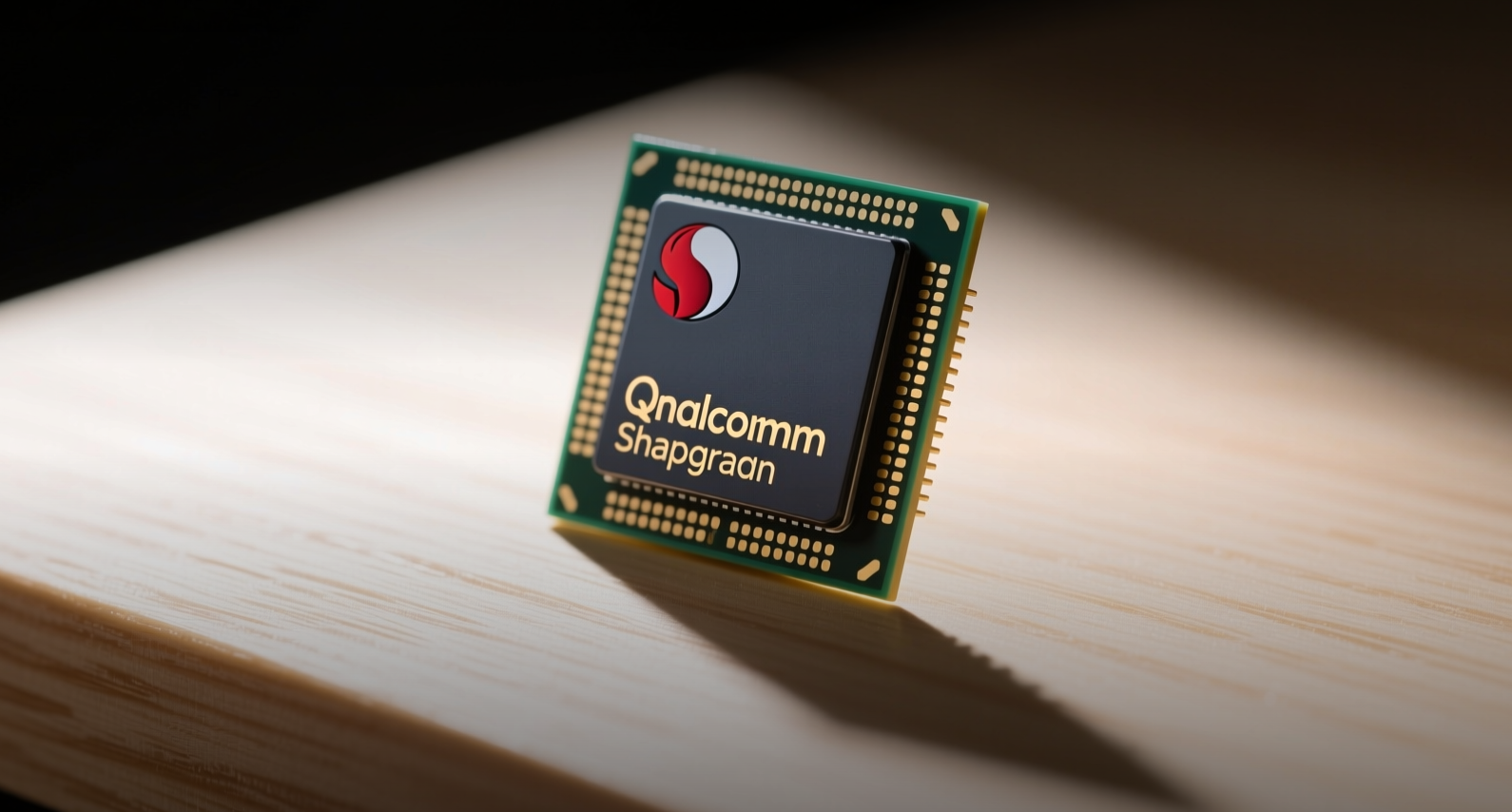
Qualcomm is developing a new chip architecture for smartphones, a redesign that could extend its lead in on-device AI processing and defend its position in the $48 billion mobile processor market.
Qualcomm is developing a new chip architecture for smartphones, according to a report from Cailianshe on June 27, a redesign that would mark the company's first major architectural overhaul since its transition to custom Oryon CPU cores in 2023. The move targets the premium tier where phones sell for $800 and above.
The new architecture represents a shift in how Qualcomm designs its Snapdragon line, the chips powering most Android flagship phones. The company has not disclosed the process node or performance targets, but a successor on TSMC's 2nm node — which packs more transistors per square millimeter, improving performance per watt — would follow the current Snapdragon 8 Gen 4 built on 3nm technology. Qualcomm's current Hexagon NPU handles 10 billion-parameter AI models; a new architecture could push that threshold higher, enabling more capable on-device inference without an internet connection.
The timing coincides with a broader expansion. Qualcomm shares have gained 14% this year, boosted by its Modular acquisition and raised guidance, as investors bet on the company's push beyond phones into AI data centers and automotive. The company recently announced Dragonfly data center chips, a CPU and a machine learning accelerator, and said AI data centers will become its next big growth engine.
Why the Architecture Matters
A new chip architecture typically delivers 15% to 25% year-over-year gains in performance and power efficiency, based on historical industry benchmarks. For Qualcomm, the stakes extend beyond raw speed. On-device AI inference — running models like Meta's Llama or Google's Gemini directly on the phone — requires specialized neural processing units tightly integrated with the CPU and GPU. Apple's A18 chip, built on TSMC's 3nm node, features a 16-core Neural Engine capable of 38 trillion operations per second. MediaTek's Dimensity 9400, also on 3nm, includes a dedicated AI processing unit. Qualcomm's architectural refresh would need to match or exceed those specs to maintain its roughly 40% share of the Android application processor market.
The competitive pressure is mounting from both ends. Apple designs its own chips and controls the entire software stack, giving it integration advantages no third-party supplier can match. MediaTek has been gaining share in the midrange and pushing into premium territory with its Dimensity line. Qualcomm's architectural investment is a defensive move as much as an offensive one.
The Investment Angle
Qualcomm trades at roughly 18 times forward earnings, a discount to Nvidia's 35 times but a premium to Intel's 22 times, reflecting its dual identity as a mobile chip leader and an emerging AI infrastructure player. The new architecture, if it reaches mass production by late 2026 or early 2027, could extend Qualcomm's pricing power in the premium smartphone segment, where average selling prices have risen 12% over the past two years as AI features drive upgrades.
The risk is execution. Architectural transitions are complex and expensive — Qualcomm's research and development spending reached $8.7 billion in fiscal 2025, much of it directed at custom CPU cores and AI accelerators. A delay or performance miss would hand an opening to MediaTek and Apple at a time when Qualcomm is also investing heavily in data center and automotive chips. The company's ability to execute across three fronts simultaneously will determine whether the architectural bet pays off.
This article is for informational purposes only and does not constitute investment advice.
