
Qatar's delayed North Field East LNG train keeps natural gas above $3 per MMBtu while Saudi Arabia's partial East-West pipeline restart caps crude upside, leaving WTI near $88.68.
Qatar's delayed North Field East LNG train keeps natural gas above $3 per MMBtu while Saudi Arabia's partial East-West pipeline restart caps crude upside, leaving WTI near $88.68.
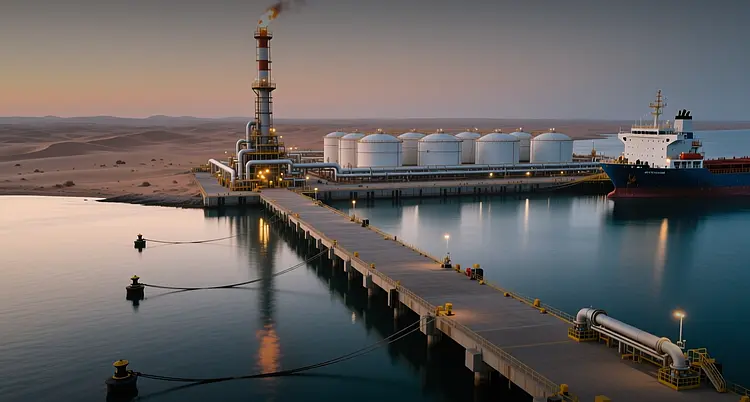
Natural gas held above $3 per million British thermal units while WTI crude tested $88.68 a barrel, as traders weighed a deepening Qatari LNG outage against Saudi Arabia's partial restart of the East-West pipeline that bypasses the Strait of Hormuz.
The two supply shocks are pulling in opposite directions. QatarEnergy's North Field East train, originally slated to commission in summer 2026, has slipped to early 2027 after the US-Iran conflict disrupted construction and shipping, according to the company's revised schedule. That delay removes incremental volumes the market had already counted on, leaving European and Asian buyers bidding for a shrinking pool of spot cargoes. Germany's gas inventories stood at a record seasonal low of 56.6%, and the country's market operator THE has launched tenders for first-quarter 2027 deliveries to coax traders into storage ahead of peak winter demand.
"Gas is the tighter of the two markets because the Qatari barrels are simply not there, and no amount of Saudi crude fixes a winter heating shortfall," said Omar Tariq, commodities strategist covering Asia-Pacific resource flows. "The pipeline restart gives crude traders a reason to sell the headline, but the physical market is still short."
Saudi Aramco resumed pumping through the 7-million-barrel-per-day East-West pipeline at a low rate after an 11-day shutdown, with one cargo scheduled to load at the Red Sea port of Yanbu for China. Restoring the pre-attack flow of roughly 4 million barrels per day could take six to eight weeks, Reuters reported, citing people familiar with the operations. Brent crude fell to $98.88 a barrel on September 23, down 0.37% on the day but still up 7.28% over the past month and 42.66% from a year earlier, according to Trading Economics data tracking the benchmark. WTI dropped below $92 before rebounding, with the $88.68 level acting as the near-term pivot.
The easing in crude is narrower than the headline suggests. Freight now accounts for at least 25% of the total cost of crude delivered to Asia, up from 5% to 6% in 2025, according to Bloomberg. Daily earnings on a Gulf-to-China very large crude carrier route reached $1.2 million this week, and TotalEnergies fixed the Kuwait Prosperity tanker at $75 million, equivalent to $38 per barrel. Diesel markets remain tight after refinery disruptions in Russia and the Middle East, with Ukraine's drone strike halting all crude processing at the 230,000-barrel-per-day Moscow refinery for several weeks of repairs.
The last time Middle East supply routes were disrupted this severely, in the 2019 Abqaiq attack, Brent jumped 14.6% in a single session before giving back most of the gain within two weeks as Saudi Arabia restored output faster than expected. The current episode differs in one respect: the constraint is not a single facility but a chokepoint. Iran has proposed reopening the Strait of Hormuz within seven days if the United States begins easing military pressure and its blockade of Iranian ports, a condition Washington has not accepted.
The inflation channel is where this becomes a broader market problem. Energy pass-through into headline consumer prices keeps rate-sensitive sectors under pressure, and France's President Emmanuel Macron has said he would convene a G7 summit to discuss another coordinated release of OECD strategic petroleum stocks, following the record 400-million-barrel drawdown agreed in March. A second release would cap crude upside but do nothing for gas, where the shortage is a supply problem rather than a price one.
The next hard data point is the US Energy Information Administration's weekly inventory report, after the American Petroleum Institute estimated a 1.8-million-barrel build in nationwide crude stockpiles alongside declines in gasoline and distillate. A confirmed distillate draw would reinforce the diesel tightness that freight rates are already pricing. For gas, the market's floor above $3 holds as long as QatarEnergy's North Field East train stays delayed; any signal of an earlier commissioning would be the first genuine bearish catalyst for the benchmark this quarter.
This article is for informational purposes only and does not constitute investment advice.