

Procter & Gamble is rolling the dice on a laundry "tile" called Tide evo, betting consumers will embrace yet another detergent format from a brand that already controls about 60 percent of the market.
Procter & Gamble is rolling the dice on a laundry "tile" called Tide evo, betting consumers will embrace yet another detergent format from a brand that already controls about 60 percent of the market.
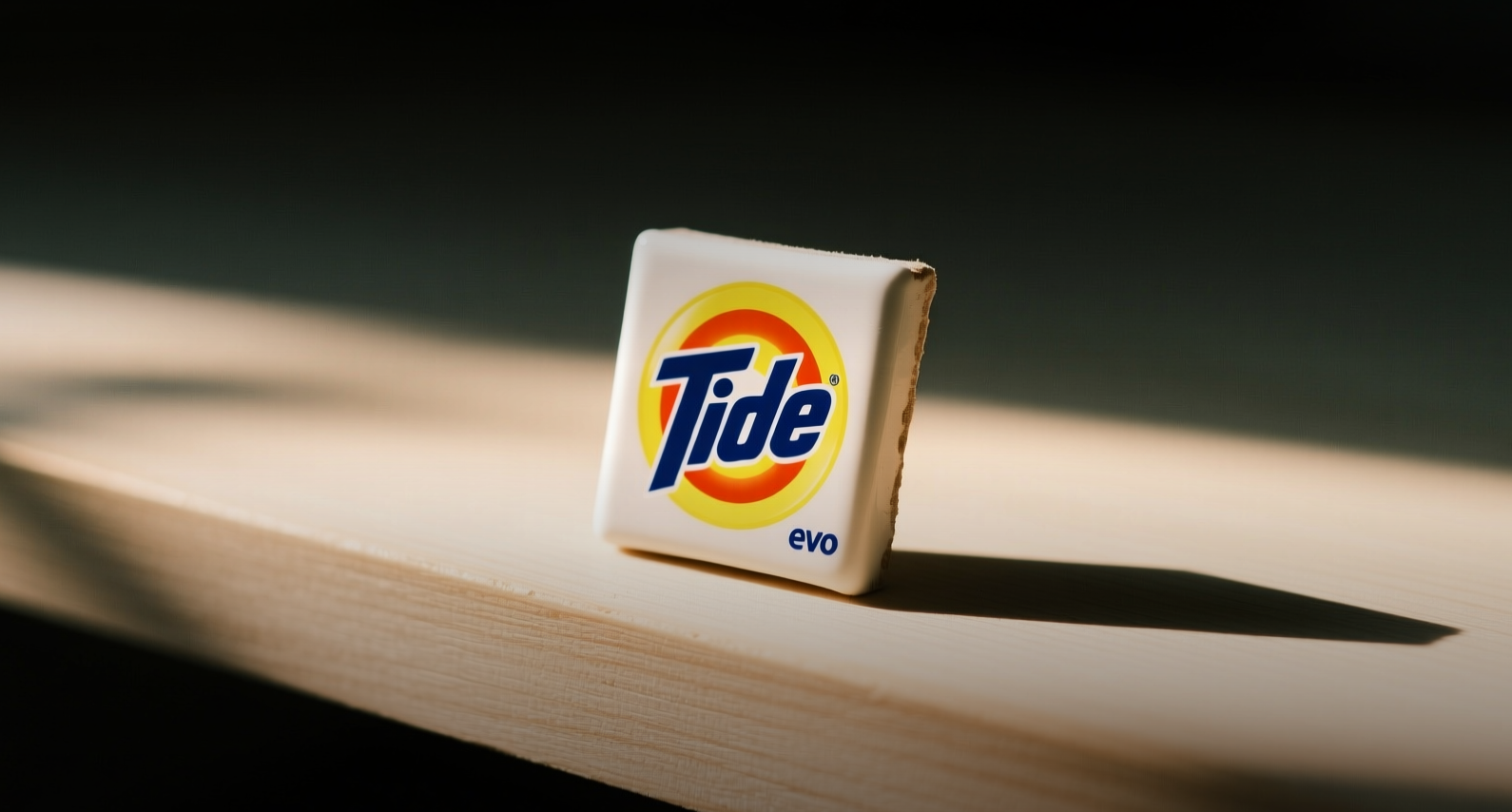
Procter & Gamble Co. is pushing a detergent "tile" called Tide evo, wagering its $2 billion annual research budget on converting consumers to a new format even as its flagship brand already commands roughly 60 percent of the U.S. laundry market.
"The arrows started flying when we presented this to the sales and marketing team," said Victor Aguilar, who oversees P&G's $2 billion in annual research-and-development spending, describing the yearslong internal debate over whether the new technology could become a salable product.
The new product, developed at P&G's Mason, Ohio, innovation center, represents the company's latest attempt to reinvent laundry detergent after it spent years persuading consumers to switch from liquid to Tide pods. The skepticism from the company's own fabric-care sales force underscored the challenge: convincing shoppers to change habits when the existing product already dominates.
For P&G, the bet is about defending a franchise that generates billions in annual revenue against potential disruption from smaller rivals and changing consumer preferences around sustainability and packaging. The company's shares slipped 0.12 percent on the news, reflecting investor caution about the costs and risks of converting a loyal customer base.
Why Tide Keeps Reinventing Laundry
P&G's decision to launch Tide evo comes as the company seeks to stay ahead of shifting consumer trends and competitive threats. The detergent market has seen a steady evolution from powders to liquids to pods, with each transition requiring massive marketing investment to change consumer behavior. The Tide pods transition alone took years and hundreds of millions in advertising spend.
The new tile format represents a more radical departure. Unlike pods, which still contain liquid detergent encased in a water-soluble film, Tide evo is a solid tile that dissolves in the wash. The format eliminates plastic packaging entirely, a selling point as consumers and regulators increasingly target single-use plastics.
The $2 Billion R&D Machine
Aguilar's research operation, one of the largest in the consumer goods industry, has been pushing the boundaries of detergent chemistry and format design. The company spends more on laundry research alone than many of its competitors spend on total product development, according to industry estimates.
The internal resistance Aguilar described highlights a tension at the heart of P&G's strategy: the same market dominance that generates predictable cash flow also creates inertia. Convincing a sales force that has spent decades selling liquid detergent to embrace a tile requires as much change management as chemistry.
What Comes Next
P&G is expected to begin rolling out Tide evo to select retailers in the coming months, with a national launch potentially following in 2027. The company has not disclosed pricing, but analysts expect the tile format to carry a premium over traditional liquid detergent, reflecting both the technology and the packaging savings.
If successful, Tide evo could open a new product category that competitors would scramble to enter. If it fails to gain traction, it would join a long list of detergent format experiments that never achieved mainstream adoption.
This article is for informational purposes only and does not constitute investment advice.
