
Key Takeaways: Penguin Solutions has more than tripled this year as its memory-optimization business grows 63%, carving a niche in the AI infrastructure buildout.
Key Takeaways: Penguin Solutions has more than tripled this year as its memory-optimization business grows 63%, carving a niche in the AI infrastructure buildout.
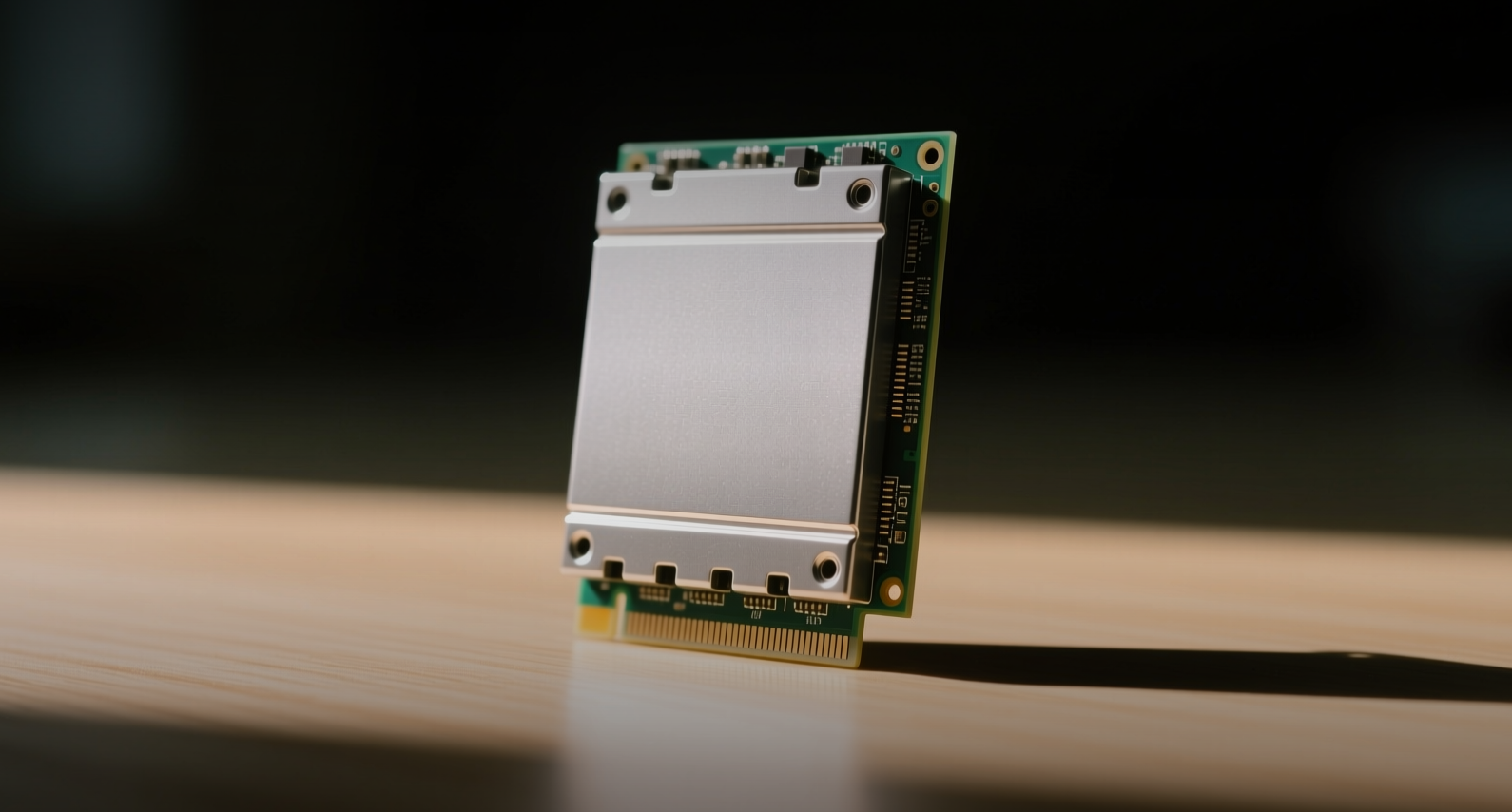
Penguin Solutions has more than tripled this year as its memory-optimization business grows 63%, carving a niche in the AI infrastructure buildout.
Penguin Solutions' integrated memory business grew 63% year over year in fiscal Q2, defying a 6% overall revenue decline and positioning the $3.25 billion company as a specialized beneficiary of AI data center expansion.
"Memory optimization becomes critical as agentic inference workloads intensify," the company said in its earnings release, pointing to its high-density compute express link servers that improve memory chip utilization in AI clusters.
The memory segment also improved 25.7% sequentially, accelerating from the prior quarter. Grand View Research projects the AI market will grow at a 30.6% compound annual rate through 2033, and memory-focused peers have already demonstrated outsized returns — Micron reached a $1 trillion market cap, while Sandisk surged more than 4,000% over the past year to $300 billion.
Penguin Solutions is winding down non-core operations to concentrate on memory infrastructure, a bet that hinges on whether AI data center operators will prioritize memory density over raw compute as inference workloads scale. IBM Chief Executive Arvind Krishna recently warned of a "multi-trillion dollar AI data center bubble," a risk that could test the thesis.
As AI models shift from training to inference, memory bandwidth and density are emerging as the primary constraints on performance. Penguin Solutions' compute express link servers aggregate high-bandwidth memory (HBM) across multiple nodes, effectively creating larger memory pools that reduce data movement latency — a problem that grows more acute as agentic AI systems execute multi-step reasoning tasks. Nvidia's H100 and B200 GPUs already push the limits of HBM3e memory, and the industry's migration to HBM4 on TSMC's advanced nodes will require new server architectures to fully utilize the bandwidth.
Unlike memory chipmakers Micron and Sandisk, Penguin Solutions does not fabricate memory — it builds the server infrastructure that optimizes how those chips are deployed. That distinction matters as hyperscale cloud operators seek to wring more performance from existing GPU clusters rather than buying new hardware. The company's integrated memory segment now represents the fastest-growing part of its business, and management has indicated a strategic pivot toward this higher-margin opportunity.
The rally has not been without volatility. Penguin Solutions shares fell 5.6% in a single session last month after Bank of America's fund manager survey showed 80% of respondents viewed semiconductors as the most crowded trade — the highest reading in the survey's history. May import prices of 1.9%, nearly double the 1.1% consensus, added pressure by reviving rate-hike expectations.
Still, the memory segment's trajectory mirrors the pattern that propelled Micron and Sandisk to multi-hundred-billion-dollar valuations. Penguin Solutions trades at roughly 10x the market cap of those peers, leaving room for multiple expansion if the memory infrastructure thesis plays out. The company has not yet disclosed forward guidance for its memory business, but the sequential acceleration from the prior quarter suggests momentum is building.
This article is for informational purposes only and does not constitute investment advice.
