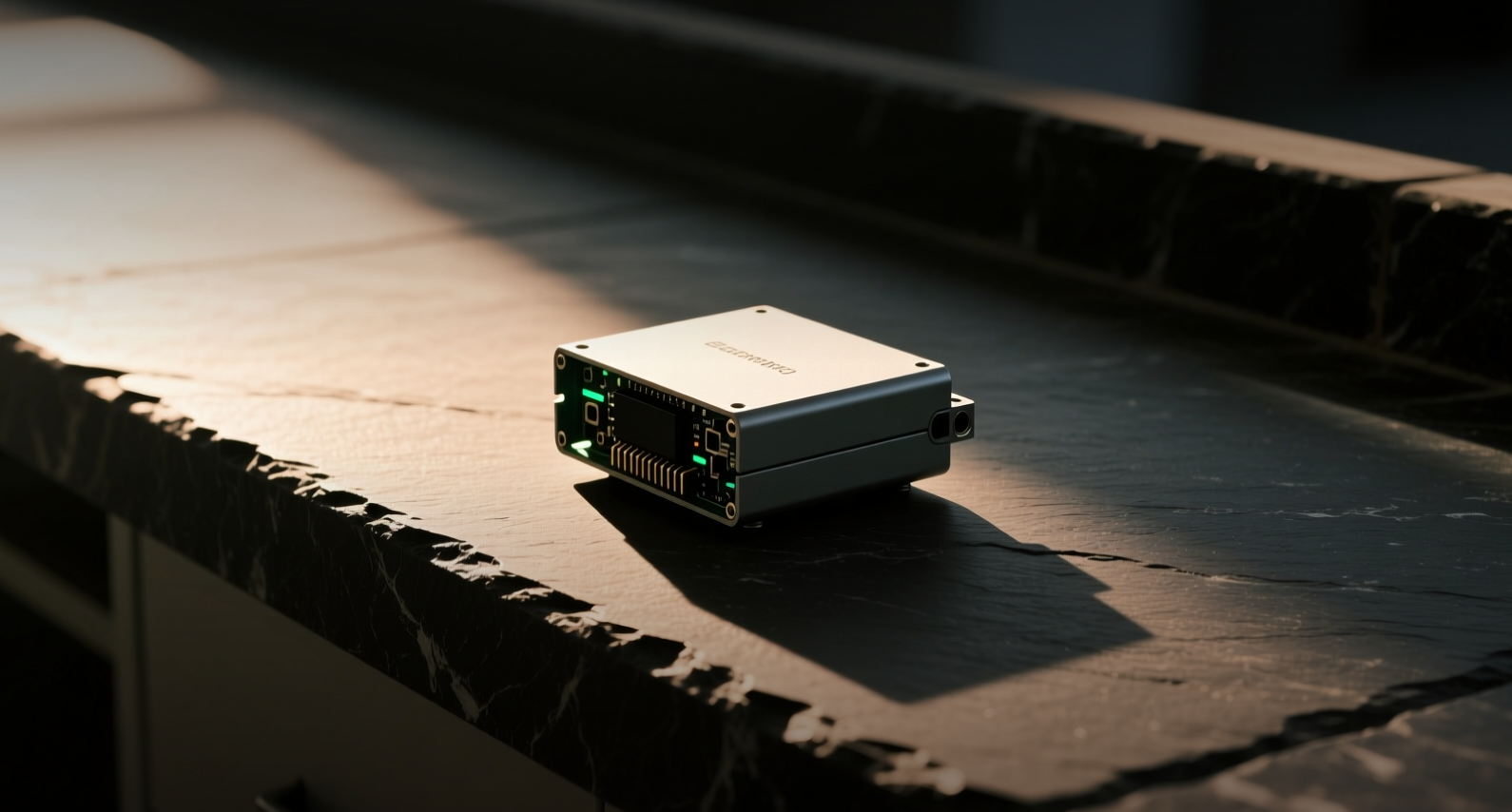
Ondas Holdings' counter-drone subsidiary Sentrycs will embed its Cyber-over-RF technology into Lockheed Martin's Sanctum platform, giving military operators a non-kinetic option to detect and seize control of unauthorized drones without jamming or physical interception.
"Combining Lockheed Martin's advanced modular defense architecture with Sentrycs' precise, non-disruptive detection and mitigation technology creates a stronger and more comprehensive operational capability," Eric Brock, chairman and CEO of Ondas Holdings, said in a statement.
Sentrycs' technology operates at the communication protocol layer, enabling operators to identify, track and take control of rogue drones without collateral interference with surrounding communications or infrastructure. The system avoids wide-area jamming and kinetic engagement — a critical distinction for protecting airports, stadiums and densely populated venues. Lockheed Martin's Sanctum platform combines artificial intelligence, cloud-enabled data fusion and a modular defense architecture to detect, track and neutralize aerial threats, including coordinated swarms.
The collaboration comes as Ondas has been rapidly scaling its defense business. The company landed more than $40 million in new June orders for autonomous defense gear, including counter-UAS systems, loitering munitions and ground systems, pushing second-quarter order volume past $150 million. Ondas also agreed last week to acquire Cyberhawk, a drone inspection and infrastructure data provider, for about $125 million, with closing expected in the third quarter. First-quarter revenue jumped to $50.1 million from $4.3 million a year earlier, and the company raised its 2026 revenue target to at least $390 million. Backlog stood at $457 million after accounting for acquisitions.
The global unmanned aerial vehicle market is projected to climb to $40.6 billion by 2030 from $26.1 billion in 2025, a compound annual growth rate of 9.2%, according to industry estimates. The aerial imaging segment, which relies heavily on drone-based solutions, is expected to reach $8.2 billion by 2030 from $3.9 billion in 2025, growing at more than 16% annually. U.S. officials in January announced a $115 million push for counter-drone technology ahead of the 2026 FIFA World Cup and America's 250th anniversary events, while FEMA approved $250 million for 11 host states to acquire these systems.
Ondas faces competition from DroneShield, which Axios reported supplied gear to Kansas City police for World Cup security, and Fortem Technologies, which secured a multimillion-dollar order to protect U.S. World Cup sites using radar and drone interceptors. Lockheed Martin separately secured a potential $35 billion contract to scale production of its THAAD interceptor system and an $8.4 billion extension for Precision Strike Missile production, underscoring the broader defense buildup that benefits companies across the supply chain.
Ondas shares traded at $7.96 on June 24, down 6.7% on the session, as the stock gave back some gains from a run-up driven by the string of contract announcements. Lockheed Martin shares closed at $491.64, down 7.6% over the prior week despite the multi-billion-dollar contract awards. The partnership gives Ondas a distribution channel into Lockheed Martin's defense customer base, while Lockheed gains a precise, non-kinetic mitigation layer for its Sanctum architecture — a combination that positions both companies to capture a larger share of the fast-growing counter-UAS market.
This article is for informational purposes only and does not constitute investment advice.