President Donald Trump said US officials met an Iranian delegation for three hours on the sidelines of the United Nations General Assembly, describing the encounter as "very good" and confirming a further round of talks has already been arranged — the first direct contact between the two governments since a June memorandum of understanding collapsed.
"It was a meeting that lasted for three hours; it ended an hour ago," Trump told reporters in New York on Tuesday. "It was a very good meeting. I can't imagine why they wouldn't want to do it; it's greatness or obliteration." He added that "a settlement is going to be reached" and that "the relationship is developing."
The headline cut against seven months of escalation. Trump told the same gathering that Iran had refused to end its nuclear program and called on all nations to join Washington's economic pressure campaign, while Iran's Revolutionary Guard spokesman Hossein Mohebbi said Tehran had "toughened our conditions" after the June deal broke down. Iranian Foreign Minister Abbas Araghchi met Qatari Prime Minister Sheikh Mohammed bin Abdulrahman Al-Thani in New York to discuss "efforts being made to de-escalate," according to Doha's foreign ministry.
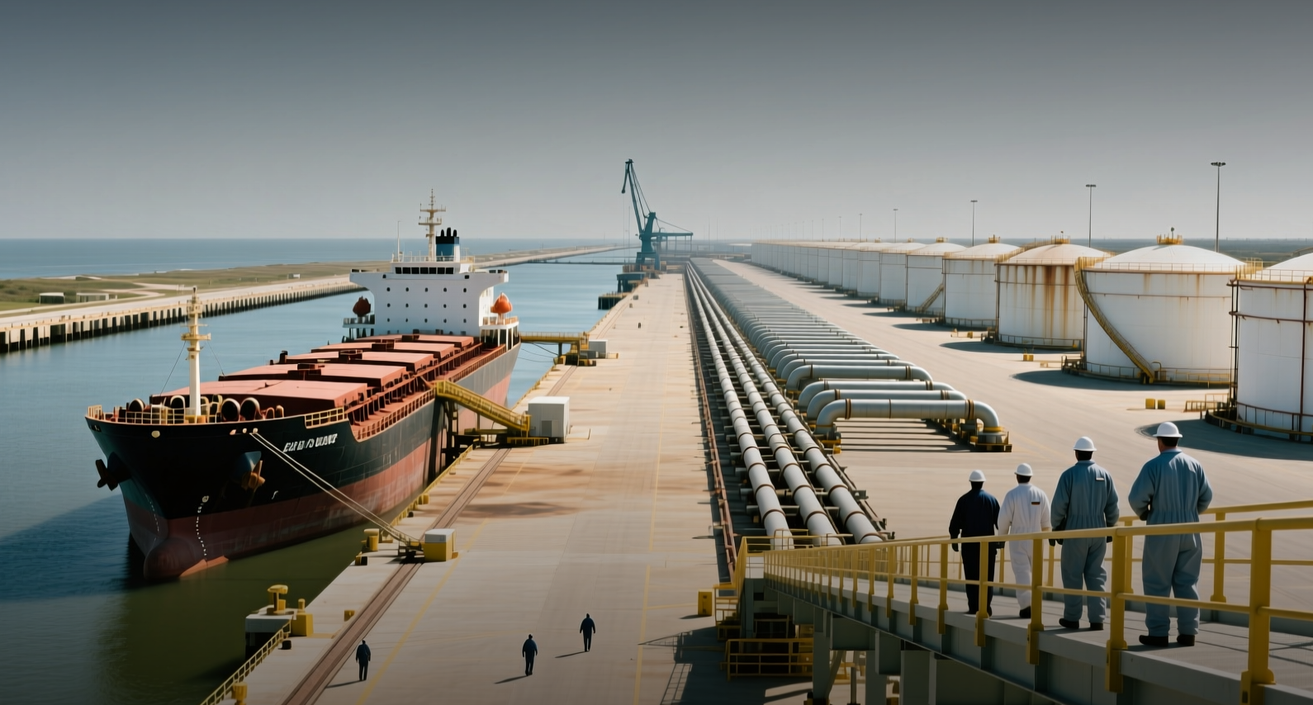
The market transmission runs through the Strait of Hormuz, which handles roughly a fifth of global seaborne crude. Brent's geopolitical risk premium had been inflated by Houthi attacks on Saudi Arabia, the capture of Perim Island in the Bab el-Mandeb, and Iraqi airports being ordered to stop accepting Iranian aircraft as of midnight to comply with US sanctions. Any credible path to sanctions relief reopens the Iran supply channel — the single largest dormant barrel source outside OPEC's spare capacity — and that is what oil, gold and the dollar are now pricing.
The safe-haven leg is the most reversible. Gold and the dollar index had both carried a Middle East escalation bid through the summer; a scheduled follow-up meeting at the presidential level removes the immediate tail risk without removing the sanctions architecture that keeps Iranian barrels off the market. That distinction matters: sentiment can reprice in a session, but supply cannot restart without Treasury licenses and shipping insurance that no one has yet agreed to issue.
What has to change for Iranian barrels to actually return
Trump has leverage he has not yet spent. Ali Vaez, deputy program director for the Middle East and North Africa at the International Crisis Group, said the president could offer "removing naval blockades on Iranian ports, rolling back sanctions against Tehran, or returning access to certain frozen assets." Vaez added: "The most important thing for Iranians is economic reprieve and that's precisely where President Trump has tremendous leverage."
The Gulf states are the likely brokers. Trump met leaders from Saudi Arabia, the UAE, Qatar, Bahrain, Kuwait and Oman on Tuesday, with US Ambassador to the UN Mike Waltz saying the president "truly values hearing from them and hearing their concerns" directly. Vaez said Qatar could lead mediation with backing from Saudi Arabia, Oman, Turkey, Pakistan and Egypt. Pakistan, Turkiye, Saudi Arabia and Egypt issued a joint statement stressing that "dialogue and diplomacy remain the only path towards sustainable resolution."
The historical template is cautionary. The June memorandum of understanding produced a brief moderation in regional tension — Saudi crude exports rose 3.3 percent in July to 4.125 million barrels per day, the highest since March, on data from the Joint Organisations Data Initiative — before the deal broke down and exports from Red Sea terminals weakened again on renewed Houthi activity. UBS analyst Giovanni Staunovo attributed the July increase to "regional tensions moderated," a phrase that has since been overtaken.
The binary that sets the next move in crude
Trump framed the choice in explicitly binary terms at the assembly: "Will a deal be made with Iran that lets them rebuild and create a far greater country than it ever was before … or do I annihilate the Islamic republic, and do it quickly?" He also said he believes a deal comes "after the election," which pushes any durable resolution past the near-term window and leaves the risk premium oscillating on headlines rather than fundamentals.
Vaez put the odds of a breakthrough this week low. "There are very serious differences, and there's deep mistrust," he said. "And so that's why I'm not very optimistic." Sanam Valki, director of the Middle East and North Africa Programme at Chatham House, said a direct exchange between the delegations would be "a big deal" because it would mean Iran's president is willing to risk his standing at home "in order to stave off a serious military attack and build a direct lifeline to the Trump team."
For positioning, the asymmetry is now skewed. If the scheduled follow-up round produces sanctions relief or asset unfreezing, crude gives back more of the war premium and the dollar's safe-haven bid fades further. If it stalls — or if Washington proceeds with what Valki described as "another round of serious and severe strikes against the Islamic Republic" — the premium re-inflates quickly, with European jet fuel already running a daily shortfall of 510,000 barrels and reserves at a seven-year low, according to former Iranian roads minister Mehrdad Bazrpash.
This article is for informational purposes only and does not constitute investment advice.